B Corporations and Sustainable Development: Global Trends from a Bibliometric Analysis (1991–2023)
Empresas B y desarrollo sostenible: tendencias globales a partir de un análisis bibliométrico (1991-2023)
 PDF
Received: September 16, 2024
Accepted: May 21, 2025
Sanabria-Ospino, A. E., López García, D.M., Puerta-Guardo, F.A., Fajardo-Moreno, W. S., y Cantillo-Orozco, A. S. (2025). Empresas B y desarrollo sostenible: tendencias globales a partir de un análisis bibliométrico (1991-2023). Revista CEA, 11(26), e3239. https://doi.org/10.22430/24223182.
Abstract
Objective: This study analyzes the evolution of scientific literature on B Corporations and their five core dimensions—governance, community, workers, environment, and customers—in relation to corporate sustainability, aiming to identify research trends and knowledge gaps in this field.
Design/methodology: A scientific data mining process was conducted using the Scopus and Web of science databases. Three specialized bibliometric tools—Biblioshiny (R interface), VantagePoint, and VOSviewer—were employed to analyze 98 high-impact journal articles published between 1991 and 2023.
Findings: China and the United Kingdom lead global research on corporate social responsibility and sustainability. Keyword co-occurrence analysis revealed that sustainable development, sustainability, corporate social responsibility, and environmental performance are the predominant themes. Among these, the strongest relationships, in descending order, were observed between B Corporations and sustainable development, sustainability, and corporate social responsibility.
Conclusions: Research on B Corporations has exhibited a fragmented approach to key thematic intersections, such as corporate governance and social responsibility, stakeholder groups and their theoretical frameworks, and sustainability and sustainable development. Future studies should explore these intersections more comprehensively, particularly the relationship between corporate governance, social responsibility, and stakeholder engagement.
Originality: This study offers novel insights into the conceptual dimension of B Corporations and their alignment with corporate sustainability, contributing to the development of a future research agenda in this domain.
Keywords: B Corporations, green economy, sustainable development, economic and social development, bibliometric analysis.
JEL Codes: Q56, M14, L21.
Highlights
Resumen
Objetivo: esta investigación analiza la evolución literaria presentada en torno de las empresas B y sus cinco dimensiones (gobierno, comunidad, trabajadores, medioambiente y clientes) relacionadas con la sostenibilidad empresarial, identificando patrones científicos y brechas en el conocimiento.
Diseño/metodología: se realizó una minería de datos científica de las bases de datos Scopus y Web of Science (WoS), utilizando tres herramientas informáticas especializadas: la interfaz del software R Biblioshiny, Vantage Point y VOSviewer. Se tomó como intervalo las últimas 4 décadas y se identificaron 98 artículos de revista de alto impacto.
Resultados: los países que lideran la investigación mundial en tópicos como responsabilidad social corporativa y sostenibilidad son China y Reino Unido. Los temas principales, de acuerdo con el análisis de coocurrencia de palabras claves, son el desarrollo sostenible, la sostenibilidad, y la responsabilidad social corporativa junto con el desempeño ambiental; la mayor relación presentada entre estas temáticas es en su respectivo orden con empresas B, desarrollo sostenible, sostenibilidad y responsabilidad social corporativa.
Conclusiones: las investigaciones actuales sobre empresas B han tratado de forma desarticulada las temáticas en torno al gobierno corporativo y su responsabilidad social, los diferentes grupos de interés con sus teorías, y la sostenibilidad con el desarrollo sostenible. Por tanto, futuras líneas de investigación se pueden realizar analizando la relación entre el gobierno corporativo y la responsabilidad social junto con los grupos de interés.
Originalidad: este trabajo realiza relevantes aportes sobre la dimensión de las organizaciones B y su relación con la sostenibilidad empresarial generando una agenda futura sobre futuras investigaciones.
Palabras clave: empresas B, economía verde, desarrollo sostenible, desarrollo socioeconómico, análisis bibliométrico.
Códigos JEL: Q56, M14, L21.
Highlights
1. INTRODUCTION
Amid growing global climate challenges, shifting consumer preferences for environmentally friendly products, and mounting pressure on business leaders to balance financial performance with sustainability, new economic models are gaining attention (
Environmental threats such as global warming have catalyzed the adoption of sustainable practices, which are now seen as essential for achieving long-term business success (
As a result, companies are moving toward sustainable development through a stakeholder-oriented approach, recognizing the importance of serving multiple interest groups (
A business model can be broadly defined as a framework that outlines how companies conduct their commercial activities (
The challenges of the current era demand a balance between sustainability and profitability—one that B Corps are uniquely positioned to achieve (
In terms of corporate governance, B Corps foster innovation through the implementation of Corporate Social Responsibility (CSR) practices that enhance business performance (
The social and environmental dimensions, meanwhile, encompass supplier relationships, local community engagement, reductions in energy and water usage, emissions management, and the overall social and environmental impact of products (
Given this context, the present study seeks to answer the following research questions: What are the current research trends surrounding B Corps? How has scholarly knowledge about B Corps and sustainable development evolved? What is the relationship between B Corps and the broader concept of sustainable development?
This article is structured as follows: Section 1 situates the evolution of business models in the global context, culminating in the emergence of sustainable business models and B Corps. Section 2 provides a review of the literature relevant to this study. Section 3 describes the systemic method employed for data collection. Section 4 presents the results through the metaphor of a tree. Sections 5, 6, and 7 discuss the key findings, limitations, and directions for future research.
2. THEORETICAL FRAMEWORK
The concept of B Corps originated in 2006 with the establishment of B Lab, a nonprofit organization responsible for certifying companies that meet rigorous standards of social and environmental performance (
B Corps are commonly described as triple-impact (economic, social, and environmental) organizations structured around five core dimensions (
Sustainable development, as defined by
Similarly,
These studies have made valuable contributions to understanding the interplay between sustainability and corporate responsibility, albeit in a fragmented manner across the five dimensions of the B Corp model. The present study addresses this gap by offering an integrated analysis of current scholarly trends related to the B Corp framework and its alignment with sustainable development.
3. METHODOLOGY
This study employed a combined bibliometric and content analysis approach. Bibliometric analysis provides a quantitative assessment of scholarly output and facilitates the scientific mapping of literature related to the topics under study (
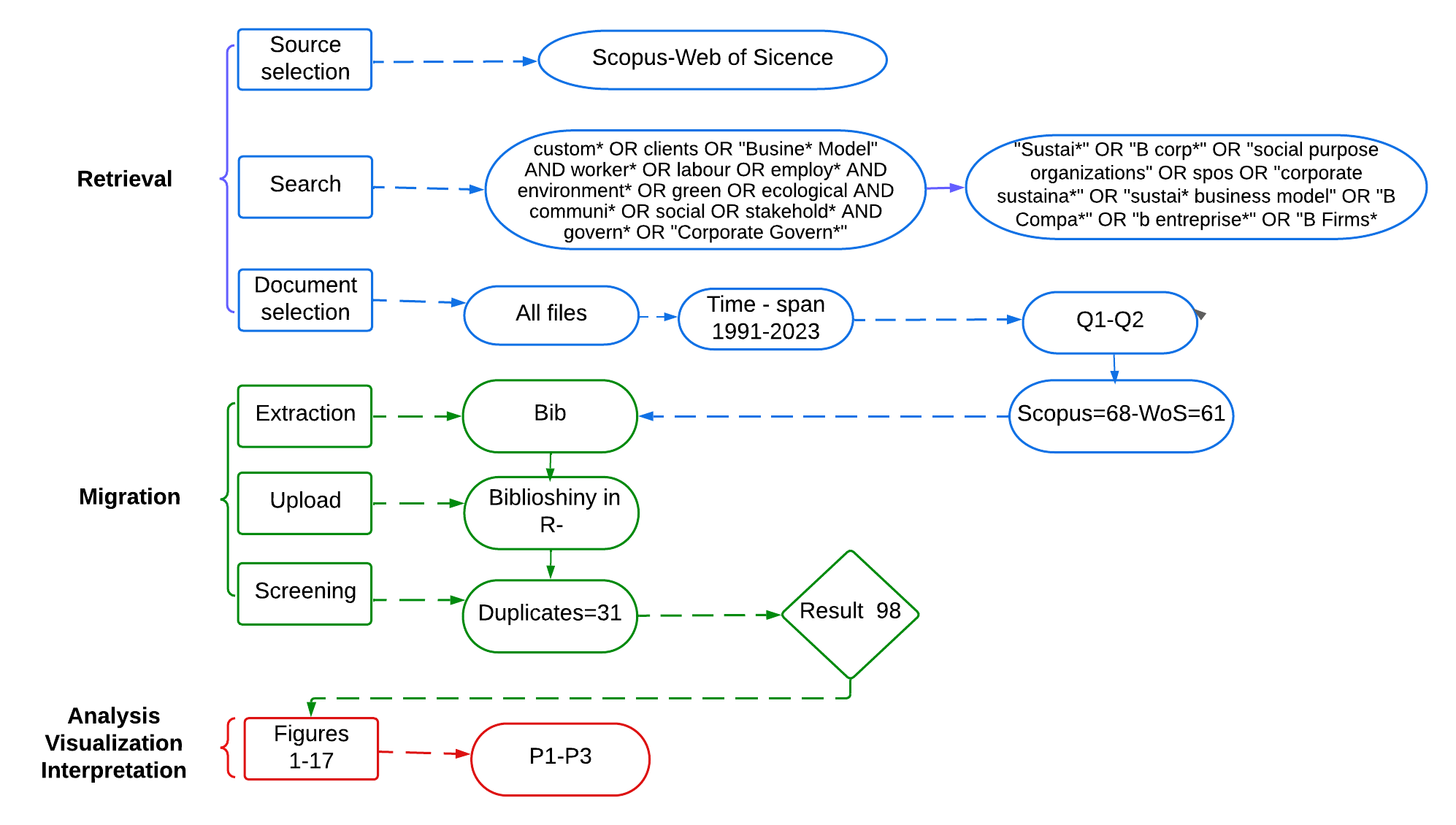
Figura 1. Estructura metodológica para la minería de datos científica
Source: Adapted from
The Scopus and Web of Science (WoS) databases were selected for document retrieval, as both are widely recognized for their coverage, reliability, and academic impact (
custom* OR clients OR "Busine* Model" AND worker* OR labour OR employ* AND environment* OR green OR ecological AND communi* OR social OR stakehold* AND govern* OR "Corporate Govern*" AND "Sustai*" OR "B corp*" OR "social purpose organizations" OR spos OR "corporate sustaina*" OR "sustai* business model" OR "B Compa*" OR "b entreprise*" OR "B Firms*".
For document selection, only those articles containing the specified search terms in the title, abstract, or keywords were included, covering the period from 1991 to the present. To ensure academic rigor, only publications in high-impact journals classified within the Q1 or Q2 quartiles were considered. This process yielded 68 documents from Scopus and 61 from WoS. The datasets were exported in BibTeX format and loaded into the RStudio environment, where the R programming language was used for data processing. Scopus files were labeled “Sco.” Using a computational algorithm, the two datasets were merged into a single file named “ScoWoS.” A total of 31 duplicate records were identified and removed, resulting in a final dataset of 98 unique documents.
To validate and enhance the robustness of the data mining process, a parallel consolidation was conducted using VantagePoint software. The Scopus dataset was exported in CSV format and the WoS dataset in plain text format. The consolidated file, titled “Scopus+WoS,” confirmed the outcome obtained in RStudio—31 duplicates removed and a final unified dataset of 98 articles.
The analysis of scientific output relied on three types of bibliometric indicators. Quantitative indicators measured productivity in terms of authors, journals, and countries. Structural indicators facilitated the identification of relationships, thematic patterns, and scientific collaboration networks. Lastly, qualitative indicators were used to assess the impact of publications, authors, journals, and countries within the relevant field of knowledge (
4. RESULTS
These indicators assess the trajectory and growth of research activity within a given field (
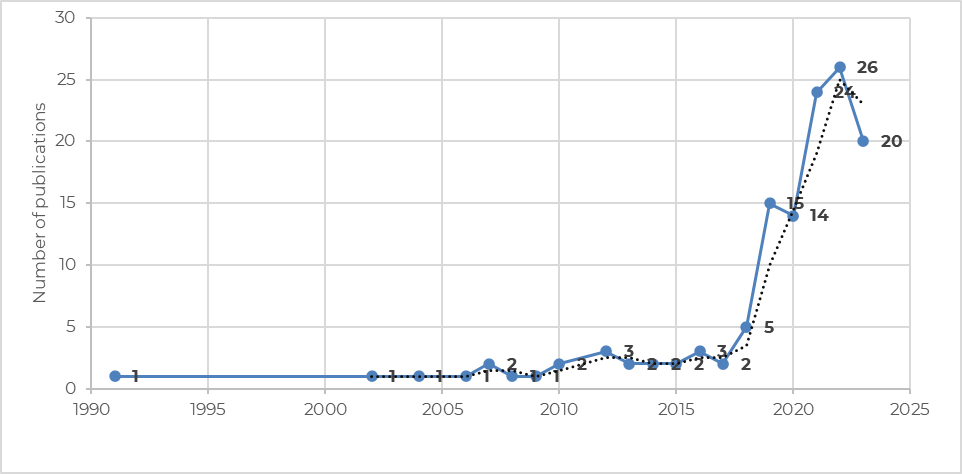
Figura 2. Comportamiento histórico de las publicaciones
Source: Authors’ own work based on Biblioshiny data.
Figure 3 shows the geographic distribution of scientific publications, with the top five countries highlighted in varying intensities of red to indicate publication volume. Ranked by the number of publications (in parentheses), the leading countries are China (15), the United Kingdom (14), Australia and India (12 each), and the United States (11).
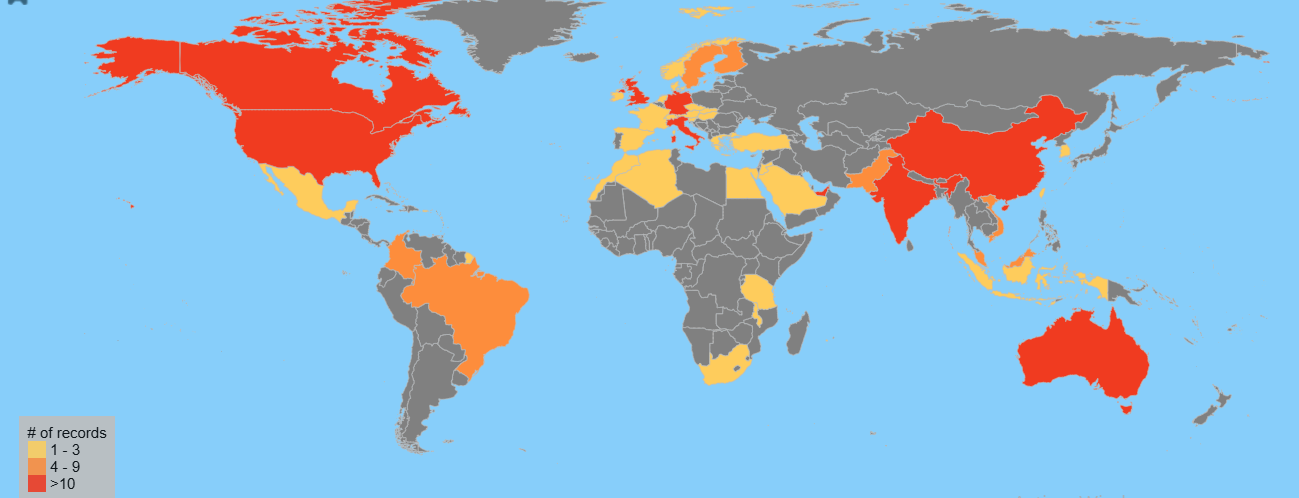
Figura 3. Distribución geográfica de las publicaciones
Source: Authors’ own work using VantagePoint.
Figure 4 displays the relationship between these five countries and the historical timeline of their contributions. Australia was the first to publish in this area (1991), followed by the United States (2002), India (2003), and finally China and the United Kingdom (2007).
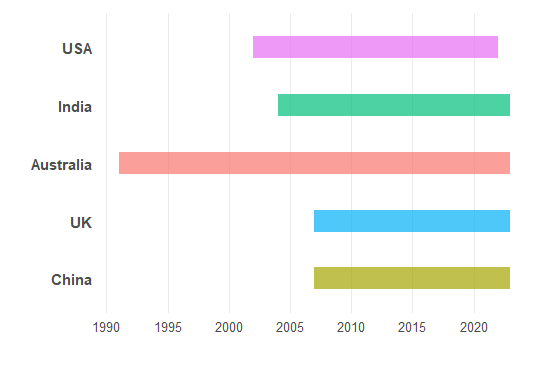
Figura 4. Distribución geográfica e histórica de las publicaciones
Source: Authors’ own work using VantagePoint.
Structural Indicators
Structural indicators, particularly those derived from bibliographic coupling, enable the identification of relationships among variables within bibliometric analysis. Figure 5 presents the research clusters formed, where the strength of scientific collaboration can be inferred from the number and distribution of partner countries represented by the nodes. The most prominent research network is led by the United Kingdom, which forms a cluster with seven countries: Germany, France, the United States, India, Australia, Malaysia, and Pakistan.
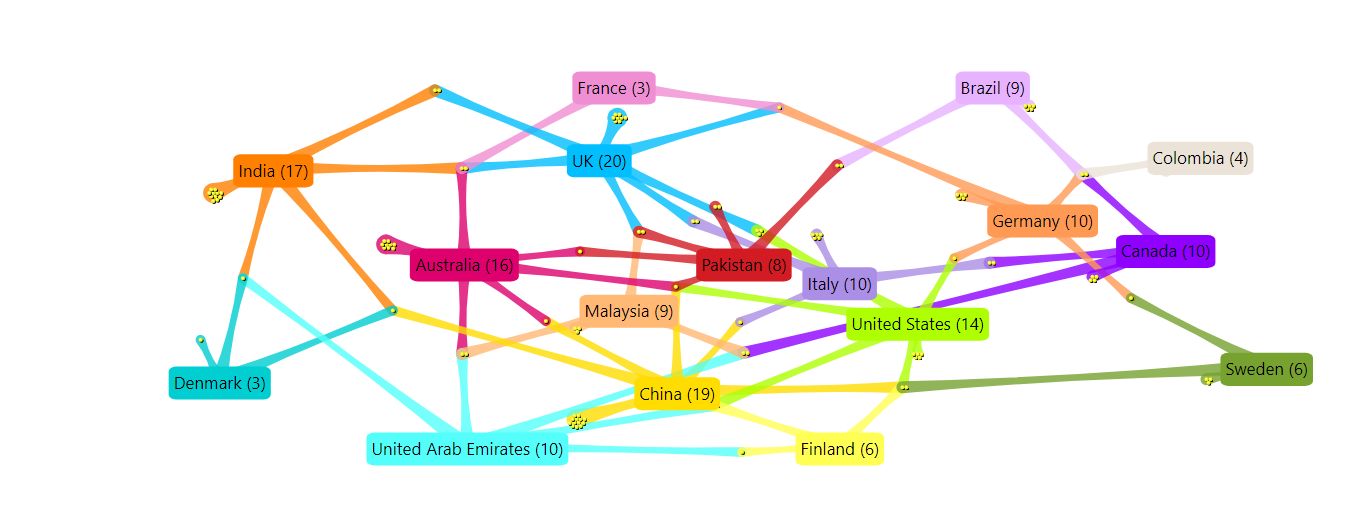
Figura 1. Clústeres de investigación
Source: Authors’ own work using VantagePoint.
In parallel, keyword analysis provides insight into prevailing research themes within the literature. Figure 6 displays a keyword cloud, visually representing author-selected keywords. The size of each term correlates with its frequency of use. The five most frequently occurring terms are: corporate social responsibility, sustainability, sustainable development, stakeholder theory, and stakeholders.
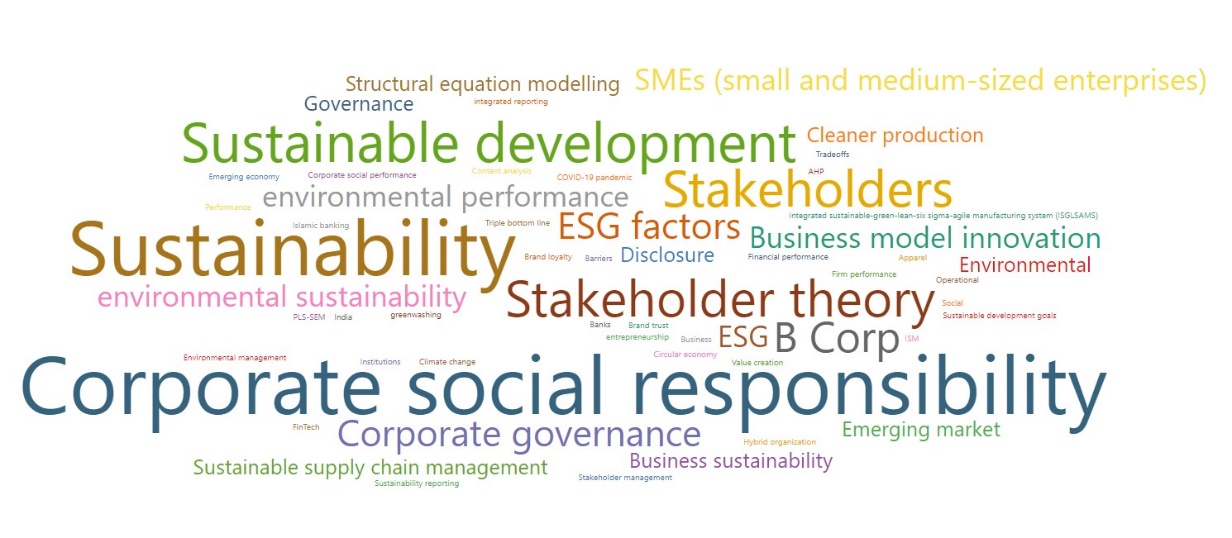
Figura 6. Nube de palabras claves
Source: Authors’ own work using VantagePoint.
Figure 7 illustrates keyword co-occurrence, where the size of each node and its proximity to others indicate importance and relational strength. The terms sustainability (red cluster), corporate social responsibility (blue cluster), and sustainable development with B Corp (purple cluster) appear in close proximity, suggesting a strong, though non-empirical, relationship among them.
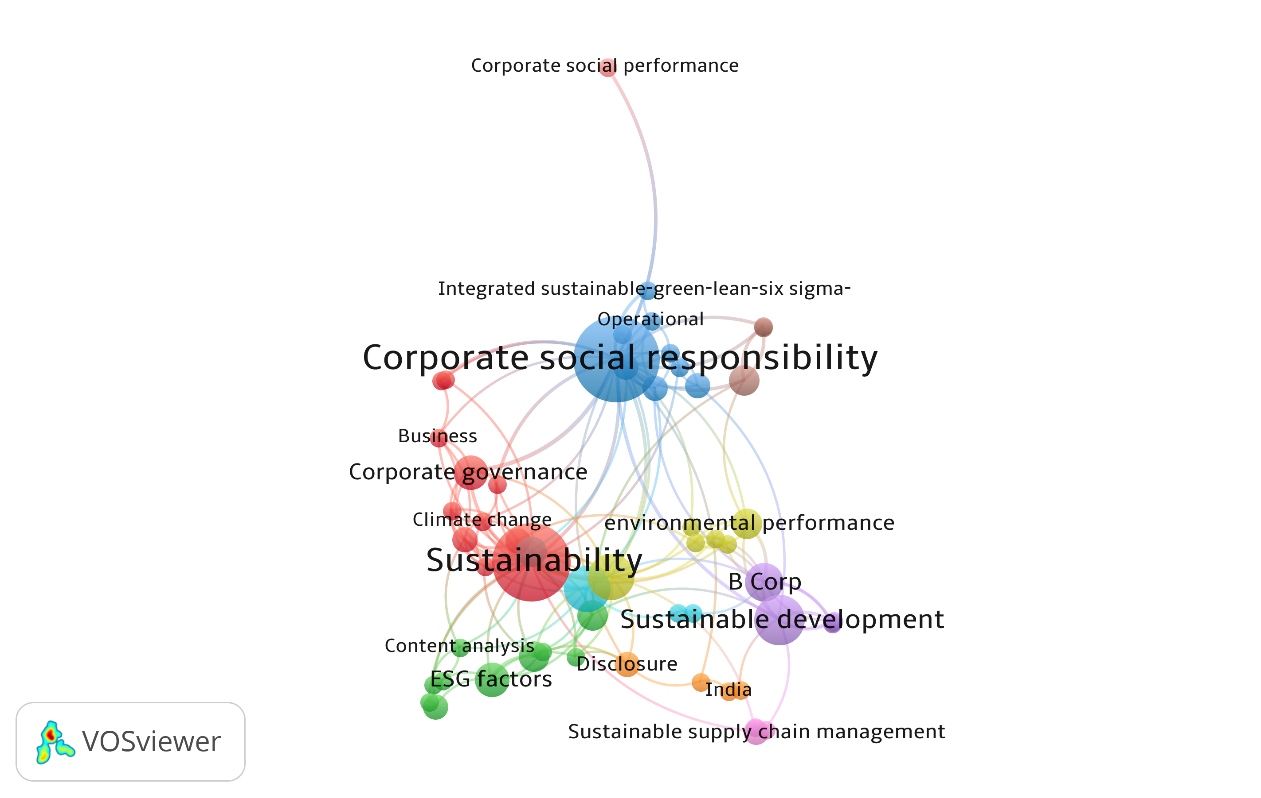
Figura 7. Coocurrencia palabras claves
Source: Authors’ own work using VOSviewer.
Figure 8 depicts keyword density. In this visualization, deeper red hues indicate a greater concentration of research activity. The dominant topics related to B Corps include, in descending order, corporate social responsibility, sustainability, stakeholders, and stakeholder theory. Emerging areas of research include B Corps and sustainable development, stakeholders and sustainable supply chains, greenwashing, tradeoffs, and environmental performance. By contrast, underexplored topics include clean production, corporate social performance, barriers in the apparel industry, and the Analytic Hierarchy Process (ahp).
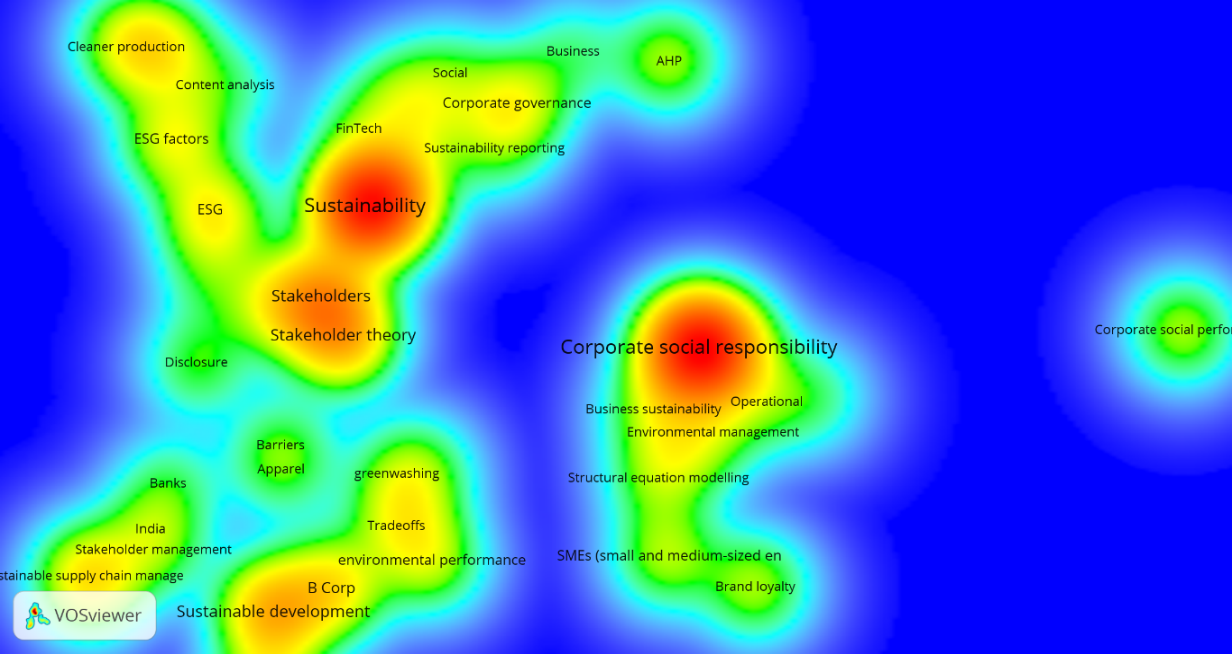
Figura 8. Densidad palabras claves
Source: Authors’ own work using VOSviewer.
Figure 9 presents a dendrogram derived from factorial analysis, grouping 15 author keywords into three clusters (blue, green, and purple). Based on multiple correspondence analysis, the clusters suggest that most documents share indexed terms within each group (
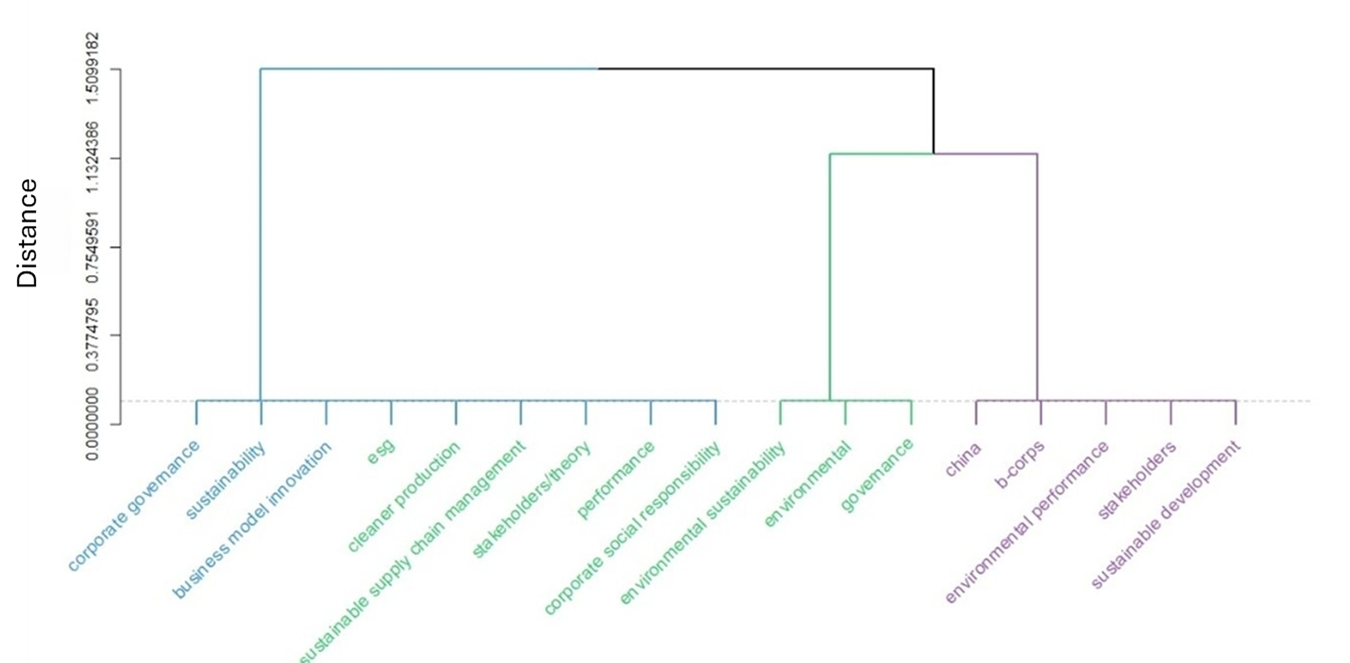
Figura 9. Dendograma palabras claves
Source: Authors’ own work using Biblioshiny.
Figure 10 displays a thematic map based on keyword clusters. It identifies corporate social responsibility, corporate governance, and performance as borderline topics between basic and emerging themes. Clean production is categorized as a niche topic, while sustainability, stakeholder theory, and environmental sustainability are classified as motor themes.
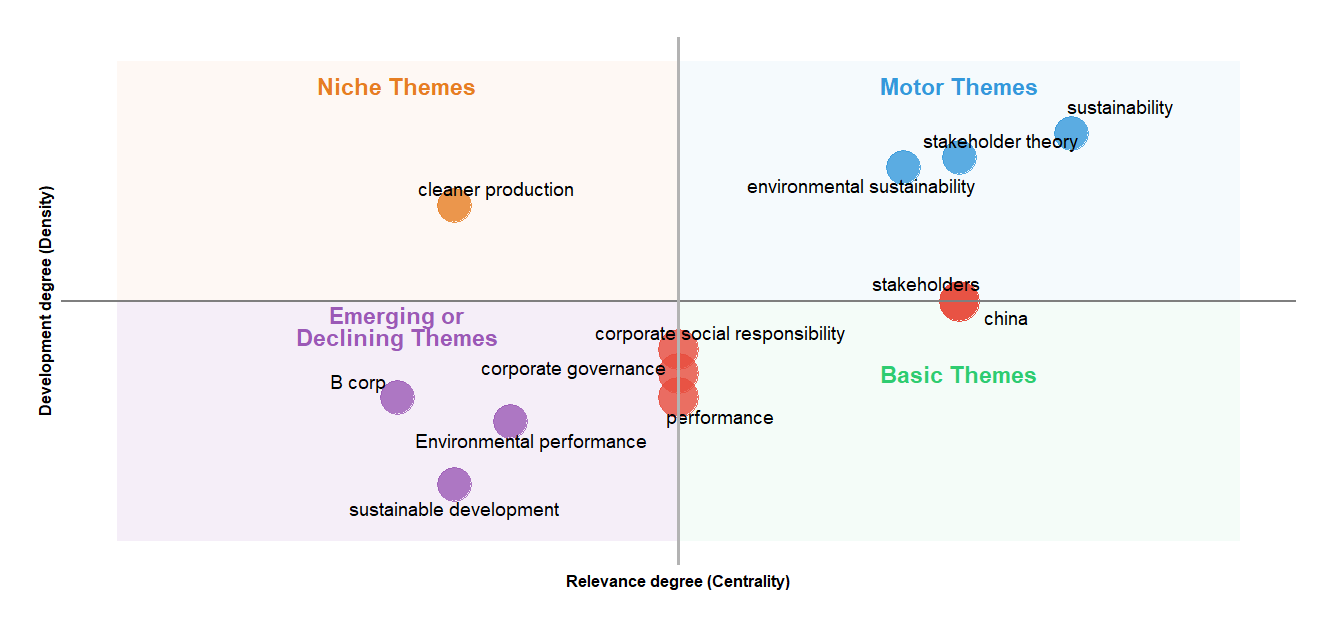
Figura 10. Mapa temático
Source: Authors’ own work using Biblioshiny.
Complementing this analysis, Figure 11 presents a bubble chart that illustrates the relationship between the top five research-producing countries and their most prominent keywords. The size of each bubble reflects the relative importance of the term within each national context. For instance, corporate social responsibility is most frequently studied in Australia; sustainability is dominant in both the United Kingdom and India; sustainable development and stakeholders are prominent in the United Kingdom; and stakeholder theory is most prevalent in China.
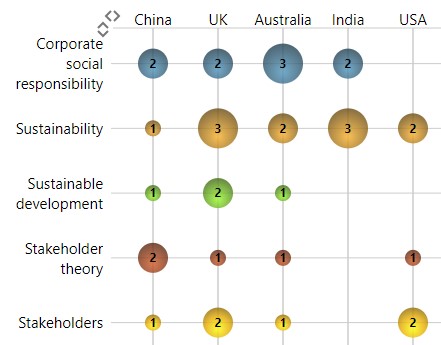
Figura 11. Relación entre países y palabras claves
Source: Authors’ own work using VantagePoint.
Finally, Figure 12 illustrates the journals most commonly associated with each of the leading countries. For example, China publishes most frequently in the Journal of Cleaner Production, while the United Kingdom leads in contributions to Business Strategy and the Environment.
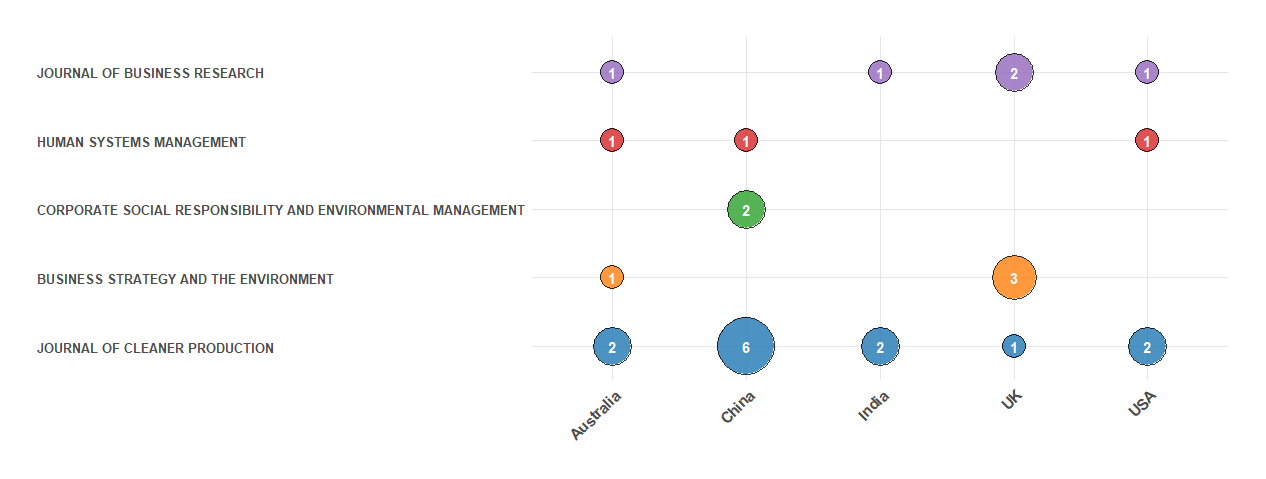
Figura 12. Relación entre países y revistas
Source: Authors’ own work using VantagePoint.
Qualitative Indicators
This type of metrics assesses the scientific excellence and impact of academic research (
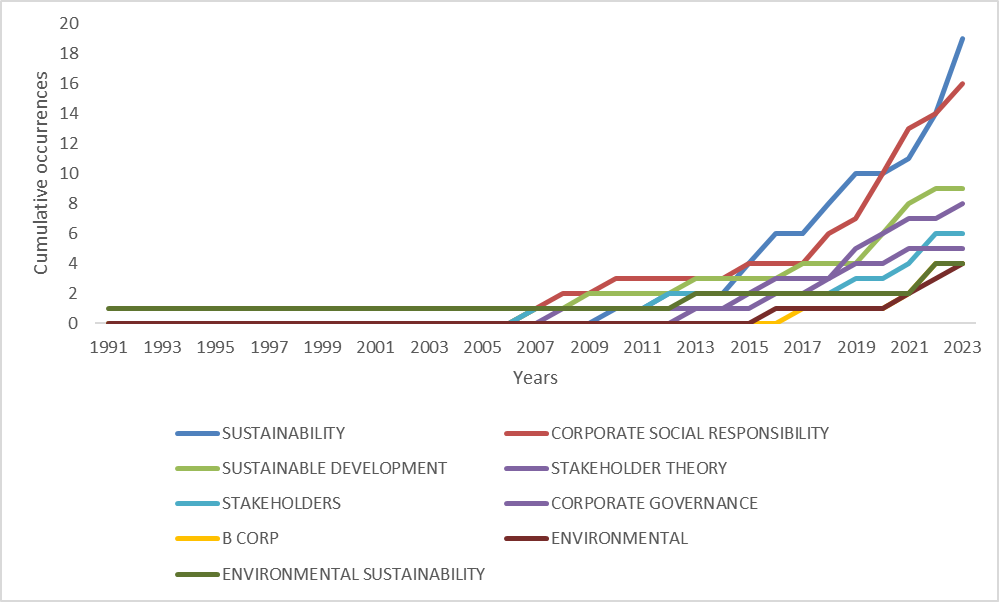
Figura 13. Ocurrencia acumulativa de palabras clave
Source: Authors’ own work using Biblioshiny.
Figure 14 identifies the leading authors in this research domain, ranked by citation frequency. The three most cited authors are, in descending order,
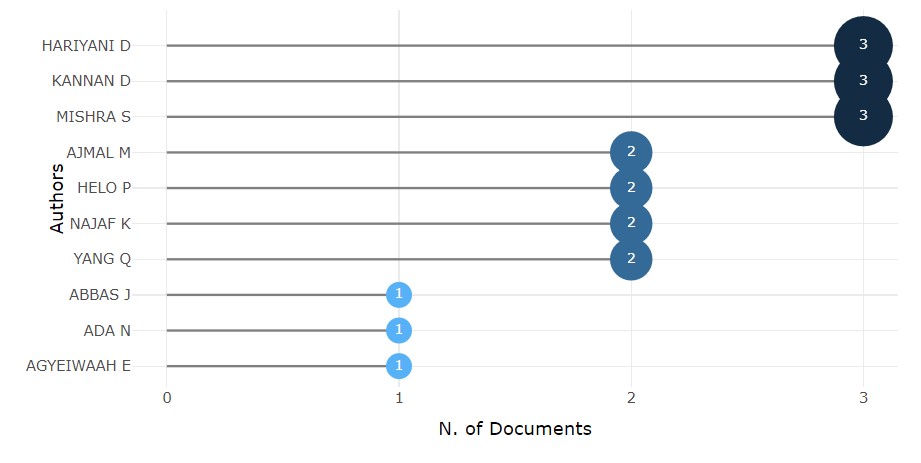
Figura 14. Principales autores de investigación
Source: Authors’ own work using Biblioshiny.
Figure 15 presents the five most cited documents in the dataset. These include
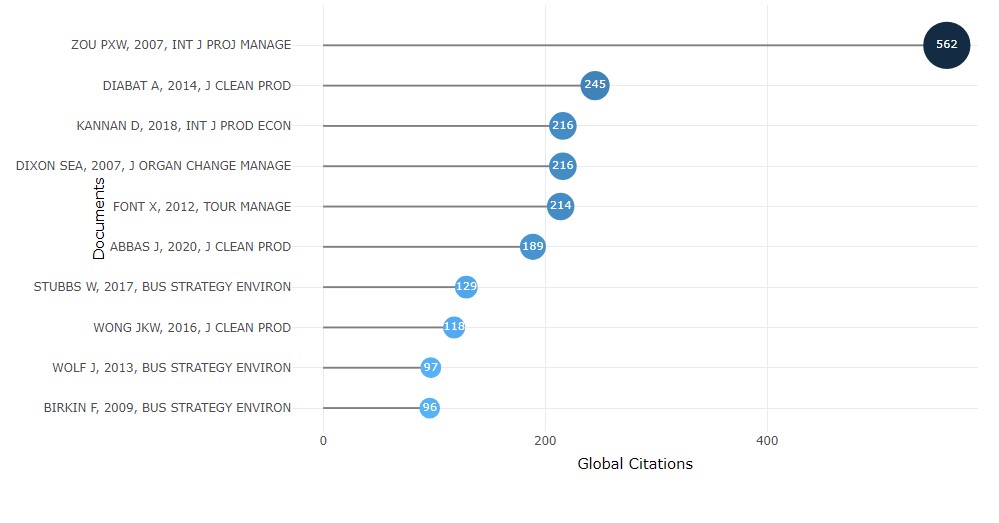
Figura 15. Documentos más citados
Source: Authors’ own work using Biblioshiny.
Figure 16 shows the spectroscopic analysis of references by year of publication (black line), along with the deviation from the five-year median. This analysis follows three steps: identifying the documents to be analyzed, evaluating the number of references cited by year, and interpreting the results (
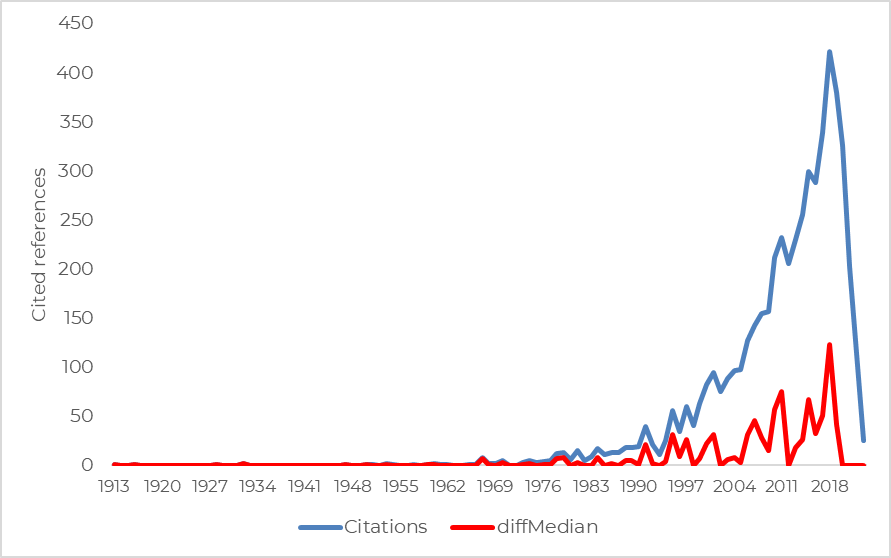
Figura 16. Análisis espectroscópico
Source: Authors’ own work using Biblioshiny.
Evolution of Research on B Corps and Sustainable Development
This analysis used the metaphorical figure of a tree (
For example, the natural-resource-based view proposed by
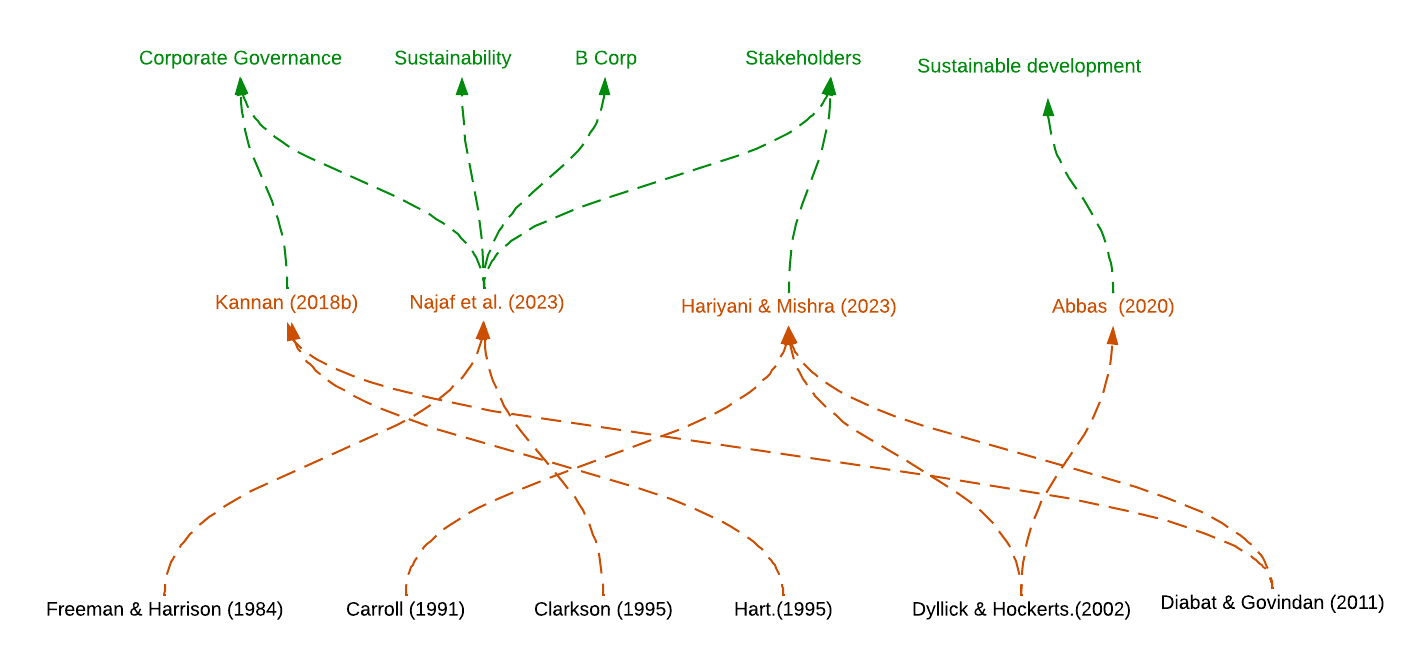
Figura 17. Árbol del conocimiento
Source: Authors’ own work.
This study also identifies CSR as a predominant theme across the analyzed literature, consistent with Carroll’s (1991) framework, which positions CSR as essential for corporate legitimacy. Furthermore, CSR emerges as a differentiation strategy in B Corps, aligning with
In addition, although the research points to a limited number of studies on corporate governance in B Corps, authors like
Regarding China and the United Kingdom’s leadership in B Corps research, consistent with the findings of
5. DISCUSSION
The literature analysis reveals that, although the concept of B Corps emerged in 2006 and the first publications in high-impact journals appeared in 2017 (Figure 13), the underlying business philosophy is rooted in the definition of sustainable development proposed by
Despite the introduction of the sustainable development concept in 1987, companies have historically struggled to achieve key sustainability objectives, such as economic efficiency, equity, self-governance, social responsibility, and environmental sustainability (
The findings of this study confirm that the relationship between B Corps and sustainable development is both emerging and gaining traction in scholarly research (Figures 6–10, 13). This trend is driven by a growing vision that integrates social, economic, and environmental factors aimed at achieving sustainable development, prompting companies to transform how they conduct their activities. This aligns with the assertions of
In this regard, B Corps have emerged as key allies in revitalizing progress toward the SDG, particularly in the post-COVID-19 context (
The above calls into question any assumptions regarding a direct, linear relationship between B Corps and sustainable outcomes. As illustrated in the results (Figure 10), the topic remains in an emergent stage—still developing but with growth potential and increasing global relevance due to new dynamics surrounding sustainability. In support of this critical perspective,
Despite the contradictions surrounding the theories that link B Corps and sustainability, there are also well-established foundations and substantive contributions that continue to support the integration of these two critical concepts, ultimately favoring sustainable business growth.
Limitations
Several important limitations of this study should be acknowledged. First, the analysis did not incorporate research from databases that feature regionally focused studies, particularly those addressing Ibero-American contexts. Future studies could incorporate documents from databases such as SciELO, allowing for a more nuanced exploration of regional dynamics. Additionally, expanding the search to include other types of documents could provide a more holistic view of the research topics.
Moreover, future studies could benefit from applying multivariate statistical models to evaluate the effects of B Corp dimensions on sustainable performance. These models could be further validated and enhanced through the integration of artificial intelligence techniques, such as artificial neural networks, to overcome the limitations of traditional statistical approaches.
6. CONCLUSIONS
As evidenced by quantitative indicators, there is a clear upward trend in scientific publications related to B Corps and sustainable business practices. The number of publications reached a historic high of 26, reflecting a growing interest in sustainable organizational operations, driven by global concerns such as climate change, global warming, and widespread poverty and inequality. The quantitative analysis also revealed that China and the United Kingdom are leading contributors to this field, with the United Kingdom heading the most robust research cluster. This leadership may be attributed to strong research infrastructure and regulatory frameworks that promote knowledge production.
Structural indicators highlight significant patterns in the behavior of research topics. Keyword analysis demonstrated a strong emphasis on CSR and sustainability; however, studies that explicitly connect these themes to B Corps remain limited. Research evolution further underscores the importance of motor themes such as sustainable performance, governance within the framework of sustainable development, and the socio-economic impacts of trade. These findings suggest that aligning B Corp strategies with these topics could strengthen their social, environmental, and financial impact across different geographical contexts. In contrast, corporate social performance remains a notably underexplored topic, representing an opportunity to develop a theoretical framework tailored to B Corps.
Moreover, the study confirms a strong association between B Corps and sustainable development, particularly as a strategic mechanism for achieving the SDG. Thus, B Corps emerge as essential tools for decision-makers seeking to advance corporate sustainability through the alignment of economic, environmental, and social dimensions. As such, they offer a solid basis for meeting the SDG and regaining momentum lost during the COVID-19 pandemic.
Finally, although the current body of research on B Corps has addressed topics such as corporate governance, social responsibility, and stakeholders, it often does so in a fragmented manner. Consequently, future research should aim for greater theoretical integration and should explore the practical implications of B Corps. Particularly, attention should be given to the implementation of sustainable practices across various geographic contexts and the development of models that assess the impact of corporate governance on sustainable performance.
CONFLICTS OF INTEREST
The authors declare that they have no financial, professional, or personal conflicts of interest that could inappropriately influence the results obtained or the interpretations proposed.
AUTHOR CONTRIBUTIONS
To achieve the objectives of this study, each author made the following contributions:
Alfredo Enrique Sanabria-Ospino: Data mining using VantagePoint and Biblioshiny in R, drafting of the manuscript, graphical interpretation.
Diana Milena López García: Data mining using VOSviewer, drafting of the manuscript, graphical interpretation, figure design.
Fabio Andrés Puerta-Guardo: Proofreading, graphical analysis and interpretation, drafting of the discussion and conclusions.
William Stive Fajardo-Moreno: Graphical analysis, drafting of the conclusions, proofreading.
Ana Susana Cantillo-Orozco: Literature review, graphical analysis, proofreading.
REFERENCES
- arrow_upward Abbas, J. (2020). Impact of total quality management on corporate green performance through the mediating role of corporate social responsibility. Journal of Cleaner Production, 242, 118458. https://doi.org/10.1016/j.jclepro.2019.118458
- arrow_upward Acevedo-Duque, Á., Álvarez-Herranz, A. P., y Artigas, W. (2023). Contribución a la marca país a través de la sostenibilidad de los procesos productivos en Chile: Empresas B Corp. Retos, 13(26), 253–271. https://doi.org/10.17163/ret.n26.2023.05
- arrow_upward Ada, N. (2022). Sustainable Supplier Selection in Agri-Food Supply Chain Management. International Journal of Mathematical, Engineering and Management Sciences, 7(1), 115–130. https://doi.org/10.33889/IJMEMS.2022.7.1.008
- arrow_upward Ardito, L., Dangelico, R. M., y Messeni Petruzzelli, A. (2021). The link between female representation in the boards of directors and corporate social responsibility: Evidence from B corps. Corporate Social Responsibility and Environmental Management, 28(2), 704–720. https://doi.org/10.1002/csr.2082
- arrow_upwardAttanasio, G., Battistella, C., y Chizzolini, E. (2025). B‐Corp Certification: Systematic Literature Review and Research Agenda. Corporate Social Responsibility and Environmental Management, 23(3), 3729-3769. https://doi.org/10.1002/csr.3118
- arrow_upward Bermeo-Giraldo, M. C., Mosquera González, D., Moreno López, G. A., y Rodríguez Zavala, L. (2023). Tendencias investigativas en el área de historia empresarial: una aproximación bibliométrica. Revista CEA, 9(20), e2454. https://doi.org/10.22430/24223182.2454
- arrow_upward Boni, L., Chiodo, V., Gerli, F., y Toschi, L. (2024). Do prosocial‐certified companies walk the talk? An analysis of B Corps’ contributions to Sustainable Development Goals. Business Strategy and the Environment, 33(3), 2518–2532. https://doi.org/10.1002/bse.3612
- arrow_upward Bringas-Fernández, V., López-Gutiérrez, C., y Pérez, A. (2024). B-CORP certification and financial performance: A panel data analysis. Heliyon, 10(17), e36915. https://doi.org/10.1016/j.heliyon.2024.e36915
- arrow_upward Brundtland, G. H. (1987). Our common future—Call for action. Environmental Conservation, 14(4), 291–294. https://doi.org/10.1017/S0376892900016805
- arrow_upward Brundtland, G. H., y Khalid, M. (1987). Our common future. Oxford University Press.
- arrow_upward Carroll, A. B. (1991). The pyramid of corporate social responsibility: Toward the moral management of organizational stakeholders. Business Horizons, 34(4), 39–48. https://doi.org/10.1016/0007-6813(91)90005-G
- arrow_upward Cantele, S., Leardini, C., y Piubello Orsini, L. (2023). Impactful B corps: A configurational approach of organizational factors leading to high sustainability performance. Corporate Social Responsibility and Environmental Management, 30(3), 1104-1120. https://doi.org/10.1002/csr.2407
- arrow_upward Ceccoli, R. D., Bianchi, D. A., Zocchi, S. B., y Rial, D. V. (2024). Mapping the field of aroma ester biosynthesis: A review and bibliometric analysis. Process Biochemistry, 146, 587–600. https://doi.org/10.1016/j.procbio.2024.10.002
- arrow_upward Chadegani, A. A., Salehi, H., Yunus, M. M., Farhadi, H., Fooladi, M., Farhadi, M., y Ebrahim, N. A. (2013). A comparison between two main academic literature collections: Web of Science and Scopus databases. Asian Social Science, 9(5). https://www.ccsenet.org/journal/index.php/ass/article/view/26960
- arrow_upward Chavan, M., Gowan, S., y Vogeley, J. (2023). Collaborative corporate social responsibility praxis: case studies from India. Social Responsibility Journal, 19(2), 229–248. https://doi.org/10.1108/SRJ-06-2021-0216
- arrow_upward Chen, W. D., y Marquis, C. (2022). Remaking capitalism: The movement for sustainable business and the future of the corporation. Management Decision, 60(11), 2897–2903. https://doi.org/10.1108/MD-08-2021-1086
- arrow_upward Chistov, V., Aramburu, N., y Carrillo-Hermosilla, J. (2021). Open eco-innovation: A bibliometric review of emerging research. Journal of Cleaner Production, 311, 127627. https://doi.org/10.1016/j.jclepro.2021.127627
- arrow_upward Clarkson, M. E. (1995). A stakeholder framework for analyzing and evaluating corporate social performance. Academy of Management Review, 20(1), 92–117. https://doi.org/10.2307/258888
- arrow_upward Da Silva, M. A., Borchardt, M., Pereira, G. M., Cardoso, J., Milan, G. S., y Leite, R. L. (2023). Developing a Sustainable Business Model in the Bioeconomy: A Case Study of an Amazon Rainforest Enterprise. International Journal of Sustainable Development and Planning, 18(9), 2703–2712. https://doi.org/10.18280/ijsdp.180909
- arrow_upward Diabat, A., y Govindan, K. (2011). An analysis of the drivers affecting the implementation of green supply chain management. Resources, Conservation and Recycling, 55(6), 659–667. https://doi.org/10.1016/j.resconrec.2010.12.002
- arrow_upward Diabat, A., Kannan, D., y Mathiyazhagan, K. (2014). Analysis of enablers for implementation of sustainable supply chain management – A textile case. Journal of Cleaner Production, 83, 391–403. https://doi.org/10.1016/j.jclepro.2014.06.081
- arrow_upward Diez-Busto, E., Sanchez-Ruiz, L., y Fernandez-Laviada, A. (2021). The B Corp Movement: A Systematic Literature Review. Sustainability, 13(5), 2508. https://doi.org/10.3390/su13052508
- arrow_upward Dixon, S. E. A., y Clifford, A. (2007). Ecopreneurship – a new approach to managing the triple bottom line. Journal of Organizational Change Management, 20(3), 326–345. https://doi.org/10.1108/09534810710740164
- arrow_upward Dyllick, T., y Hockerts, K. (2002). Beyond the business case for corporate sustainability. Business Strategy and the Environment, 11(2), 130–141. https://doi.org/10.1002/bse.323
- arrow_upward Escudero, S. B., Jestratijevic, I., Short, J. C., y Wolfe, M. T. (2023). B Corp certification in the age of fast fashion: Using hierarchical clustering and correspondence factor analysis to highlight social entrepreneurial advancement in the fashion industry. Journal of Business Venturing Insights, 20, e00412. https://doi.org/10.1016/j.jbvi.2023.e00412
- arrow_upward Fatimah, Y. A., Kannan, D., Govindan, K., y Hasibuan, Z. A. (2023). Circular economy e-business model portfolio development for e-business applications: Impacts on ESG and sustainability performance. Journal of Cleaner Production, 415, 137528. https://doi.org/10.1016/j.jclepro.2023.137528
- arrow_upward Ferioli, M., Gazzola, P., Grechi, D., y Vătămănescu, E.-M. (2022). Sustainable behaviour of B Corps fashion companies during Covid-19: A quantitative economic analysis. Journal of Cleaner Production, 374, 134010. https://doi.org/10.1016/j.jclepro.2022.134010
- arrow_upward Ficco, C., Bersía, P., Bressan, C., y Herrera-Rodríguez, E. E. (2023). Contribution of Argentinian B Corporations to Sustainable Development Goals: Empirical Analysis Based on Their Practices and Solutions to Socioenvironmental Problems. Sustainability, 16(1), 6. https://doi.org/10.3390/su16010006
- arrow_upward Freeman, R. E. (2010). Strategic Management: A Stakeholder Approach. Working Paper No. 01-02 [paper]. Darden Graduate School of Business Administration, University of Virginia.
- arrow_upward García-Villar, C., y García-Santos, J. M. (2021). Indicadores bibliométricos para evaluar la actividad científica. Radiología, 63(3), 228–235. https://doi.org/10.1016/j.rx.2021.01.002
- arrow_upward Gazzola, P., Paterson, A., Amelio, S., y Ferioli, M. (2022). Certified B Corporations and Innovation: Crowdfunding as a Tool for Sustainability. Sustainability, 14(24), 16639. https://doi.org/10.3390/su142416639
- arrow_upward Hariyani, D., y Mishra, S. (2023). An analysis of drivers for the adoption of integrated sustainable-green-lean-six sigma-agile manufacturing system (ISGLSAMS) in Indian manufacturing industries. Benchmarking An International Journal, 30(4), 1073–1109. https://doi.org/10.1108/BIJ-08-2021-0488
- arrow_upward Hariyani, D., y Mishra, S. (2024). A descriptive statistical analysis of enablers for integrated sustainable-green-lean-six sigma-agile manufacturing system (ISGLSAMS) in Indian manufacturing industries. Benchmarking An International Journal, 31(3), 824-865. https://doi.org/10.1108/BIJ-06-2022-0344
- arrow_upward Haunschild, R., y Bornmann, L. (2022). Reference publication year spectroscopy (RPYS) in practice: a software tutorial. Scientometrics, 127(12), 7253–7271. https://doi.org/10.1007/s11192-022-04369-8
- arrow_upward Hart, S. L. (1995). A natural-resource-based view of the firm. Academy of Management Review, 20(4), 986–1014. https://doi.org/10.2307/258963
- arrow_upward Hoyos, O., Castro Duque, M., Toro León, N., Trejos Salazar, D., Montoya-Restrepo, L. A., Montoya-Restrepo, I. A., y Duque, P. (2023). Gobierno corporativo y desarrollo sostenible: un análisis bibliométrico. Revista CEA, 9(19), e2190. https://doi.org/10.22430/24223182.2190
- arrow_upward Jastrzębska, E. (2021). Ruch B Corp wobec wyzwań zrównoważonego rozwoju w dobie pandemii COVID-19 – wybrane polskie przykłady. Studia Ecologiae et Bioethicae, 19(2), 63–75. https://doi.org/10.21697/seb.2021.19.2.06
- arrow_upward Johri, A., Joshi, P., Kumar, S., y Joshi, G. (2024). Metaverse for Sustainable Development in a bibliometric analysis and systematic literature review. Journal of Cleaner Production, 435, 140610. https://doi.org/10.1016/j.jclepro.2024.140610
- arrow_upward Kannan, D. (2018). Role of multiple stakeholders and the critical success factor theory for the sustainable supplier selection process. International Journal of Production Economics, 195, 391–418. https://doi.org/10.1016/j.ijpe.2017.02.020
- arrow_upward Kirst, R. W., Borchardt, M., De Carvalho, M. N. M., y Pereira, G. M. (2021). Best of the world or better for the world? A systematic literature review on benefit corporations and certified B corporations contribution to sustainable development. Corporate Social Responsibility and Environmental Management, 28(6), 1822–1839. https://doi.org/10.1002/csr.2160
- arrow_upward Lähteenkorva, M., Tynjälä, P., y Kallio, E. K. (2025). From knowledge to wisdom in sustainable management education - Insights from a B Corp course. The International Journal of Management Education, 23(2), 101148. https://doi.org/10.1016/j.ijme.2025.101148
- arrow_upward Le, T. T. (2022). Corporate social responsibility and SMEs’ performance: mediating role of corporate image, corporate reputation and customer loyalty. International Journal of Emerging Markets, 18(10), 4565-4590. https://doi.org/10.1108/IJOEM-07-2021-1164
- arrow_upward Leopizzi, R., y Lippolis, S. (2024). How do companies show their contributions to the SDGs? The B-Corps’ experience. En A. Venturelli y C. Mio (eds.), The Routledge Handbook of Accounting for the Sustainable Development Goals (pp. 502–516). Routledge. https://doi.org/10.4324/9781003404118-33
- arrow_upward Mahna, T., Jain, S., y Yadav, S. S. (2025). Determining future research trends in Sustainable Foreign Direct Investment: A bibliometric and content analysis. Research in International Business and Finance, 77(A), 102930. https://doi.org/10.1016/j.ribaf.2025.102930
- arrow_upward Mandal, P. C. (2024). Balancing Corporate Social Responsibility and Corporate Profitability: A Marketing Perspective. En D. A. M. Roache (aut.), Ethical Quandaries in Business Practices: Exploring Morality and Social Responsibility (pp. 53-74). IGI Global. https://doi.org/10.4018/979-8-3693-3948-0.ch003
- arrow_upward Mann, M., Byun, S.-E., y Ginder, W. (2021). B Corps’ Social Media Communications during the COVID-19 Pandemic: Through the Lens of the Triple Bottom Line. Sustainability, 13(17), 9634. https://doi.org/10.3390/su13179634
- arrow_upward Metz, D., Ilieș, L., y Nistor, R. L. (2020). The Impact of Organizational Culture on Customer Service Effectiveness from a Sustainability Perspective. Sustainability, 12(15), 6240. https://doi.org/10.3390/su12156240
- arrow_upward Michán, L., y Muñoz-Velasco, I. (2013). Scientometrics for the medical sciences: Definitions, applications and perspectives. Investigación en Educación Médica, 2(6), 100–106. https://doi.org/10.1016/S2007-5057(13)72694-2
- arrow_upward Mion, G., Bonfanti, A., De Crescenzo, V., y Loza Adaui, C. R. (2024). Mission statement and social impact: Shedding light on the contribution of Italian B corps to society. Long Range Planning, 57(1), 102377. https://doi.org/10.1016/j.lrp.2023.102377
- arrow_upward Montiel Vargas, A. (2023). B lab and the process of certificating B corps. En H. Peter, C. Vargas Vasserot y J. Alcalde Silva (eds), The International Handbook of Social Enterprise Law (pp. 281-299). Springer. https://doi.org/10.1007/978-3-031-14216-1_13
- arrow_upward Moroz, P. W., y Gamble, E. N. (2021). Business model innovation as a window into adaptive tensions: Five paths on the B Corp journey. Journal of Business Research, 125, 672–683. https://doi.org/10.1016/j.jbusres.2020.01.046
- arrow_upward Najaf, K., Haj Khalifa, A., Obaid, S. M., Rashidi, A. A., y Ataya, A. (2023). Does sustainability matter for Fintech firms? Evidence from United States firms. Competitiveness Review: An International Business Journal, 33(1), 161–180. https://doi.org/10.1108/CR-10-2021-0132
- arrow_upward Nigri, G., Del Baldo, M., y Agulini, A. (2020). The Mondora Method: Quantum Leaders in Benefit Corporations. Entrepreneurship Research Journal, 10(4), 20190309. https://doi.org/10.1515/erj-2019-0309
- arrow_upward Onbhuddha, R., y Ogata, S. (2024). The influence of stakeholder on a company’s sustainable practice: Insights from the Japanese perspective. Journal of Cleaner Production, 436, 140402. https://doi.org/10.1016/j.jclepro.2023.140402
- arrow_upward Osterwalder, A., Pigneur, Y., y Tucci, C. L. (2005). Clarifying business models: Origins, present, and future of the concept. Communications of the Association for Information Systems, 16(1), 1. https://doi.org/10.17705/1CAIS.01601
- arrow_upward Paelman, V., Van Cauwenberge, P., y Vander Bauwhede, H. (2021). The Impact of B Corp Certification on Growth. Sustainability, 13(13), 7191. https://doi.org/10.3390/su13137191
- arrow_upward Palácios, H., De Almeida, H., y Sousa, M. J. (2021). A Bibliometric Analysis of Service Climate as a Sustainable Competitive Advantage in Hospitality. Sustainability, 13(21), 12214. https://doi.org/10.3390/su132112214
- arrow_upward Platonova, E., Asutay, M., Dixon, R., y Mohammad, S. (2018). The impact of corporate social responsibility disclosure on financial performance: Evidence from the GCC Islamic banking sector. Journal of Business Ethics, 151, 451–471. https://doi.org/10.1007/s10551-016-3229-0
- arrow_upward Pollmeier, T., Hirschmann, M., y Fisch, C. (2025). Exploring the signaling effect of B Corp certification in entrepreneurial finance. Journal of Cleaner Production, 493, 144978. https://doi.org/10.1016/j.jclepro.2025.144978
- arrow_upward Poponi, S., Colantoni, A., Cividino, S. R. S., y Mosconi, E. (2019). The Stakeholders’ Perspective within the B Corp Certification for a Circular Approach. Sustainability, 11(6), 1584. https://doi.org/10.3390/su11061584
- arrow_upward Primc, K., Dominko, M., y Slabe-Erker, R. (2021). 30 years of energy and fuel poverty research: A retrospective analysis and future trends. Journal of Cleaner Production, 301, 127003. https://doi.org/10.1016/j.jclepro.2021.127003
- arrow_upward Putnam Rankin, C., y Matthews, T. L. (2020). Patterns of B Corps Certification: The Role of Institutional, Economic, and Political Resources. Societies, 10(3), 72. https://doi.org/10.3390/soc10030072
- arrow_upward Ramos-Escobar, E. A., García-Pérez-de-Lema, D., Castillo-Vergara, M., y Valdez-Juárez, L. E. (2022). Immigrant entrepreneurs: A review of the literature and an agenda for future investigations. International Journal of Intercultural Relations, 91, 170–190. https://doi.org/10.1016/j.ijintrel.2022.09.009
- arrow_upward Rapti, S., Tselegkaridis, S., Sapounidis, T., y Triantafyllou, S. A. (2025). A bibliometric and content analysis of educational robotics’ impact on communication, collaboration, critical thinking, and creativity in kindergarten. Thinking Skills and Creativity, 57, 101849. https://doi.org/10.1016/j.tsc.2025.101849
- arrow_upward Rastogi, T., Agarwal, B., y Gopal, G. (2024). Exploring the nexus between sustainable marketing and customer loyalty with the mediating role of brand image. Journal of Cleaner Production, 440, 140808. https://doi.org/10.1016/j.jclepro.2024.140808
- arrow_upward Sachdeva, S., Ramesh, L., Mathew, M., y K. S., M. (2023). Measurement of Corporate Social Responsibility of Financial Companies in the Indian Context. Indian Journal of Finance, 17(12), 56. https://doi.org/10.17010/ijf/2023/v17i12/172059
- arrow_upward Shakeel, J., Mardani, A., Chofreh, A. G., Goni, F. A., y Klemeš, J. J. (2020). Anatomy of sustainable business model innovation. Journal of Cleaner Production, 261, 121201. https://doi.org/10.1016/j.jclepro.2020.121201
- arrow_upward Silva, V., Lima, V., Sá, J. C., Fonseca, L., y Santos, G. (2022). B Impact Assessment as a Sustainable Tool: Analysis of the Certification Model. Sustainability, 14(9), 5590. https://doi.org/10.3390/su14095590
- arrow_upward Stubbs, W. (2017). Characterising B Corps as a sustainable business model: An exploratory study of B Corps in Australia. Journal of Cleaner Production, 144, 299-312. http://dx.doi.org/10.1016/j.jclepro.2016.12.093
- arrow_upward Tabares, S. (2021a). Certified B corporations: An approach to tensions of sustainable-driven hybrid business models in an emerging economy. Journal of Cleaner Production, 317, 128380. https://doi.org/10.1016/j.jclepro.2021.128380
- arrow_upward Tabares, S. (2021b). Do hybrid organizations contribute to Sustainable Development Goals? Evidence from B Corps in Colombia. Journal of Cleaner Production, 280, 124615. https://doi.org/10.1016/j.jclepro.2020.124615
- arrow_upward Tabares, S., Morales, A., Calvo, S., y Molina Moreno, V. (2021). Unpacking B Corps’ Impact on Sustainable Development: An Analysis from Structuration Theory. Sustainability, 13(23), 13408. https://doi.org/10.3390/su132313408
- arrow_upward Thomas, A. E., Bhaumik, A., y Aruja, J. M. (2023). The Impact of Corporate Governance Practices on Firm-Level Innovations and their Market Value : Empirical Evidence from India. Indian Journal of Finance, 17(11), 26. https://doi.org/10.17010/ijf/2023/v17i11/170424
- arrow_upward Turnbull, S. (1992). Re-Inventing Corporations. Human Systems Management, 10(3), 169–186. https://doi.org/10.3233/HSM-1991-10303
- arrow_upward Vicente-Pascual, J. A., Paradinas Márquez, M. del C., y González-Rodrigo, E. (2024). Key elements for achieving high impact and their relationship to the SDGs: Analysis of BCorp-certified companies in the primary sector. Technological Forecasting and Social Change, 201, 123176. https://doi.org/10.1016/j.techfore.2023.123176
- arrow_upward Xiang, G., He, Z., Feng, T., y Feng, Z. (2024). Is B Corp certification sufficiently attractive to emerging markets? A conceptual study of B Corps in China. International Journal of Emerging Markets. https://doi.org/10.1108/IJOEM-09-2022-1350
- arrow_upward Xu, E. G., Graves, C., Shan, Y. G., y Yang, J. W. (2022). The mediating role of corporate social responsibility in corporate governance and firm performance. Journal of Cleaner Production, 375, 134165. https://doi.org/10.1016/j.jclepro.2022.134165
- arrow_upward Yang, S.-S., Wu, W.-M., Pang, J.-W., He, L., Ding, M.-Q., Li, M.-X., Zhao, Y.-L., Sun, H.-J., Xing, D.-F., Ren, N.-Q., Yang, J., Criddle, C. S., y Ding, J. (2023). Bibliometric analysis of publications on biodegradation of plastics: Explosively emerging research over 70 years. Journal of Cleaner Production, 428, 139423. https://doi.org/10.1016/j.jclepro.2023.139423
- arrow_upward Yassin, A. M. M., Hassan, M. A., y Elmesmary, H. M. (2022). Key elements of green supply chain management drivers and barriers empirical study of solar energy companies in South Egypt. International Journal of Energy Sector Management, 16(3), 564–584. https://doi.org/10.1108/IJESM-10-2020-0014
- arrow_upward Zou, P. X. W., Zhang, G., y Wang, J. (2007). Understanding the key risks in construction projects in China. International Journal of Project Management, 25(6), 601–614. https://doi.org/10.1016/j.ijproman.2007.03.001

 Google