Strategic Decision-Making in the Tourism Sector in Medellin Based on Regional and National Tourism Reports
Toma de decisiones estratégicas en el sector turístico en Medellín a partir de los informes turísticos regionales y nacionales
 PDF
Received: December 16, 2024
Accepted: October 3, 2025
Muñoz-Vélez, T. A., García-Restrepo, C. P., Jaramillo Roldan, Y., & Ospina Martínez, J. Y. (2026). Strategic Decision-Making in the Tourism Sector in Medellin Based on Regional and National Tourism Reports. Revista CEA, 12(28), e3356. https://doi.org/10.22430/24223182.3356
Abstract
Objective: The study aimed to analyze strategic decision-making in the tourism sector in Medellín based on regional and national tourism reports.
Design/methodology: A mixed exploratory methodology was used, combining quantitative and qualitative components in different phases. Quantitatively, the companies surveyed were characterized according to the type of tourism service provider; the variables were shown as percentages. Qualitatively, interviews were conducted with officials from institutions and the tourism sector trade association on the management of data, information, strategies, and decisions in the sector.
Findings: It was found that there are different types and sources of information that are used as input for decisions in the public sector. The Tourism Intelligence System showed an evolution in the systematization and processing of data, influencing the transformation of Medellín as a tourist destination. Organizations adapt strategies according to the context, the nature of the problem, and their specific objectives. Among the most common strategies used by companies are data analysis and consultation of tourism information sources, reaffirming the importance of data as a guide for strategic decisions in a competitive environment.
Conclusions: The consultation and use of different sources of tourism information by some tourism entrepreneurs is limited; likewise, there is a lack of data culture. Generating this culture is the most significant commitment of the public sector to increase trust among entrepreneurs.
Originality: The originality of the study lies in integrating different perspectives, allowing for a more comprehensive view of information management and its impact on strategic planning in the tourism sector. It contributes to academia and the business and management sector by promoting data as a tool for strategic decision-making, a commitment to public and private management.
Keywords: Decision Making, Information Source, Data, Tourism, Medellín.
JEL codes: M10, M14, O17, Z30.
Highlights
Resumen
Objetivo: el estudio tuvo por objetivo analizar la toma de decisiones estratégicas en el sector turístico en Medellín a partir de los informes turísticos regionales y nacionales.
Diseño/metodología: se empleó metodología mixta exploratoria, combinando componentes cuantitativos y cualitativos en fases diferentes. Cuantitativamente, se caracterizaron las empresas encuestadas según el tipo de prestador de servicio turístico; las variables se mostraron con tratamiento en porcentajes. Cualitativamente, se realizaron entrevistas a funcionarios de la institucionalidad y al gremio del sector turístico alrededor del manejo de datos, información, estrategias y decisiones en el sector.
Resultados: se evidenció que existen diferentes tipos y fuentes de información que se convierten en insumo para las decisiones en el sector público. El Sistema de Inteligencia Turística mostró una evolución en la sistematización y el tratamiento de los datos, incidiendo en la transformación de Medellín como destino turístico. Las organizaciones adaptan estrategias según el contexto, la naturaleza del problema y sus objetivos específicos. Entre las estrategias más comunes que utilizan las empresas se encuentran el análisis de datos y la consulta de fuentes de información turística, reafirmando la importancia de los datos como guía de las decisiones estratégicas en un entorno competitivo.
Conclusiones: la consulta y el uso de diferentes fuentes de información turística por algunos empresarios de turismo es limitado; igualmente, hay falta de cultura del dato. Generar esta cultura es la apuesta más significativa del sector público para aumentar la confianza entre los empresarios.
Originalidad: la originalidad del estudio radica en integrar diferentes perspectivas, permitiendo una visión más completa sobre la gestión de la información y su incidencia en la planificación estratégica del sector turístico. Se presenta un aporte a la academia y el sector empresarial y de gestión, al promover el dato como instrumento para decidir estratégicamente, una apuesta para la gestión pública y privada.
Palabras clave: toma de decisiones, fuente de información, datos, turismo, Medellín.
Códigos JEL: M10, M14, O17, Z30.
Highlights
1. INTRODUCTION
Decision-making is a fundamental process in any organizational context because it directs actions toward achieving strategic objectives (
The tourism sector is well aware of this global dynamic. It faces the ongoing challenge of making data-driven strategic decisions that respond to current realities and needs. This enables an understanding of trends, evaluation of impacts, and design of strategies that foster development (
Decision-making is inherently complex. As
In Medellín, the limited information provided by tourism businesses exacerbates this challenge, hindering the development of a data-driven culture and restricting access to key information for decision-making (
The study used regional and national tourism reports to analyze strategic decision-making in Medellín’s tourism sector. It examined the information sources used by the sector, identified the strategies adopted by public and private organizations, and assessed the impact of decision-making on tourism development. A mixed-methods approach was employed, integrating quantitative and qualitative components. On the quantitative side, the study characterized lodging establishments and travel agencies and conducted a survey of business owners. Qualitatively, semi-structured interviews were carried out with public officials and directors of lodging and travel agency associations.
The document is organized into five sections. The first section provides context through a literature review, study objectives, methodology, and main findings. The second section outlines the methodological approach, detailing the qualitative and quantitative components and data processing. The third section presents the results; the fourth section offers lines of discussion; and the fifth section concludes with the study’s findings, limitations, and potential areas for future research.
2. METHODOLOGY
The exploratory methodology combined quantitative and qualitative components developed across different phases. According to
The research adopted an interpretive paradigm, integrating both qualitative and quantitative approaches. The qualitative perspective focused on interpreting the actions and reality of institutions and associations in the tourism sector. As
Sample
In the first phase, the Medellín Chamber of Commerce for Antioquia provided information on lodging establishments and travel agencies located in Medellín. Tourism Service Providers were selected based on having an active National Tourism Registry (abbreviated rnt in Spanish). A total of 606 tourist accommodation and 710 travel agencies were identified. The sample size was then calculated using the free statistical software OpenEpi, version 3.0. In the “Sample Size for % Frequency in a Population” module, the following parameters were set: an anticipated frequency of 50% due to the lack of comparable studies, a confidence limit of 5%, and a design effect of 1. This produced a sample of 236 lodging establishments and 250 travel agencies, for a total of 486 organizations with a 95% confidence interval.
The survey included 17 variables and 79 questions (multiple choice, numerical selection, and a Likert scale) that addressed company structure, information sources, and administrative decision-making processes. Three experts in tourism and management reviewed and validated the instrument. The survey was conducted between August 2020 and July 2021.
In the second phase, semi-structured interviews were conducted with representatives of lodging and accommodation associations, travel agencies, and government institutions. The interviews followed a framework of guiding questions, enabling the interviewers to ask follow-up questions during the conversation to delve deeper into relevant topics (
Information Analysis Method
For the qualitative component, a coding process was applied after conducting a preliminary analysis of the interview narratives. According to
According to
- The descriptions of each category.
- The meanings associated with each category.
- The presence and frequency of each category in the analyzed materials.
- The relationships between categories, including links, connections, and associations.
The analysis incorporated triangulation as a rigorous method for validating information. As
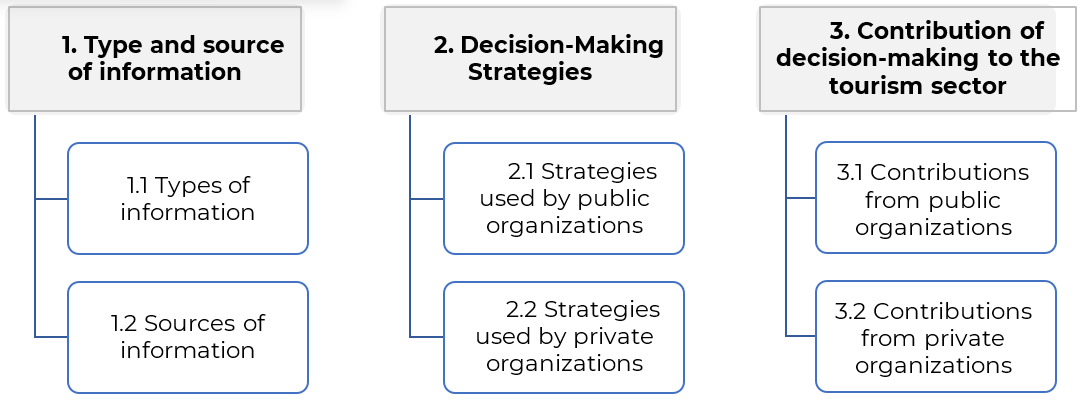
Figura 1. Scheme of categories and subcategories
Source: Authors’ own work.
The narratives are coded as follows: interviewee 1 (E-1), interviewee 2 (E-2), and interviewee 3 (E-3).
3. RESULTS
To provide context for the study, the evolution of tourism information systems in Medellín is outlined. This process began with the Tourism Indicators System (abbreviated SITUR in Spanish), which was managed by Fenalco Antioquia and was initially funded by the Medellín Economic Development Secretariat and the National Tourism Fund. From 2014 to 2020, SITUR provided official data on hotel occupancy, tourist profiles, and the performance of the tourism sector to inform decision-making. SITUR then evolved into the Medellín Tourism Observatory and started collaborating with local universities to incorporate predictive and prospective analyses to enable a deeper understanding of tourism’s economic and social impacts (
The study analyzed how tourism organizations use information sources for strategic decision-making and compared these practices with the perspectives of sector institutions and associations. However, limitations emerged due to reduced data availability during the pandemic and the closure of several travel agencies and accommodation establishments. The survey was administered between August 2020 and July 2021.
This section presents information on the size and economic subsector of participating companies, including public and private organizations in Medellín’s tourism sector. Regarding company size, 83% are microenterprises with fewer than 10 employees, and 17% are small businesses with 11 to 50 employees. For clarity, the results from the quantitative and qualitative components are presented separately below.
Qualitative Component
The categories and subcategories are summarized using a structured narrative analysis of the interviews.
Type of Information
In this category, there are institutional repositories of tourism data available. In Medellín, this repository is known as the Medellín Tourism Observatory (abbreviated OTM in Spanish). At the time of the study, the OTM was transitioning to the new platform known as SIT, formerly SITUR.
Let's call this phase the transition phase. What we did this year was transition from a simpler, single-page SITUR to a tourism intelligence system. We have not made much fuss about it while we stabilize the dashboards and the technological development itself. This was the transition phase. Next year, we will begin the consolidating phase of the model, generating new technological developments, and by the end of this administration, we will be able to say that we have migrated to a tourism intelligence system (E-1, personal communication, March 2, 2023).
Since SITUR is still transitioning, its historical data is being incorporated into the new system and will become part of the city’s public information. Together with the OTM, which is now taking over and strengthening the previous system, this has become a powerful tool for the tourism sector in Medellín. According to
One of the observatory's main functions—perhaps the main one—is collecting data, analyzing it, and transforming it into information and knowledge. This knowledge becomes highly valuable for all tourism stakeholders, enabling them to make informed decisions (E-2, personal communication, March 28, 2023).
Another source of public information is the Center for Tourism Thought (abbreviated CPTUR in Spanish), which is structured as a research unit dedicated to sector-wide reflection and analysis (
Strategic information supports decision-making and transformation and drives improvements across sectoral processes, underscoring its value as a valid tool.
OTM is part of the broader smart tourism destination strategy. In the smart destination model, data is central—not just the observatory itself. That is what the team is working for—as the project outlines—to evolve it from a tourism observatory into a tourism intelligence system (E-1, personal communication, March 2, 2023).
Information Sources
These sources serve as repositories of tourism sector data and support decision-making processes. They are structured around various information systems within the city. Some of these systems begin as data sources and evolve into full information sources, as reflected in the following testimonies.
One key source is the SIT, which incorporates recent technologies and innovations into work processes to serve the objectives of sustainability and accessibility within an efficient, transparent, and participatory governance model" (
Tourism intelligence tools are the brain of STDs. They are the system that thinks about what STDs should do because that is where the data and valuable information are—information important for guiding public policy decisions (E-1, personal communication, March 2, 2023).
That is the brain where the information is, but the heart of STDs is governance—the public-private partnership (E-1, personal communication, March 2, 2023).
SITUR is also worth mentioning again as an information source previously classified under types of public information.
When SITUR existed, several reports, bulletins, and studies were produced with specific, timely data. However, none of them were used to making decisions. […] Only a quarter of the city’s businesses used this information, and most of those who acknowledge they knew it and employ it were in the accommodation industry. But many subsectors have no idea what this data is for, do not know about it, do not use it, and do not understand how it is useful for them (E-1, personal communication, March 2, 2023).
Another relevant source is CPTUR, which provides valuable sectoral insights: « CPTUR is a source that may be of interest to use and consult» (E-1, personal communication, March 2, 2023).
Regarding primary information sources, which are data obtained through observation and questionnaires, and secondary sources, defined as existing and available information (
Other secondary sources include trade associations, for example. One important entity in this case is COTELCO, a key institution with which we work closely. They provide us with monthly hotel occupancy rate reports. We also collaborate with immigration officials to determine how many people, both nationals and foreigners, are entering and leaving through the José María Córdova border crossing. Additionally, we work directly with tourist attractions and parks (E-2, personal communication, March 28, 2023).
Returning to secondary sources of information, statistical measurements are a fundamental input for building sectoral decision-making systems. These measurements enable understanding and projection of the local tourism system and support research processes, as
The following account illustrates this:
[...] Each thematic block has several dashboards, such as occupancy percentages by zone or overall, or one showing average rates by zone. This is how the page is composed or structured. It can be filtered through these interactive dashboards, which are visually user-friendly (E-2, personal communication, March 28, 2023).
Decision-Making Strategies
This category is essential because information functions as a strategic resource that improves decision-making in the tourism sector.
The growing demand for tourism knowledge and the need for quick access to information sources have paved the way for a SIT (
That was the transition phase, meaning it is useful for tourism decision-making by both public and private entities (E-2, personal communication, March 28, 2023).
That's the brain, where the information is. But the heart of STDs is governance—the public-private partnership that allows the project to consolidate over time (E-1, personal communication, March 2, 2023).
Another key strategy for decision-making is information literacy, which ensures that stakeholders are aware of available information and know how to use it appropriately for their processes and objectives. This is particularly relevant considering that tourism is one of the main economic sectors internationally, gaining importance in developing countries (
«Reinforcing the pedagogy of information literacy is crucial, but it’s a long-term process because most business owners are sole proprietors. They don't have staff to analyze what’s happening in the city» (E-1, personal communication, March 2, 2023).
It is important to note that the private sector comprises all companies that provide tourism services and are directly or indirectly linked to tourism activity (
The analysis suggests that both sectors share decision-making strategies within the broader tourism framework. This framework is based on a systemic perspective of tourism organizations as open systems that continuously interact with their environment. Their internal structure is shaped by relationships among subsystems that contribute to achieving overall objectives.
« […] For example, security and information issues are fundamental to public sector decision-making and should also be important to the private sector and companies» (E-1, personal communication, March 2, 2023).
Contribution of Decision-Making to the Tourism Sector by Public and Private Organizations
This category is important because it acknowledges the fundamental role of decision-making in tourism development. As
Systematizing and generating qualitative and quantitative information on tourism-related issues is essential to measuring the evolution of tourism and sustainability in the public and private sectors. This information also helps determine the effectiveness of local tourism initiatives and supports local tourism destination planning.
In the public sector, information management is considered a vital tool for enhancing the experience of social groups that expect proper oversight of tourism projects. These groups influence institutional and city-level decisions, shaping tourism dynamics.
Information is very important. Many hoteliers, especially chain hotels, join the association to receive firsthand information because they are interested in comparing rates and occupancy levels in different parts of the city and learning about strategies they can implement daily (E-3, personal communication, April 4, 2023).
In the private sector, governance is still essential. Public and private organizations must collaborate to achieve tourism sector goals and provide positive experiences for local, national, and international visitors. The following account highlights ongoing collaboration and feedback processes.
Many business owners provide feedback, saying things like ‘Why don't we have this type of information here?’ or ‘It would be great to have this information here.’ Many independent business owners have been involved in the process and with the trade associations. However, I think it's harder for us to reach independent, non-unionized business owners, and our actions are limited. They are small businesses with limited resources, which also limits us. However, many business owners and trade associations are involved. In fact, a session was held with them and the observatory team to discuss how they wanted to be represented and what type of data they needed. Several working sessions have been held to determine what information should appear on the portal and how it should be organized for easier readability. A couple of workshops were held (E-1, personal communication, March 2, 2023).
Quantitative Component
This section presents the results of the document review and surveys of tourism service providers: lodging and accommodations, and travel agencies.
Sources and Types of Information
The research identified several organizations in Colombia that serve as key sources of information for the tourism sector. These entities collect data, conduct research, and provide statistics and analyses relevant to businesses, national tourists, and international tourists. The main organizations include:
Colombia Tourism Information Portal – PorTuColombia: This platform is managed by the Ministry of Commerce, Industry, and Tourism (abbreviated MINCIT in Spanish) and consolidates, updates, and provides reliable, official information on the tourism sector (Ministry of Commerce, Industry, and Tourism).
SIT: A platform that compiles tourism data for Medellín and transforms it into actionable information to guide decision-making in the public, private, academic, and professional sectors.
The National Administrative Department of Statistics (abbreviated DANE in Spanish): While not exclusively dedicated to tourism, DANE provides valuable statistical data for the sector, including surveys of accommodations and studies of tourist spending.
These organizations play a crucial role in providing Colombia’s tourism sector with up-to-date, accurate information for strategic decision-making and policy development.
Based on this review, it can be concluded that the tourism sector has enough information sources to support organizational decision-making. However, the study also examined whether tourism companies are effectively using the information published by these sources. To assess this, respondents were asked three questions: ‘Does your company consult tourism information sources?’ ‘Has the information consulted been useful?’ and ‘Which information sources do you consult most frequently?’ The results are shown in Figure 2.
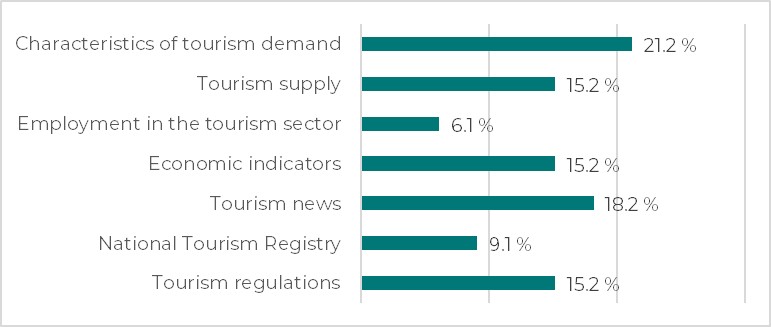
Figura 2. Information consulted
Source: Author's own work.
Sixty-one percent of business owners reported consulting tourism information sources. Of those, 63.6% said these sources are always or almost always useful for decision-making, while 36.4 % said they are useful only occasionally. The most frequently used sources were DANE (57.1 %), followed by the World Tourism Organization (UNWTO) and PorTuColombia (21.4 % each).
Of the 39 % of business owners who do not consult official tourism information sources, some noted that they stay informed through alternative channels. Of those, 32.6 % use social media, 26.1 % consult websites, and 21.7 % obtain information by attending congresses, seminars, and symposiums. They also rely to a lesser extent on news programs, specialized magazines, and mobile apps.
To determine the type of information most frequently consulted, business owners were asked, ‘What information have you consulted in these sources?’ The results revealed a strong interest in tourism demand characteristics (21.2 %), followed by current tourism trends (18.2 %). Tourism supply, economic indicators, and tourism regulations each accounted for 15.2 % of consultations. In contrast, the National Tourism Registry and employment in the tourism sector were consulted less frequently.
Strategies Used by Organizations for Decision-Making
To address the strategies that companies use for decision-making, the analysis begins with strategic planning, which is one of the core stages of the administrative process. In this stage, key elements interact to achieve organizational objectives. According to
Based on the above, Figure 3 presents the results of applying the instrument to identify the strategic planning elements incorporated by the organizations under study. The corresponding graph is shown below.
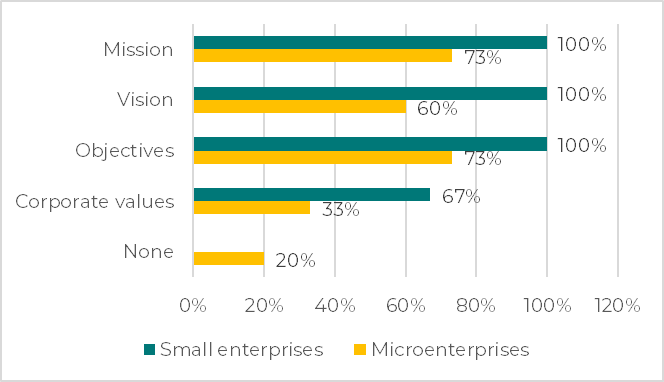
Figura 1. Elements of strategic planning incorporated
Source: Authors' own work.
The results indicate that all small businesses with 11–50 employees incorporate three key elements into their strategic planning: mission, vision, and objectives. Additionally, 67 % include corporate values. In contrast, 73 % of microenterprises (fewer than ten employees) incorporate mission and vision, 60 % incorporate vision alone, and 33.3 % incorporate corporate values. Meanwhile, 20 % do not include any corporate elements in their strategic planning.
In terms of planning horizons, 13.3 % of microenterprises engage in short-term planning (less than one year), 46.7 % implement medium-term planning (two to three years), and 26.7 % adopt long-term planning (four to five years). Among small businesses, 66.7 % focus on long-term planning and 33.3 % concentrate on short-term planning.
Another key aspect of strategic planning is incorporating management tools into administrative processes to support decision-making. These tools include job descriptions, procedures, process mapping, and guidelines. Figure 4 shows the tools that were used most frequently by companies included in the study:
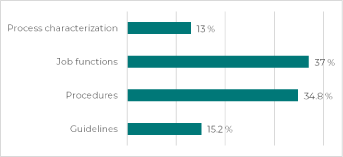
Figura 4. Management tools incorporated
Source: Authors' own work.
According to the assessment of the four tools used for administrative management in the selected companies, job descriptions and procedures are the most frequently implemented.
Organizations also adapt their strategies based on context, problem nature, and specific objectives. The most common strategies include: a) data analysis, b) market research and competitive analysis, and c) consulting experts, forming decision-making committees, or creating multidisciplinary teams to leverage diverse knowledge and experience. The results obtained from the instrument are summarized below:
- Data analysis: Most companies (61 %) consult tourism information sources, which underscores the importance of data as a key input for strategic decisions in a competitive environment.
- Market Research and Competitive Analysis: Many companies monitor their competitors’ behavior. Specifically, 56 % believe they have an advantage, 33 % consider themselves to be on equal footing, and 11 % perceive their competitors to have an advantage. This approach helps companies identify opportunities and threats to adjust their strategies and maintain competitiveness.
- Expert Consultation and Multidisciplinary Team Creation: Results show that 72 % of companies always or almost always consider employee suggestions when formulating strategies. Additionally, 94 % reported that employees contribute significantly to strategy development through their experience and knowledge. This practice promotes inclusion and collaboration, ensuring that decisions are informed by multiple perspectives and expertise. Similarly, 83.3 % of companies stated that strategies defined within the organization are communicated to employees, which emphasizes the importance of internal communication in the strategic process.
Relationships between tourism companies and industry organizations are considered a key decision-making strategy. Of the companies surveyed, 61 % reported participating in associations or networks, while 39 % did not belong to any. Furthermore, 81.8 % of companies believe that these relationships support decision-making and enhance the exchange of information and resources. The survey results show that 30.8 % of companies belong to Cotelco, 15.4 % belong to Anato, and 15.4% belong to Fenalco. Another 38.5 % reported ties with organizations such as the Greater Medellín Convention and Visitors Bureau, ProColombia, the Business Tourism Cluster, Fairs and Conventions, and the Medellín Chamber of Commerce for Antioquia.
The study also found that companies build relationships with government institutions through training sessions. Nineteen percent participate in programs offered by the Undersecretary of Tourism of Medellín Mayor’s Office, 15 % by the Ministry of Commerce, Industry, and Tourism, and 11 % by the Government of Antioquia’s Secretariat of Tourism. Smaller percentages reported participating through the Greater Medellín Convention and Visitors Bureau (4 %) and through Fiducoldex, ProColombia, and Fontur (2 % each).
The methodology employed a mixed approach consistent with that of
4. DISCUSSION
This article contributes to a deeper understanding of tourism information, including its access, use, and standardization. It can serve as a resource for businesses in the tourism sector (
Studies such as those by
Today, ICTs are essential for enhancing business and sector competitiveness. As De Pablo (2004) explains, as cited by
Although competitiveness is essential for tourism companies, many business owners rely on social media platforms that focus on customer satisfaction, experiences, and opinions for information. This focus is understandable, but it diverts attention from environmental and sectoral needs that foster a deeper understanding of tourism dynamics and transformation. This limits companies’ ability to identify challenges and opportunities. Prioritizing social media reflects an approach to decision-making driven by immediacy and reactivity rather than long-term planning since these platforms mainly capture users’ short-lived tastes and preferences (
In Medellín, the institutional framework promotes collaboration with the tourism business sector, encouraging participation in networks and joint working groups. These groups support informed and timely decision-making, as well as building awareness of issues relevant to the city.
5. CONCLUSIONS
In Medellín and throughout Colombia, sources of tourism information, such as DANE, SIT, PorTuColombia, and CPTUR are being consolidated. These sources provide data on tourism demand, sector supply, economic indicators, regulations, and employment.
The development of tourism information systems in Medellín began with SITUR, which operated from 2014 to 2020 and supplied essential data for sector decision-making. This system then evolved into the Medellín Tourism Observatory, which strengthened tourism impact analysis by collaborating with higher education institutions. Eventually, the observatory became the SIT, a key strategy for positioning Medellín as STD by using technology to enhance competitiveness and provide safe, sustainable tourism experiences.
Despite the availability of these sources, information literacy remains limited within the tourism business sector. Many companies do not consider reporting data to official sources relevant, which affects the quality and accuracy of available information. Reasons for this low participation include perceptions of limited direct benefit and concerns about confidentiality and competition. This lack of reporting hinders the collection of accurate, comprehensive data and consequently the development of effective public policies. It also limits organizations’ capacity to address sector needs and challenges. Nevertheless, the study shows that available information is valuable for strategic decision-making.
Therefore, strengthening the information culture in the tourism sector is essential. This involves promoting greater participation in data reporting and more consistent consultation of available sources to support informed, strategic decision-making. Despite government campaigns encouraging the use of tourism information systems, consultation rates among businesses remain low. It is important to note that raising awareness about the importance of data is not solely the government’s responsibility. Businesses also play a crucial role in contributing to tourism development.
In this sense, tourism networks and associations provide an ideal space to promote the use of available information and recognize its importance in developing strategies that benefit companies and the destination’s overall tourism growth.
The literature review and study findings suggest future research opportunities, such as investigating the perceived value of data in decision-making processes, examining information governance within tourism organization networks, assessing the impact of information on business competitiveness. They also point to the need to analyze cultural, digital, and innovation-related barriers to information use and interpretation.
CONFLICTS OF INTEREST
The authors declare no financial, professional, or personal conflicts of interest that could have inappropriately influenced the results or interpretations presented in this study.
AUTHOR CONTRIBUTIONS
All authors have made significant contributions to the development of this project, as specified below:
Tatiana Andrea Muñoz Vélez: Principal investigator; development of the project proposal; design of instruments for the qualitative and quantitative components; quantitative data analysis; drafting of the article.
Claudia Patricia García-Restrepo: Co-investigator; design of the qualitative instrument; analysis and development of narratives; drafting of the article.
Yessica Jaramillo Roldan: Co-investigator; design of instruments for the qualitative and quantitative components; analysis of quantitative results; drafting of the article.
Jorge Yimi Ospina Martínez: Co-investigator; design of instruments for the qualitative and quantitative components; analysis of quantitative results; drafting of the article.
REFERENCES
- arrow_upward Alcaldía de Medellín. (2025). Sistema de Inteligencia Turística. Qué hacemos. turismomde.gov.co. https://www.turismomde.gov.co/que_hacemos/quienes_somos
- arrow_upward Alzua-Sorzabal, A., Herasimovich, V., Guereño-Omil, B., & Thiel-Ellul, D. (2024). Connections Between a Tourist Destination, the Digital Ecosystem, and ICT Actors. En A. J. Guevara Plaza, A. Cerezo Medina, y E. Navarro Jurado (eds.), Tourism and ICTs: Advances in Data Science, Artificial Intelligence and Sustainability. TURITEC 2023 (pp. 215-226). Springer. https://doi.org/10.1007/978-3-031-52607-7_20
- arrow_upward Arnold, M., & Osorio, F. (1998). Introducción a los Conceptos Básicos de la Teoría General de Sistemas. Cinta de Moebio, (3). https://www.redalyc.org/articulo.oa?id=10100306
- arrow_upward Barrera-Narváez, C. F., González-Sanabria, J. S., & Cáceres-Castellanos, G. (2020). Sistemas de información geográfica e inteligencia de negocios en la toma decisiones en el sector turismo. Revista Científica, 38(2), 160-173. https://doi.org/10.14483/23448350.15997
- arrow_upward Basco, A. A. R., Mejia, Z. J. L., & Gueco. I. S. (2021). Social Media and its influence to tourist decision making and preferences. International Journal of Management and Commerce Innovations, 9(1), 231-247. https://www.researchpublish.com/upload/book/paperpdf-1621249255.pdf
- arrow_upward Batista-Matamoros, C. R., Díaz-Contreras, C. A., Velázquez-Zaldívar, R., & Ronda-Pupo, G. A. (2015). Alineación entre toma de decisiones y gestión del conocimiento. El caso de las empresas relacionadas con el negocio del turismo. Ingeniare. Revista Chilena de Ingeniería, 23(4), 540-555. http://dx.doi.org/10.4067/S0718-33052015000400006
- arrow_upward Benseny, G. (2002). El sector privado como actor en la gestión del turismo en el territorio de la Provincia de Buenos Aires. V Jornadas Nacionales de Investigación-Acción en Turismo y VIII Jornadas de Interacción, Mar del Plata [ARG], 29 mayo-1 junio 2002.
- arrow_upward Blasco Franch, D., & Cuevas Contreras, T. (2013). Observatorio en turismo: organismo inteligente para la toma de decisiones en el destino. Revista Iberoamericana de Turismo, 3(2), 25-34. https://www.seer.ufal.br/index.php/ritur/article/view/1071/813
- arrow_upward Centro de Pensamiento Turístico- Colombia. (2024). Publicaciones. https://cptur.org/
- arrow_upward Cienfuegos Velasco, M. de los A., & Cienfuegos Velasco, A. (2016). Lo cuantitativo y cualitativo en la investigación. Un apoyo a su enseñanza. RIDE. Revista Iberoamericana para la Investigación y el Desarrollo Educativo, 7(13), 15-36. https://www.ride.org.mx/index.php/RIDE/article/view/231
- arrow_upward Epstein, H. (2021). El presente y futuro de las estadísticas de turismo. Índice. Revista de Estadística y Sociedad, 81, 8-12. https://www.revistaindice.com/docs/Indice_81.pdf#page=8
- arrow_upward Fenalco. (s.f.). Sistema de Indicadores Turísticos de Medellín y Antioquia. https://www.fenalcoantioquia.com/situr
- arrow_upward García Moreno, B., & Fernández Alcantud, A. (2020). Los destinos turísticos inteligentes: el pilar de la recuperación turística. Ayana. Revista de Investigación en Turismo, 1(1), 002. https://doi.org/10.24215/27186717e002
- arrow_upward Gámez Gastélum, R. (1997). Comunicación y cultura organizacional en empresas chinas y japonesas. Edición electrónica gratuita.
- arrow_upward Giner Sánchez, D., Beltrán López, G., & Díaz Luque, P. (2019). TIC y Turismo. Universitat Oberta de Catalunya. www.eumed.net/libros/2007a/221/
- arrow_upward Godínez Ortiz, R. (2014). Los Observatorios Turísticos como instrumento en la toma de decisiones: El caso de Guadalajara, México [tesis doctoral, Universidad de Guadalajara-Universidad de Malaga]. Repositorio Institucional de la Universidad de Málaga. https://riuma.uma.es/entities/publication/bee52b4b-e7c5-4d2d-8f4a-0d1abcb2f8d3
- arrow_upward Goetz, J. P., & LeCompte, M. D. (1988). Etnografía y diseño cualitativo en investigación educativa. Ediciones Morata.
- arrow_upward Guelmes Valdés, E. L., & Nieto Almeida, L. E. (2015). Algunas reflexiones sobre el enfoque mixto de la investigación pedagógica en el contexto cubano. Universidad y Sociedad, 7(1), 23-29. https://rus.ucf.edu.cu/index.php/rus/article/view/281/pdf_64
- arrow_upward Hernández Sampieri, R., & Fernández Collado, C. (2003). Metodología de la Investigación. McGraw-Hill Interamericana.
- arrow_upward Hurtado, E., & Pereli, O. (2021). De la estadística a la inteligencia turística: una oportunidad sin vuelta atrás. Índice. Revista de Estadística y Sociedad, 81, 27-29. https://www.revistaindice.com/docs/Indice_81.pdf#page=27
- arrow_upward Londoño-Patiño, J. A. (2020). Toma de decisiones basada en la productividad en Pymes manufactureras: aproximación desde la lógica difusa. Revista CEA, 6(12), 181-207. https://doi.org/10.22430/24223182.1507
- arrow_upward López Zapata, L., & Márquez Godoy, J. (2012). Proyecto de observatorio de turismo para Medellín y Antioquia. Revista Soluciones de Postgrado EIA, (9), 79-96. https://repository.eia.edu.co/server/api/core/bitstreams/e84ec00e-0aab-49ba-a44f-7e8bf1da4a96/content
- arrow_upward Menchero Sánchez, M. (2015). Propuesta y diseño de un sistema de información turística para centros colombianos: estudio de caso del centro histórico de La Candelaria (Bogotá). Reflexión Política, 17(33),146-161. https://doi.org/10.29375/01240781.2247
- arrow_upward Ministerio de Comercio, Industria y Turismo. (2024). Portal de Información Turística de Colombia. https://portucolombia.mincit.gov.co/que-es-el-observatorio-turistico#:~:text=El%20portal%20de%20informaci%C3%B3n%20Tur%C3%ADstica,de%20manera%20detallada%20y%20confiable
- arrow_upward Monfort Mir, V. M. (2000). La política turística: una aproximación. Cuaderno de Turismo, (6), 7-27. https://www.redalyc.org/pdf/398/39800601.pdf
- arrow_upward Orgaz Agüera, F., & Moral Cuadra, S. (2016). El turismo como motor potencial para el desarrollo económico de zonas fronterizas en vías de desarrollo. Un estudio de caso. El periplo sustentable, (31), 00008. http://www.scielo.org.mx/scielo.php?script=sci_arttext&pid=S1870-90362016000200008&lng=es&tlng=es
- arrow_upward Pérez Rives, L., & Echarri Chávez, M. (2021). Retos y perspectivas de los Sistemas de Información en Destinos Turísticos. Revista Internacional de Turismo, Empresa y Territorio, 5(1), 125-146. https://doi.org/10.21071/riturem.v5i1.13424
- arrow_upward Pimentel Villalaz, L. (1999). Planificación estratégica: Introducción al concepto de planificación estratégica. Universidad de Pamplona. https://www.unipamplona.edu.co/unipamplona/portalIG/home_4/mod_virtuales/modulo5/5.2.pdf
- arrow_upward Quevedo Quevedo, J. (1999). La información estadística para el análisis del turismo: fundamentos, avances y otras cuestiones. Estudios Turísticos, (140), 57-65. https://doi.org/10.61520/et.1401999.808
- arrow_upward Rodríguez Cruz, Y. (2015). Gestión de Información y del Conocimiento para la toma de decisiones organizacionales. Bibliotecas Anales de Investigación, 11(4), 150-163. https://revistasbnjm.sld.cu/index.php/BAI/article/view/203
- arrow_upward Rodríguez Rodríguez, G., & Martínez Roget, F. (2009). Nuevos retos para el turismo. Editorial Netbiblo.
- arrow_upward Segrado Pavón, R. G., Arroyo Arcos, L., & Palafox Muñoz, A. (2009). El observatorio del turismo en la planificación turística local de Cozumel. En R. I. Covarrubias Ramírez, I. Magaña Carrillo, y C. M. Amaya Molinar (coords.), Universidad, gobierno, sociedad: vinculación para la innovación en el turismo (pp. 149-162). Universidad de Colima.
- arrow_upward Sepúlveda Atehortúa, L. Y. (2018). Toma de decisiones en Redes Organizacionales: Caso de la red Alianza Hoteles Laureles Estadio. En Diversidad y Complejidad Organizacional en América Latina. Perspectivas de análisis (pp.477-503).Grupo Editorial Hess.
- arrow_upward Sieber, S., Valor, J., & Porta, V. (2006). Los sistemas de información en la empresa actual: aspectos estratégicos y alternativas tácticas. McGraw-Hill.
- arrow_upward Taherdoost, H., & Madanchian, M. (2023). Decision Making: Models, Processes, Techniques. Cloud Computing and Data Science, 5(1), 1-14. https://ojs.wiserpub.com/index.php/CCDS/article/view/3284
- arrow_upward Taylor, S. J., & Bogdan, R. (2000). Introducción a los métodos cualitativos de investigación. Paidós.
- arrow_upward Valenzuela González, J. R., & Flores Fahara, M. (2014). Fundamentos de investigación educativa. Volumen 1. Tecnológico de Monterrey.

 Google