Impact of a Business Simulation Experience: A Quantification Methodology Based on Qualitative
Impacto de una experiencia de simulación empresarial: una metodología de cuantificación basada en datos cualitativos
 PDF
Received: July 10, 2025
Accepted: February 17, 2026
Domínguez Santiago, M., Gómez Araque, L., Restrepo Mantilla, M. D., Gamero Pinillos, Y., y Porto Solano, A. F. (2025). Impact of a Business Simulation Experience: A Quantification Methodology Based on Qualitative Data. Revista CEA, 12(28), e3558. https://doi.org/10.22430/24223182.3558
Abstract
Objective: This study aimed to evaluate the impact of a business simulation experience on the professional development and training of Industrial Engineering students, particularly in transversal skills, by applying a quantification methodology based on qualitative data.
Design/Methodology: A quasi-experimental design was implemented in the Operations Strategies course at Universidad del Norte in Barranquilla, Colombia. The study involved 49 students who participated in a business simulation carried out throughout one academic semester. At the beginning and at the end of the course, a questionnaire designed to measure ten key competencies—such as proactivity, leadership, responsibility, and decision-making—was administered. Information on the impact of the experience was obtained through self-assessments and peer assessments. To compare the results, a paired-samples t-test was applied.
Findings: The results showed a significant improvement in the skills evaluated. The overall average score increased from 59.6 to 67.1 points, which represents an improvement of about 12.6%. The t-test produced p-values below 0.01, confirming the significance of the results. In addition, a Pareto analysis indicated that 25% of the total increase in scores was explained by a small group of high-performing students, suggesting a differential effect of the simulation on the learning process.
Conclusions: It can be concluded that business simulations contribute positively to the strengthening of key competencies within students’ professional training, mainly by encouraging independent and active learning.
Originality: This study proposes an innovative approach to quantifying the impact of qualitative experiences by integrating statistical tools for the assessment of soft skills in the higher education contexts.
Keywords: transversal competencies, organizational behavior, managerial skills development, competency assessment, business simulation.
JEL codes: A22, C12, C83, M10.
Highlights
Resumen
Objetivo: El presente estudio tuvo como propósito evaluar el impacto de una experiencia de simulación empresarial en la formación profesional de estudiantes de Ingeniería Industrial, con énfasis en el desarrollo de competencias transversales, mediante la aplicación de una metodología de cuantificación basada en datos cualitativos.
Diseño/Metodología: Se implementó un diseño cuasiexperimental en la asignatura Estrategias de Operaciones de la Universidad del Norte en Barranquilla, Colombia. El estudio contó con la participación de 49 estudiantes, quienes desarrollaron una simulación empresarial a lo largo de un semestre académico. Al inicio y al final del curso se aplicó un cuestionario diseñado para medir diez competencias clave, entre ellas proactividad, liderazgo, responsabilidad y toma de decisiones. La información sobre el impacto de la experiencia se obtuvo a partir de autoevaluaciones y coevaluaciones. Posteriormente, para comparar los resultados obtenidos, se utilizó una prueba t para muestras relacionadas.
Resultados: Los resultados evidenciaron una mejora significativa en las competencias evaluadas. El puntaje promedio general aumentó de 59.6 a 67.1 puntos, lo que representa un incremento aproximado del 12.6%. La prueba t arrojó valores de p inferiores a 0.01, lo que confirma la significancia de los resultados. Asimismo, el análisis de Pareto mostró que el 25% del incremento total en los puntajes fue explicado por un grupo reducido de estudiantes con alto desempeño, lo que sugiere que la simulación generó un efecto diferencial en el proceso de aprendizaje.
Conclusiones: Se concluye que el uso de simulaciones empresariales contribuye de manera positiva al fortalecimiento de competencias clave dentro de la formación profesional, ya que favorece un aprendizaje activo y autónomo.
Originalidad: Este estudio propone una forma innovadora de cuantificar el impacto de experiencias cualitativas mediante la integración de herramientas estadísticas en la evaluación de habilidades blandas en el contexto de la educación superior.
Palabras clave: competencias transversales, comportamiento organizacional, desarrollo de habilidades gerenciales, evaluación de competencias, simulación empresarial.
Códigos JEL: A22, C12, C83, M10.
Highlights
1. INTRODUCTION
In Industrial Engineering programs, business simulation is used as an educational strategy to reinforce experiential learning and competency development (Pérez & González, 2014). Specifically, in the Operations Strategies course at Universidad del Norte in Barranquilla, Colombia, students engage in a business simulation exercise that requires them to manage situations similar to those encountered in real work environments (Graeml et al., 2011). One of the most prominent challenges lies in measuring students’ progress throughout the course in areas such as teamwork, leadership, task management, and assertive decision-making. According to Galván-Cardoso and Siado-Ramos (2021), assessing both soft and hard skills is particularly difficult when relying on traditional teaching methods. Against this backdrop, the present article examines how business simulation supports competency acquisition, outlines its practical implementation, identifies the competencies assessed during the simulation, and describes the tools employed to evaluate student achievement. In addition, it presents key findings that highlight the value of this learning-by-doing approach for tracking student progress.
The primary contribution of this article is to demonstrate that the development of fundamental skills such as problem-solving, resilience, and strategic thinking is not limited to academic settings but also plays a decisive role in the economic performance of organizations. These skills define how future professionals manage resources, evaluate risk scenarios, and respond to highly competitive market environments. From an economic perspective, strong strategic and managerial competencies are essential for consistently promoting productivity within companies and effective coordination mechanisms that respond to the demands of rapidly changing markets. Accordingly, by proposing a methodology to assess the development of these skills, this study also offers insights regarding the fields of economics and econometrics, where understanding human behavior, decision-making processes, and performance outcomes is critical.
The rest of this article is structured as follows: Section 2 presents the theoretical framework underpinning the use of business simulation and its role in developing core skills in higher education. Section 3 describes the methodology of the study, including participant characteristics, the learning setting, the structure of the business simulation, the assessment instrument, and the statistical methods employed. Section 4 reports the empirical results obtained from the two evaluation sessions, comprising comparative analyses, significance testing, and Pareto-based performance distributions. Section 5 discusses the implications of the findings for the teaching–learning process, professional practice, and business behavior, while also identifying limitations and avenues for future research. Finally, Section 6 summarizes the main conclusions of the study.
2. THEORETICAL FRAMEWORK
In higher education, especially in engineering and management-related programs, sustaining student engagement has become an increasingly complex and relevant challenge. The academic environment has evolved and will continue to do so; consequently, learning expectations are also shifting. The new learning challenges extend beyond theoretical knowledge, encompassing experiences and interactions that spark students’ interest and connect them with real-world situations. This involves not only completing tasks (i.e., collecting evidence) but also understanding their underlying purpose. In this regard, authors such as Alba Pastor (2019) emphasize the importance of designing activities that align with students’ interests and abilities, thereby enhancing their engagement, building confidence, and promoting recognition of their own progress.
Along the same lines, strategies such as business simulations have become progressively valuable, as they allow students to assume the role of professionals within fictitious companies created specifically for educational purposes, incorporating multiple aspects of real-world practice. In these simulated settings, students are tasked with analyzing situations or challenges, collaborating in teams, and making decisions based mainly on the knowledge and tools acquired throughout the course. Despite their gamified nature, business simulations are not considered improvised activities. On the contrary, they have clearly defined learning objectives and are supervised by professors or evaluators over extended periods, often spanning weeks, months, or even a full semester. This ensures that the experience is not perceived simply as a case study but as a structured, collaborative, and deliberate learning process. The aim is to expose students, prior to graduation, to situations similar to those they will face in the workplace. This becomes even more relevant in the context of a constantly evolving labor market. Mastery of theoretical concepts alone is no longer enough; the ability to adapt, communicate, solve problems, and act judiciously is now an imperative. Porto Solano et al. (2017) and García Miranda and Durán Heras (2020) highlight that higher education should prepare students for dynamic environments in which continuous learning is crucial.
Advocating for professional innovation while rigid and non-participatory schemes persist in the classroom is inherently contradictory; teaching methodologies must also be updated. Puebla Sánchez and Temiño Aguirre (2018) argue that instructional strategies should be aligned with business realities and integrate different areas of knowledge. In a company, financial decisions affect marketing, production influences strategy, and commercial activities directly impact financial outcomes. This interdependence must likewise be reflected in training. Many university programs have understood this need and have incorporated simulations into their curricula. Vásquez Fajardo and Fajardo Vaca (2017) point out that this type of experience increases student satisfaction, since it enables them to apply theoretical knowledge in practical situations before completing their degree. In this sense, learning by doing proves more meaningful than just listening or following a structured learning guide. Polanco Navarro (2018) reinforces this perspective, noting that simulation strengthens the principle of experiential learning. Although simulation scenarios may encompass both controllable and unpredictable variables (e.g., context, individual responsibilities, motivation), they demonstrate that effective decisions can be reached through strategic planning and rigorous analysis. Consequently, students learn to overcome the fear of making mistakes and to manage them constructively.
According to Graeml et al. (2011), simulations may focus on specific functional areas within a company—such as production, marketing, finance, accounting, or strategic management—or integrate them, depending on the scope of the course and the time available. A particularly valuable aspect is their capacity to integrate knowledge while fostering both technical and soft skills, including communication, leadership, and decision-making under pressure. As a result, these experiences contribute to the development of a more comprehensive professional profile. Similarly, Sánchez Verdú (2020) emphasizes that such practices strengthen the competencies students require to navigate the highly dynamic work environments observed in today’s markets. Likewise, Pérez and González (2014) note that business simulations also encourage creative thinking and the strategic management of resources within settings guided by a facilitator or professor.
In contrast, traditional educational approaches have been widely criticized for perpetuating relatively passive learning dynamics and limiting the agency of the true protagonists of the process: the students. Galván-Cardoso and Siado-Ramos (2021) argue that, when academic performance is assessed primarily through grades, the learning process often becomes confined to the memorization of content or the completion of standardized tests. Under this model, the instructor tends to be positioned as the transmitter of knowledge and the student as the recipient, thereby leaving little room for critical analysis or meaningful reflection on the part of the latter. In light of these constraints, several studies, including those by Hunt et al. (2004) and González Velazco et al. (2018), underscore the pressing need to reconsider prevailing educational models. They contend that creativity, innovation, and continuous learning should not be treated as peripheral elements, but rather as central components in the preparation of professionals capable of responding effectively to the complex challenges of the real world.
In the workplace, recent graduates are frequently expected to assume responsibilities immediately, with limited time for adaptation. This represents a concern not only for employers but also for higher education institutions, which must ensure that students are both aware of and prepared for the demands of the professional world. Casimiro Urcos et al. (2019) state that universities must respond to the needs of society and the labor market by aligning their educational offerings accordingly. This includes not only teaching the fundamentals of their field but also providing them with skills applicable in professional contexts. As Graeml et al. (2011) point out, this is a progressive process that requires sustained and deliberate practice. When these competencies are systematically developed, their impact becomes evident in improved professional performance. Zumba Hidalgo et al. (2021) further emphasize the importance of students being able to manage conflicts and collaborate effectively within teams. Likewise, Ruíz Valdés and Ruíz Tapia (2013) assert that students can no longer be passive recipients of information; instead, they must actively engage in their learning process, taking on challenges that foster cognitive development and, therefore, meaningful knowledge.
Teaching and learning through business simulation
Business simulations represent particularly valuable experiences for students and future entrepreneurs, as they provide a form of training that differs from traditional classroom instruction. In fact, as Cuellar Campos et al. (2015) observe, these pedagogical exercises enhance professional formation by exposing students to diverse situations that challenge their soft skills. Through these experiences, students go beyond the mere application of prior knowledge and engage in practical learning—something difficult to achieve through theory alone. This exposure facilitates their adaptation to dynamic labor markets and strengthens their ability to make informed decisions. In this regard, Vásquez Fajardo and Fajardo Vaca (2017) indicate that students design strategies aimed at achieving specific objectives within the simulation environment, leveraging both the knowledge acquired in the classroom and the experience gained through practice.
In line with this approach, some institutions have formally incorporated business simulation into their undergraduate curricula as a mechanism to build professional competencies. In Industrial Engineering programs in particular, these experiences are often embedded in courses focused on operations and strategy, where systems thinking, production processes, and management tools are approached from a holistic perspective. The purpose is not merely to study the associated theory (i.e., conceptual understanding), but to cultivate analytical and decision-making competencies aligned with principles such as productivity, efficiency, and organizational competitiveness. This orientation coincides with a current trend that emphasizes the development of managerial skills. Technical knowledge alone is no longer enough; students are now expected to acquire procedural skills, interpersonal capabilities, and attitudes, as well as conceptual competencies that enable them to analyze and understand complex contexts.
Porto Solano and Angarita Álvarez (2023) and Barragán Ramírez et al. (2020) explain that management roles require professionals capable of leading teams and achieving organizational objectives effectively. Similarly, Useche Aguirre et al. (2019) note that companies demand managers equipped with knowledge, skills, and attitudes that enable them to respond to constant economic and organizational changes. In this sense, higher education must support future industrial engineers in developing planning, management, and control tools, so that they can formulate leadership strategies aimed at improving productivity and competitiveness. As Salazar Garcés et al. (2018) state, universities must adapt to current social, economic, and technological transformations. They should be understood not only as teaching spaces but as structured organizations committed to training professionals under a competency-based approach.
To achieve these purposes, a practical business simulation component is incorporated into the Operations Strategies course, in which students are required to plan and establish a company. This simulated organization not only fulfills the academic objectives of the course but also strengthens key competencies for professional development, including proactivity, teamwork, leadership, responsibility, organization, emotional intelligence, effective communication, planning and monitoring, and decision-making. Ruíz Valdés and Ruíz Tapia (2013) confirm that this type of practice fosters decision-making and teamwork through situations that can be transferred to real-world contexts. Likewise, Lacruz (2017) conceptualizes simulations as instructional mechanisms that promote active learning, positioning students as primary agents in the construction of their own knowledge.
Consequently, the approach adopted in this study aligns with a competency-based training model, whose objective is not limited to the gathering of information but extends to the development of competencies, skills, and attitudes that enhance professional performance (Cejas Martínez et al., 2019). Accordingly, business simulation should not be regarded as an isolated curricular supplement but as a structured mechanism that connects theory with practice, reinforces essential competencies, and better prepares students to meet the demands of professional environments.
Competencies Assessed
In order to strengthen student performance beyond the classroom, business simulation seeks to develop well-rounded professionals with the vision and preparation required to perform effectively in their future roles. As Garizurieta Bernabé et al. (2018) point out, “employers seek and require responsiveness, crisis management, and the proactivity of an experienced professional” (p. 38). Based on a literature review and the analysis of simulation experiences, the competencies considered fundamental to this training process were identified.
One of the most valued competencies is proactivity. López-Salazar (2010) states that:
Developing proactive behavior in entrepreneurs is essential for creating companies capable of competing in diverse markets. It is through proactivity that managers can respond to the needs of their environment, reflecting how they perceive various situations, make decisions, and design strategies (p. 306).
In the same vein, Ares Parra (2004) argues that “proactivity has a component of strategic thinking: becoming aware, creating alternatives, and choosing options” (p. 496). Likewise, Katz (1964, as cited in Edú Valsania, 2014) defines these behaviors as “spontaneous and voluntary actions that go beyond formal obligations, particularly relevant during times of change and uncertainty, when employees must exceed their basic duties” (p. 69). For this reason, dimensions such as commitment, teamwork, and initiative are of greater importance in organizational contexts (Salcedo Díaz et al., 2016). Within the framework of this course, proactivity is understood as the willingness to face complex situations without remaining passive, assuming responsibility for the action and generating a positive impact not only on individual performance but also on team dynamics (Arancibia Carpio, 2021; Salessi & Omar, 2018).
Collaborating toward a common goal (i.e., teamwork) often translates into higher productivity and improved results. As Asún Dieste et al. (2019) indicate, “working in a group is not simply the sum of individual tasks linked together with a final collective output, but rather a process whose result is far greater than the sum of its parts” (p. 178). This perspective implies integrating individual capacities and fostering forms of leadership that articulate collective talent. Guerrero-Velástegui et al. (2018) state:
The leader is the one who is motivated by a clear objective and effectively communicates it to their team members, encouraging them to perform well and improve their work. The leader fosters creativity and provides appropriate motivation. A good leader develops people (p. 422).
Leadership is today built on trust and balanced interaction among the leader, the team, and the context, where the quality of relationships and decisions is decisive (Riquelme-Castañeda et al., 2020).
Responsibility is also a central competency. It is understood as the fulfillment of assigned tasks and the assumption of the consequences arising from the decisions made. In the business environment, it implies adhering to guidelines, meeting deadlines, and acting in accordance with established rules. Muñoz Dueñas et al. (2015) highlight that a culture of responsibility is a key factor for success. In the course, this competency is evaluated based on task management and decision-making throughout the simulation. Franco Pérez (2012) argues that, under the right orientation, responsibility becomes a marker of academic maturity that fosters reflection on one’s own actions.
As for organization, the definition provided by the Real Academia Española (2021)—“the action and effect of organizing”—is adopted. In practical terms, this competency involves the ability to prioritize tasks and meet established deadlines. Moreover, personal factors such as emotional resources, sociability, and effective communication are also considered, as they allow assessment of the student’s capacity to apply theoretical knowledge in practical situations. With regard to motivation, Carrillo et al. (2009) define it as “an internal and positive attitude toward new learning; it is what drives an individual to learn” (p. 24). Accordingly, students are expected to participate actively, interact effectively within their team, and communicate information in a timely manner. Motivation directly influences both attitude and behavior. Rivera Ramírez (2021) asserts that it may be oriented toward personal goals, support for others, or professional development. Together, all these competencies favor the integration of theory and practice within the course.
Finally, planning, monitoring, and decision-making are also included as essential competencies for professional performance. González et al. (2024) define planning as “the process through which the execution of an activity or task is determined, constituting an effective mechanism for achieving proposed objectives” (p. 251). Any professional must be able to organize tasks, manage resources, and make judicious decisions. Porter (2011) states that strategic planning guides actions toward clearly defined objectives and facilitates more effective decision-making, thus contributing to the generation of competitive advantages.
Based on these foundations, the following section presents the materials and methods used to measure the development of these competencies in the context of business simulation.
3. METHODOLOGY
To ensure that the methodological procedure can be replicated with precision, the sequence of steps followed in this study was systematically organized and documented. Although the subsequent subsections describe each component in detail, a visual summary is included to represent the overall workflow of the research design. Figure 1 illustrates the chronological progression of the procedure, beginning with the selection of participants and the definition of the learning context, followed by the implementation of the business simulation, the administration of the evaluation instruments, and the statistical and graphical analyses.
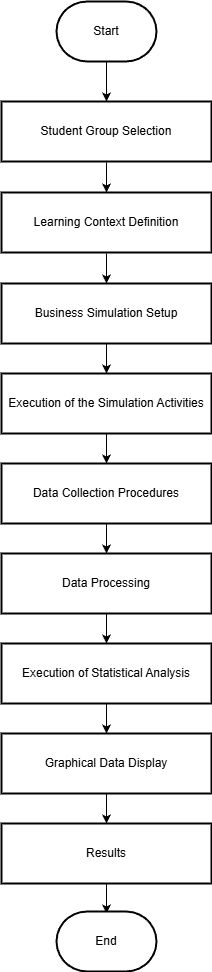
Figura 1. Proceso metodológico del estudio
Source: Author’s own elaboration.
Participants
This study was conducted at a Colombian university accredited by the Accreditation Board for Engineering and Technology (abet). abet is an international, non-profit organization recognized for accrediting engineering programs worldwide based on rigorous educational and professional quality standards (Shryock & Reed, 2009). The study sample comprised 49 participants, distributed across two groups: 30 students in the first and 19 in the second. Despite the initial intention to maintain comparable group sizes, the final distribution was determined by the schedule assigned to each section, as students enroll according to their availability and the academic workload during the corresponding semester. Specifically, the entire sample consisted of second-year students from the School of Industrial Engineering at Universidad del Norte, all of whom were enrolled in the Operations Strategies course delivered in an in-person format.
Learning context
The course was delivered through in-person instruction and consisted of two weekly sessions, each lasting two hours. These sessions were divided into a theoretical component and a practical component, during which students engaged in business simulation activities. The course is designed to help students develop knowledge, skills, and attitudes, as outlined below:
Knowledge
- Understand the basic concepts of systems theory.
- Analyze productivity using specific indicators and apply tools aimed at improving it.
- Identify existing characteristics and techniques for achieving competitive advantage.
- Define strategic planning and the managerial process as components of the system for achieving competitiveness.
Skills
- Provide foundational tools to foster strategic thinking among future industrial engineers.
- Identify and understand each stage of the managerial process as a transformation system oriented toward competitiveness.
- Complete activities such as essays, critical analyses, presentations, and supplementary readings (using academic databases), enabling students to:
- Develop oral, graphic, and written communication skills.
Attitudes
- Strengthen students’ capacity for self-directed learning (learning how to learn).
Business simulation context
The simulation begins with an introductory session that outlines the guidelines and evaluation methodology for the simulated company. Students are tasked with selecting the company’s management team, which includes the Chief Executive Officer (ceo) and the Deputy ceo. In this exercise, students volunteer for a position and justify their suitability for the role. Subsequently, the company is structured into functional areas, including marketing, procurement, production, human resources, social responsibility, finance, and any other department deemed necessary. This process culminates in the drafting of a preliminary organizational chart. Students are also required to select a company name and define its mission, vision, and objectives in accordance with the assigned simulation topic.
During the semester under study, the selected topic was jewelry-making. The simulation comprised three submissions, each involving the launch of a seasonal collection. This process encompassed the implementation of strategies in marketing, design, production, and quality assurance, with the aim of developing a competitive advantage over other student groups. The business simulation spanned 16 weeks, equivalent to an academic semester at Universidad del Norte. The initial scope of the study was defined to examine students’ competencies and the impact of the simulation on their development. This assessment was based on students’ perceptions of the course and peer performance, as measured through peer evaluation.
Data sources and instruments
Data were collected through a questionnaire using a five-point Likert scale, in which students conducted both self- and peer assessment, considering the area to which they belonged within the organization (according to each company’s organizational chart). The questionnaires were administered at two points during the simulation: the first in Week 4, by which time students had begun to interact and work toward shared organizational objectives; and the second in Week 16, after a full semester of teamwork. The resulting data served as the basis for analyzing students’ progress across the various functional areas of the simulated company.
Rating scale used
The five-point Likert scale was employed to ensure ease of use, given that students were required to complete multiple evaluations. This design aimed to minimize the likelihood of students providing random responses in order to complete the instrument quickly. The scale was structured as follows:
- The student does not possess the evaluated competency.
- The student possesses the competency at a low level.
- The student possesses the competency at a medium level.
- The student possesses the competency at a high level.
- The student excels in the evaluated competency.
Questionnaire
The questionnaire presented in Table 1, “Peer and Self-Assessment Questionnaire for Transversal Competencies,” consists of two items for each of the following categories: proactivity, teamwork, leadership, responsibility, organization, emotional resources, sociability, effective communication, planning and follow-up, and decision-making. It is based on the set of competencies and the rating scale described earlier. Additionally, students are required to provide the following information: their name, the organizational area to which they belong, and the names of the peers they are evaluating, who must be part of the same area.
Tabla 1. Cuestionario de autoevaluación y coevaluación para competencias transversales
| NAME OF THE STUDENT COMPLETING THE SURVEY: | |||||
| NAME OF THE STUDENT BEING EVALUATED: | |||||
| DEPARTMENT OR AREA: | 1 | 2 | 3 | 4 | 5 |
COMPETENCIES OF THE STUDENT BEING EVALUATED | |||||
| PROACTIVITY | |||||
| Demonstrates a positive attitude toward engaging in creative projects that address the changing needs of the course. | |||||
| Takes the initiative and proposes new ideas to improve the results of their work team. | |||||
| TEAMWORK | |||||
| Strives to contribute quality work and trusts the performance of peers. | |||||
| Encourages formal discussion to reach a consensus in group decision-making. | |||||
| LEADERSHIP | |||||
| Maintains an active, motivating, and innovative attitude focused on the organization’s well-being. | |||||
| Demonstrates the ability to positively influence peers to achieve established goals. | |||||
| RESPONSIBILITY | |||||
| Does not require constant reminders to fulfill responsibilities. | |||||
| Accepts the consequences of decisions made during the course. | |||||
| ORGANIZATION | |||||
| Prioritizes tasks based on importance and begins work accordingly. | |||||
| Completes assigned activities within the established time frame. | |||||
| EMOTIONAL RESOURCES | |||||
| Applies theoretical knowledge from the course to achieve the objectives set by the simulated company. | |||||
| Shows motivation toward activities that enhance understanding of learned concepts. | |||||
| SOCIABILITY | |||||
| Interacts easily with others. | |||||
| Is receptive to interventions and concerns within a work group. | |||||
| EFFECTIVE COMMUNICATION | |||||
| Shares information, events, and documents promptly. | |||||
| Makes effective use of communication tools to promote ongoing information exchange related to the course activities. | |||||
| PLANNING AND FOLLOW-UP | |||||
| Shows interest in developing monitoring and control mechanisms to evaluate organizational goals. | |||||
| Undertakes activities focused on the continuous improvement of their performance and that of their peers. | |||||
| DECISION-MAKING | |||||
| When facing a problem, evaluate relevant information and evidence to identify possible solutions. | |||||
| Analyzes the consequences and benefits of different options to make the best decision. | |||||
The survey instrument used in this study demonstrates both content validity and reliability for assessing transversal competencies within a business simulation context. To begin with, content validity is supported by the fact that each item was developed based on competencies broadly recognized in the academic literature as vital for managerial and professional performance, such as teamwork, leadership, responsibility, proactivity, communication, and decision-making. Moreover, the questionnaire was clearly designed so that each item translates an abstract competency into observable behaviors. This guarantees that the instrument effectively captures the constructs it is intended to measure.
With regard to reliability, various design features contribute to the consistency of responses. First, the use of a standardized five-point Likert scale facilitates the evaluation process, reduces vagueness, and increases the probability of more stable scoring among students. Second, the questionnaire was administered at two distinct points during the academic semester, allowing for comparisons of responses from the same participants and helping to minimize the influence of external or transient factors. Furthermore, the combination of self- and peer assessment strengthens the robustness of the measurement, as it incorporates multiple points of view and reduces personal discrimination.
Statistical techniques for results analysis
Following data collection via the questionnaire, as described earlier, and after sample selection, the data were processed and subjected to an initial interpretation. This was carried out by calculating the arithmetic mean of each student’s score within their respective group, based on the available matched data. To support the inferential analysis, significance tests based on the mean were applied to examine the performance of the student sample. This approach makes it possible to evaluate the development of competencies before and after the simulation exercise, thus identifying any statistically significant differences. In addition, the results are presented graphically using a Pareto Chart, which facilitates the identification of trends or patterns within the data. This representation also allows conclusions to be drawn regarding the influence of certain students on the overall group performance.
4. RESULTS
The structure of this section follows the sequence outlined in the methodological design, presenting the findings obtained from the two rounds of the self- and peer-assessment questionnaires administered in Weeks 4 and 16. The results are organized to first illustrate the comparative performance of students in both groups, followed by statistical analyses that support the observed differences. Tables 2 and 3 summarize the mean scores obtained by each student at both measurement points, enabling a clear comparison of progress at both the individual and group levels.
Results for the first group
Tabla 2. Resultados, grupo 1
Student | Data 1 | Data 2 | Student | Data 1 | Data 2 |
|
1 | 65,00 | 66,83 | 16 | 65,00 | 67,67 |
|
2 | 68,40 | 66,42 | 17 | 66,60 | 69,33 |
|
3 | 66,28 | 71,5 | 18 | 56,00 | 58,00 |
|
4 | 59,16 | 64,83 | 19 | 53,50 | 61,25 |
|
5 | 52,20 | 68,20 | 20 | 61,00 | 60,00 |
|
6 | 59,60 | 72,67 | 21 | 70,40 | 71,00 |
|
7 | 51,80 | 70,67 | 22 | 70,50 | 69,33 |
|
8 | 65,80 | 71,60 | 23 | 66,50 | 63,83 |
|
9 | 65,40 | 67,28 | 24 | 66,75 | 62,00 |
|
10 | 62,00 | 71,60 | 25 | 62,25 | 63,00 |
|
11 | 56,60 | 66,40 | 26 | 72,50 | 61,50 |
|
12 | 57,33 | 68,60 | 27 | 63,33 | 70,00 |
|
13 | 58,67 | 67,40 | 28 | 64,00 | 70,67 |
|
14 | 73,75 | 74,75 | 29 | 65,00 | 67,00 |
|
15 | 67,50 | 66,67 | 30 | 67,00 | 74,33 |
Results for the second group
Tabla 3. Resultados, grupo 2
Student | Data 1 | Data 2 | Student | Data 1 | Data 2 |
|
1 | 26,00 | 55,00 | 11 | 42,00 | 80,00 |
|
2 | 61,00 | 80,00 | 12 | 59,75 | 51,33 |
|
3 | 25,00 | 80,00 | 13 | 51,25 | 71,00 |
|
4 | 64,50 | 45,00 | 14 | 54,00 | 61,67 |
|
5 | 41,00 | 80,00 | 15 | 50,00 | 46,00 |
|
6 | 53,60 | 49,00 | 16 | 54,83 | 63,67 |
|
7 | 50,67 | 66,33 | 17 | 65,00 | 80,00 |
|
8 | 63,75 | 72,33 | 18 | 59,50 | 70,00 |
|
9 | 62,00 | 78,50 | 19 | 52,25 | 66,67 |
|
10 | 60,75 | 71,00 |
Hypothesis testing
To assess students’ progress, a hypothesis test for the means of two paired samples was conducted. Importantly, since the same questionnaire was administered to the same students at two different points in time (Date 1 and Date 2), the elements of one sample were paired with those of the other sample. This is because each data point corresponds to the same individual, thus carrying a set of relevant characteristics that will be reflected in the second data collection.
A one-tailed test was applied to determine whether the mean score obtained on Date 2 was higher than that of Date 1. The purpose of this analysis was to examine whether the course development had a positive impact on the competencies identified in the survey, particularly on those promoting students’ professional growth.
Accordingly, the data collected at the first measurement point were defined as Population 1, while those from the second measurement point correspond to Population 2, for each group of students:
μ1: mean of population 1μ2: mean of population 2
The analysis focused on determining whether the mean of Population 2 was greater than that of Population 1, which would suggest that the course methodology led to an improvement in the evaluated competencies. Based on this, the null and alternative hypotheses were formulated as follows (Equation 1 and 2):
 (1)
 (2)
The null hypothesis (H0) assumes that there was no significant improvement between the mean scores at the two measurement points, implying that any observed difference was due to random variation or external factors rather than the course itself. In contrast, the alternative hypothesis (H1) posits that the mean score obtained on Date 2 was significantly higher than that of Date 1, indicating that the course had a positive effect on the development of the targeted competencies.
t-Test for the mean of two paired samples
To perform the t-test, the data analysis tool available in Microsoft Excel was used, considering the data obtained for both groups and adopting a significance level (α) of 0.05. The results for Group 1 are presented in Table 4.
Results Group 1
Tabla 4. Prueba t para la media, grupo 1 (α = 0.05)
Data 1 | Data 2 |
|
Mean | 63.330 | 67.478 |
Variance | 33.099 | 17.895 |
Observations | 30 | 30 |
Pearson Correlation Coefficient | 0.239 | |
Hypothesized Mean Difference | 0 | |
Degrees of Freedom | 29 | |
t-Statistic | -3.621 | |
P(T<=t) one-tail | 0.000 | |
t Critical one-tail | 1.699 | |
P(T<=t) two-tail | 0.001 | |
t Critical two-tail | 2.045 |
Based on the results of the one-tailed test for Group 1, the calculated t-statistic is lower than the critical value, and the p-value is also below the established significance level. Therefore, the null hypothesis (H₀) is rejected, and it is confirmed that, at α = 0.05, the mean score for Date 2 is significantly higher than that for Date 1 in Group 1. Afterwards, a t-test was conducted using a significance level (α) of 0.01 (see Table 5).
Tabla 5. Prueba t para la media, grupo 1 (α = 0.01)
Data 1 | Data 2 |
|
Mean | 63.330 | 67.478 |
Variance | 33.099 | 17.895 |
Observations | 30 | 30 |
Pearson Correlation Coefficient | 0.239 | |
Hypothesized Mean Difference | 0 | |
Degrees of Freedom | 29 | |
t-Statistic | -3.621 | |
P(T<=t) one-tail | 0.000 | |
t Critical one-tail | 2.462 | |
P(T<=t) two-tail | 0.001 | |
t Critical two-tail | 2.756 |
A similar pattern is observed under this criterion. The t-statistic remains below the critical value, and the p-value is again smaller than the established significance level. Therefore, the null hypothesis (H₀) is also rejected, and it is confirmed that, at α = 0.01, the mean score for Date 2 is significantly higher than that for Date 1 in Group 1. Following this, the same analysis was carried out for Group 2, considering a significance level (α) of 0.05 (see Table 6).
Results Group 2
Tabla 6. Prueba t para la media, grupo 2 (α = 0.05)
Data 1 | Data 2 |
|
Mean | 52.465 | 66.710 |
Variance | 137.780 | 151.314 |
Observations | 19 | 19 |
Pearson Correlation Coefficient | -0.074 | |
Hypothesized Mean Difference | 0 | |
Degrees of Freedom | 18 | |
t-Statistic | -3.522 | |
P(T<=t) one-tail | 0.001 | |
t Critical one-tail | 1.734 | |
P(T<=t) two-tail | 0.002 | |
t Critical two-tail | 2.100922 |
Based on the results of the one-tailed test for Group 2, the calculated t-statistic is lower than the critical value, and the p-value is below the established significance level. Consequently, the null hypothesis (H₀) is rejected, and it is confirmed that, at α = 0.05, the mean score for Date 2 is higher than that for Date 1 in Group 2. The analysis was then repeated for Group 2 using a significance level (α) of 0.01, as shown in Table 7.
Tabla 7. Prueba t para la media, grupo 2 (α = 0.01)
Data 1 | Data 2 |
|
Mean | 52.465 | 66.710 |
Variance | 137.780 | 151.314 |
Observations | 19 | 19 |
Pearson Correlation Coefficient | -0.0745 | |
Hypothesized Mean Difference | 0 | |
Degrees of Freedom | 18 | |
t-Statistic | 3.522 | |
P(T<=t) one-tail | 0.001 | |
t Critical one-tail | 2.552 | |
P(T<=t) two-tail | 0.002 | |
t Critical two-tail | 2.878 |
A consistent pattern is observed under this criterion. The t-statistic remains below the critical value, and the p-value is again smaller than the established significance level. Therefore, the null hypothesis (H₀) is also rejected, and it is confirmed that, at α = 0.01, the mean score for Date 2 is significantly higher than that for Date 1 in Group 2.
An analysis of the data points to measurable changes in students’ development of competencies over the course of the business simulation. When comparing the initial and final measurements, it is evident that a considerable number of students experienced notable improvement, especially in areas such as teamwork, leadership, responsibility, communication of ideas, and decision-making.
These findings provide tangible evidence that goes beyond subjective perceptions, revealing what really happens during business simulation processes. Furthermore, the paired-sample t-tests showed significant increases in average competency levels for both groups. In this sense, the results presented in Tables 2 and 3 are not random events or the result of chance, but rather they point to genuine progress in students’ development of competencies.
Additionally, the Pareto charts suggest that some students made better progress, offering further insights into the internal dynamics of each team.
Pareto chart
To examine the progress achieved by each group, the scores obtained in the first test were compared with those from the second. For each student, improvement was calculated by subtracting their initial score from their later one. This measure shows exactly how much progress the student made and quantitatively reflects their competency development. It is worth noting that all variations, even small improvements, influenced each student’s final result. When considered collectively, these individual changes—which seem modest at first—reveal how the performance of both groups improved over time. This trend can also be observed in the Pareto charts presented in Figures 2 and 3.
Pareto analysis of group 1 results
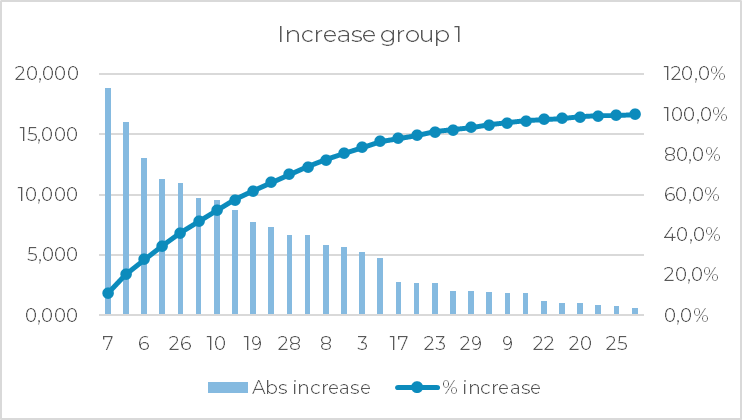
Figura 2. Diagrama de Pareto, grupo 1
Source: Author’s own elaboration.
As shown in Figure 2, students 7 and 5 accounted for 20.4 % of the total increase in scores within Group 1. This means that both students performed much better than most of their peers during the business simulation exercise.
Pareto analysis of group 2 results
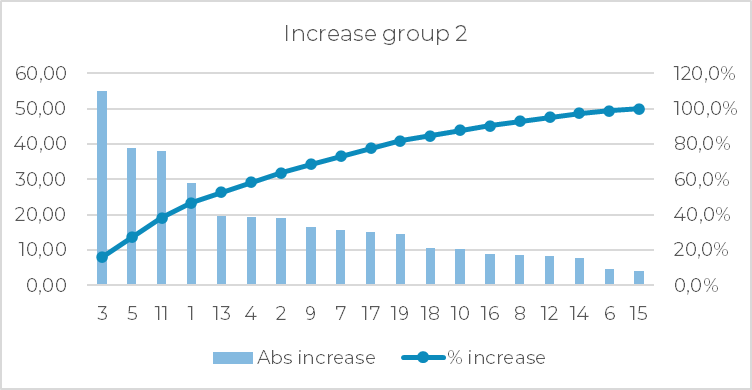
Figura 3. Diagrama de Pareto, grupo 2
Source: Author’s own elaboration.
A similar pattern can be observed in Group 2, as illustrated in Figure 3. In this case, students 3 and 5 represented 27.5 % of the total increase in scores within the group. This suggests that these students also achieved a better performance than their classmates during the business simulation exercise. Overall, their performance exceeded the group’s expected average.
5. DISCUSSION
Before addressing the criteria applied in this study, it is essential to consider the various factors that may have influenced the results. When analyzing student performance, it should be noted that the scores obtained in the self- and peer assessment did not have an impact on their final course grade. The main objective of this process was not to affect students academically, but rather to measure their performance throughout the simulation. In addition, particular attention was given to the extent to which students improved across different competencies, many of which will be highly valuable to their future professional practice in engineering.
Also, this learning approach helps students connect reality with the topics learned in the classroom. Since their final course grade would not be compromised, students were more likely to provide honest assessments that truly reflected their performance. To monitor student behavior in real time, they were also asked to complete the questionnaire independently at two different points in time. The first administration took place when the areas of each simulated company had been established, ensuring that students had already interacted with their peers and had the information necessary to answer the questionnaire correctly. This timing allowed them to apply their knowledge and that of their peers.
In line with the structure of the simulation, some measures were implemented so that students could receive solid and positive feedback from their peers during group evaluations. Clear guidance and a well-defined set of expected outcomes were provided in terms of both form and content. As a result, the assessment process not only reinforced the idea that the course promotes the learning of theoretical concepts but also facilitates the development of key competencies required for a successful professional performance.
These findings further support the theoretical premise presented in Section 2. The hypothesis testing carried out for both groups allowed the use of average coursework scores, with an overall increase. Moreover, the course design required students to work on various problem-solving tasks to encourage continuous and successful improvement while also allowing them to make their own decisions. Thus, students would be able to decide what to do when faced with a real-life problem. While instructors acted as facilitators— offering ideas and assistance when necessary—students were the sole responsible for the decisions they made about what to do and how to solve a problem. This dynamic fosters the development of creative approaches to problem-solving. In turn, such experiences are likely to contribute positively to students’ future performance in organizational settings.
The results of this study also have direct implications for the fields of economics and business management. In particular, the development of transversal competencies among professionals can influence several aspects, including the use of resources, risk assessment, and the organization of company activities. In addition, these competencies are directly related to economic behavior, as competent managers tend to enhance productivity, reduce management costs, and increase the efficiency of business processes. Furthermore, from a human resources perspective, skills such as informed decision-making and teamwork have a positive influence on business performance. In turn, these capabilities help improve resilience in highly competitive market environments.
This study contributes to the existing literature in both education and management by creating a standardized methodology for measuring competencies within research environments. This methodological contribution may also guide the evaluation of economic models and the analysis of business behavior. Overall, the multidisciplinary relevance of this study reinforces the need for academic institutions to evaluate their business management training programs. In doing so, they can better ensure that students develop managerial and key skills within their programs.
Future research
To begin with, future studies should focus on developing a formalized performance evaluation system. Such a system may incorporate Key Performance Indicators (KPIs) associated with different stages of the simulation, including tactical decision-making, team collaboration, and overall organizational effectiveness, in relation to students’ academic performance. In addition, a larger sample size could allow for more accurate comparisons and enhance relevance by including students from diverse academic programs and institutions. Finally, adopting a longitudinal research design could support hypotheses about whether the competencies developed during the simulation are retained over time and used in a professional setting.
6. CONCLUSIONS
The findings of this study indicate that carrying out a business simulation exercise within a university course/program led to an improved performance across the evaluated areas, as evidenced by both self- and peer assessments. The data revealed that, in both groups under analysis, scores increased significantly compared to those recorded at the beginning of the semester. Specifically, the most notable improvements were observed in four key areas: decision-making, responsibility, teamwork, and leadership. Therefore, the results suggest that administering the same questionnaire at two different points during the semester constitutes a valid method for measuring progress in student academic performance.
Through this simulation-based experience, students were able to apply theoretical concepts to real-life situations, including topics such as systems theory, productivity, competitiveness, planning, organization, leadership, and management control. This was achieved through realistic scenarios that resemble the types of problems typically faced in the workplace. In this way, the simulation not only encouraged students to learn independently but also motivated them to apply their knowledge in a practical setting, thus contributing to better preparation for the labor market. At the same time, it encouraged them to take responsibility for their actions, as students were required to manage a simulated company while receiving guidance and support from instructors to meet the course objectives.
In conclusion, the study shows that combining simulation-based learning with competency assessment increases the level of deep structural learning, while also strengthening basic professional skills. As a result, students are better prepared to transition into real business environments. These findings thus underscore the importance to include simulation-based approaches into the training of business and engineering students.
CONFLICTS OF INTEREST
The authors declare that they don't have any financial, professional, or personal interest conflicts that could affect in any precise form their conclusions or the interpretation of the results reported in this publication.
AUTHOR CONTRIBUTIONS
Mildred Domínguez was responsible for gathering the experiential data for this study, working in collaboration with Andrés Porto to ensure that all relevant information was recorded in a coherent and precise manner. Data analysis was conducted by Lina Gómez and Yuleici Gamero, who applied adequate analytical techniques and criteria to guarantee the reliability of the results. Maria Dhalia Restrepo contributed to the development of the theoretical framework, integrating both theoretical foundations and empirical points of view that supported the methodological decisions in line with the study’s objectives. Mildred Domínguez, with the support of André Porto and Maria Dhalia Restrepo, designed and validated the research instrument, ensuring its validity, reliability, and relevance to the analytical approach employed.
STATEMENT OF IA TOOLS USE
The authors have verified the use of ChatGPT to improve the clarity of this article, while also facilitating some components of its translation into English. By using this service/tool, the authors reviewed and edited the content of this article to their complete satisfaction and therefore assumed all responsibility for the content of this publication.
REFERENCES
- arrow_upward Alba Pastor, C. (2019). Diseño Universal para el Aprendizaje: un modelo teórico práctico para una educación inclusiva de calidad. Participación Educativa, 6(9), 55-68. https://dialnet.unirioja.es/servlet/articulo?codigo=7449797
- arrow_upward Arancibia Carpio, J. C. (2021). El Fomento de la Cultura Emprendedora en el proceso de la Formación Universitaria dentro del Ecosistema Emprendedor. Ciencia Latina Revista Científica Multidisciplinar, 5(2), 1926-1950. https://doi.org/10.37811/cl_rcm.v5i2.391
- arrow_upward Ares Parra, A. (2004). La conducta proactiva de los emprendedores. Revista de Trabajo Social, 4, 493-498. https://dialnet.unirioja.es/servlet/articulo?codigo=860568
- arrow_upward Asún Dieste, S., Rapún López, M., & Romero Martín, M. (2019). Percepciones de Estudiantes Universitarios sobre una Evaluación Formativa en el Trabajo en Equipo. Revista Iberoamericana De Evaluación Educativa, 12(1),1-28. https://doi.org/10.15366/riee2019.12.1.010
- arrow_upward Barragán Ramírez, C. A., González Bucheli, A. del C, & Ortiz Morales, A. G. (2020). Competencias gerenciales: Una visión estudiantil desde la Pontificia Universidad Católica del Ecuador/ Management competences: A student view from the Pontificia Universidad Católica del Ecuador. Revista De Ciencias Sociales, 26,113-126. https://doi.org/10.31876/rcs.v26i0.34117
- arrow_upward Carrillo, M., Padilla, J., Rosero, T., & Villagómez, M. S. (2009). La motivación y el aprendizaje. Alteridad, 4(2), 20-33. https://doi.org/10.17163/alt.v4n2.2009.03
- arrow_upward Casimiro Urcos, W. H., Casimiro Urcos, C. N., & Casimiro Urcos, J. F. (2019). Competencias de emprendimiento empresarial en estudiantes universitarios. Universidad y Sociedad, 11(5), 61-69. https://rus.ucf.edu.cu/index.php/rus/article/view/1343/1372
- arrow_upward Cejas Martínez, M. F., Rueda Manzano, M. J., Cayo Lema, L. E., & Villa Andrade, L. C. (2019). Formación por competencias: Reto de la educación superior. Revista de Ciencias Sociales, 25(1), 94-101. https://produccioncientificaluz.org/index.php/rcs/article/view/27298
- arrow_upward Cuellar Campos, D. M., Gómez Cortés, D. C., & Urrego Romero, J. E. (2015). La simulación como estrategia de aprendizaje financiero para el contexto laboral: estado de la cuestión. Revista Finova: Investigacion E Innovacion Financiera Y Organizacional, 1(2), 33-41.https://revistas.sena.edu.co/index.php/finn/article/view/334
- arrow_upward Edú Valsania, S. (2014). Influencia del liderazgo auténtico en las conductas extra-rol de los empleados [tesis de doctorado, Universidad Nacional de Educación a Distancia]. e-spacio Uned. https://hdl.handle.net/20.500.14468/19004
- arrow_upward Franco Pérez, P. M. (2012). El trabajo independiente, una forma de reforzar el valor responsabilidad en los estudiantes universitarios. Edumecentro, 4(3), 198-205. http://scielo.sld.cu/scielo.php?script=sci_arttext&pid=S2077-28742012000300020&lng=es&tlng=es
- arrow_upward Galván-Cardoso, A., & Siado-Ramos, E. (2021). Educación Tradicional: Un modelo de enseñanza centrado en el estudiante. Cienciamatria, 7(12), 962-975. https://doi.org/10.35381/cm.v7i12.457
- arrow_upward García Miranda, I., & Durán Heras, A. (2020). Uso de videojuegos de simulación empresarial como complemento de aprendizaje en el área de Ingeniería de Organización. Dirección y Organización, 70, 19-27. https://doi.org/10.37610/dyo.v0i70.566
- arrow_upward Garizurieta Bernabé, J., Muñoz Martínez, A. Y., Otero Escobar, A. D., & González Benítez, R. A. (2018). Simuladores de negocios como herramienta de enseñanza-aprendizaje en la educación superior. Apertura, 10(2), 36-49. https://doi.org/10.32870/ap.v10n2.1381
- arrow_upward González, J., Salazar, F., Ortiz, R., & Verdugo, D. (2024). Gerencia estratégica: herramienta para la toma de decisiones en las organizaciones. Telos: Revista de estudios interdisciplinarios en Ciencias Sociales, 21(1), 242-267. https://doi.org/10.36390/telos211.12
- arrow_upward González Velazco, J. M., Carmona Alvarado, F., Arboleda López, A., Porto Solano, A. (compils.). (2018). Educación transdisciplinar, tecno-didáctica y paradigmas emergentes: para una ciudadanía planetaria. Ediciones Universidad Simón Bolívar. https://hdl.handle.net/20.500.12442/3780
- arrow_upward Graeml, F. R., Baena Graciá, V., & Mihai Yiannaki, S. (2011). La integración de diferentes campos del conocimiento en juegos de simulación empresarial. Revista De Docencia Universitaria, 8(2), 29-44. https://doi.org/10.4995/redu.2010.6194
- arrow_upward Guerrero-Velástegui, C. A., Ballesteros-López, L. G., & Herrera Herrera, J. B. (2018). Gerentes y equipo de trabajo efectivo: Empresa exitosa. Dominio De Las Ciencias, 4(3), 416-430. https://doi.org/10.23857/dc.v4i3.816
- arrow_upward Hunt, L., Eagle, L., & Kitchen, P. J. (2004). Balancing Marketing Education and Information Technology: Matching Needs or Needing a Better Match? Journal of Marketing Education, 26(1),75-88. https://doi.org/10.1177/0273475303262350
- arrow_upward Lacruz, A. J. (2017). Simulation and Learning Dynamics in Business Games. RAM: Revista de Administração Mackenzie, 18(2), 49-79. https://doi.org/10.1590/1678-69712016/administracao.v18n2p49-79
- arrow_upward López-Salazar, A. (2010). La proactividad empresarial como elemento de competitividad. Ra Ximhai, 6(2), 303-312. https://doi.org/10.35197/rx.06.02.2010.11.al
- arrow_upward Muñoz Dueñas, M. del P. , Cabrita, M. do R., Ribeiro da Silva, M., & Diéguez Rincón, G. (2015). Técnicas de gestión empresarial en la globalización. Revista De Ciencias Sociales, 21(3), 346-357. https://www.redalyc.org/pdf/280/28042299006.pdf
- arrow_upward Pérez, J., & González, A. (2014). La simulación de negocios como estrategia pedagógica / Business simulation as a pedagogical strategy. Cuaderno de Pedagogía Universitaria, 9(17), 44-49. https://doi.org/10.29197/cpu.v9i17.168
- arrow_upward Polanco Navarro, D. (2018). Propuesta de la inserción de simulación empresarial como asignatura en el pensum de administración de empresas de la Universidad Central del Este. UCE Ciencia: Revista de Postgrado, 6(2), 1-8. http://uceciencia.edu.do/index.php/OJS/article/view/134
- arrow_upward Porter, M. E. (2011). ¿Qué es la estrategia? Harvard Business Review, 89(11), 100-117. https://www.ucipfg.com/Repositorio/MAES/MAES-03/Unidad1/ESTRATEGIA%20MPORTER%202011.pdf
- arrow_upward Porto Solano, A., & Angarita Álvarez L. (2023). Estructuras organizacionales: nuevas tendencias. Ad-Gnosis, 6(6), 77-83. https://doi.org/10.21803/adnogsis.v6i6.192
- arrow_upward Porto Solano, R., Silvera Sarmiento, A., Garcés Giraldo, L. F., Porto Solano, A., & Suarez Lopez, D. (2017). Marco de enseñanza basado en OVAs para el adiestramiento en la introducción de los algoritmos (OLIA). Etic@ net: Revista científica electrónica de Educación y Comunicación en la Sociedad del Conocimiento, 17(1), 60-75. https://doi.org/10.30827/eticanet.v17i1.11915
- arrow_upward Puebla Sánchez, I., & Temiño Aguirre, I. (2018). La importancia de los Centros de Simulación Empresarial en la formación universitaria. International Journal of Information Systems and Software Engineering for Big Companies, 5(2), 115-122. https://uajournals.com/ijisebc/images/papers/2018/5/2/10.pdf
- arrow_upward Real Academia Española. (2021). Organización. En Diccionario de la lengua española (23. a ed.).
- arrow_upward Riquelme-Castañeda, J. A., Pedraja-Rejas, L. M., & Vega-Massó, R. A. (2020). El liderazgo y la gestión en la solución de problemas perversos. Una revisión de la literatura. Formación Universitaria, 13(1), 135-144. https://doi.org/10.4067/S0718-50062020000100135
- arrow_upward Rivera Ramírez, W. (2021). El papel de la motivación y de la aceptación de la tecnología en el desarrollo del aprendizaje de los estudiantes que participan en juegos de simulación empresarial [trabajo de pregrado, Universitat Rovira I Virgili]. Repositori URV. http://hdl.handle.net/20.500.11797/TFM947
- arrow_upward Ruíz Valdés, S., & Ruíz Tapia, J. A. (2013). Uso del simulador de negocios como herramienta para el aprendizaje en alumnos de educación superior de la U.A.E.M. Recai Revista de Estudios en Contaduría, Administración e Informática, 2(3), 101-121. https://www.redalyc.org/articulo.oa?id=637967192002
- arrow_upward Salazar Garcés, R. G., Bejarano Lizano, B. O., & Núñez Morales, Y. I. (2018). Las competencias gerenciales y el desempeño laboral: de las autoridades de las Instituciones Estatales de Educación Superior del Cantón Ambato. Revista Publicando, 5(14), art. 1, 259-274. https://revistapublicando.org/revista/index.php/crv/article/view/1090
- arrow_upward Salcedo Díaz, L., Porto Solano, A. F., Echeverry Gutiérrez, C., Boss Agudelo, J., & Moreno Ortiz, C. A. (2016). Responsabilidad Social Empresarial: Modelo de procesos de desarrollo de productos con base en la Metodología PRiSM y la Estrategia P5. Producción+ Limpia, 11(2), 111-125. http://www.scielo.org.co/scielo.php?script=sci_arttext&pid=S1909-04552016000200011
- arrow_upward Salessi, S. M., & Omar, A. (2018). Comportamientos proactivos en el trabajo: adaptación y análisis psicométrico de una escala. Actualidades en Psicología, 32(124), 34-50. http://doi.org/10.15517/ap.v32i124.30642
- arrow_upward Sánchez Verdú, C. (2020). Simulación empresarial en la asignatura de iniciación a la actividad emprendedora y empresarial utilizando el trabajo cooperativo y la gamificación [tesis de maestría, Universidad de Alicante]. RUA. http://hdl.handle.net/10045/107643
- arrow_upward Shryock, K., & Reed, H. (2009). ABET Accreditation: Best Practices for Assessment. In 2009 Annual Conference & Exposition (pp. 14-148). ASEE Peer. https://peer.asee.org/abet-accreditation-best-practices-for-assessment
- arrow_upward Useche Aguirre, M. C., Giler, M., & Guerrero Peña, L. J. (2019). Competencias gerenciales en el ámbito empresarial zuliano. Revista De Ciencias Sociales, 25(1), 173-185. http://www.produccioncientifica.luz.edu.ve/index.php/rcs/article/view/27308
- arrow_upward Vásquez Fajardo, C. E., & Fajardo Vaca, L. M. (2017). La simulación de negocios como una herramienta de aprendizaje empresarial para desarrollar la competitividad. Revista Atlante: Cuadernos de Educación y Desarrollo. https://www.eumed.net/rev/atlante/2017/10/simulacion-negocios-aprendizaje.html
- arrow_upward Zumba Hidalgo, S. N., Quinde Tenemea, J. L., Lata Tigre, S. C., & Espinoza Álvarez, C. A. (2021). La importancia del fomento de las habilidades blandas en la educación. Illari, (9), 28-32. https://revistas.unae.edu.ec/index.php/illari/article/view/635

 Google