Relationship Marketing and the Circular Economy in Higher Education Institutions: Toward a Relational Model for Responsible Consumption
Marketing relacional y economía circular en instituciones de educación superior: hacia un modelo relacional para el consumo responsable
 PDF
Received: July 26, 2019
Accepted: September 02, 2019
Uribe-Piedrahita, J., Romero Martínez, C. D., Salgado Pérez, R., & Montoya, J. A. (2026). Relationship Marketing and the Circular Economy in Higher Education Institutions: Toward a Relational Model for Responsible Consumption. Revista CEA, 12(29), e3750. https://doi.org/10.22430/24223182.3750
Abstract
Objective: This article sought to analyze the interplay between relationship marketing and the circular economy in higher education institutions, based on the identification of a theoretical gap in the literature concerning their conceptual integration. Although the circular economy has been widely examined from operational and technical perspectives, limited attention has been given to its linkage with stakeholder engagement strategies.
Design/Methodology: A descriptive qualitative approach was adopted through a structured literature review of studies published between 2010 and 2025 in Dialnet, Redalyc, SciELO, ScienceDirect, and Scopus. The analysis focused on the interconnections among relationship marketing, sustainability, and responsible consumption.
Findings: The study proposed a conceptual integration between relationship marketing and the circular economy to better understand the role of relational strategies in fostering a culture of responsible consumption among stakeholders in academic communities. In this regard, the proposed perspective broadened the dominant approach in the literature by incorporating relational dimensions into the understanding of university sustainability.
Conclusions: The incorporation of relationship marketing into circular economy strategies strengthens the transition toward institutional models grounded in sustainability and contributes to shaping the cultural and behavioral dynamics of stakeholders within higher education institutions.
Originality: This study offers a conceptual framework that redefines the role of relationship marketing in the transition toward university models guided by the principles of the circular economy.
Keywords: responsible consumption, circular economy, higher education institutions, relationship marketing, university sustainability. JEL Codes: M31, Q56, I23, Q01.
Highlights
Resumen
Objetivo: este estudio se propuso analizar la relación entre el marketing relacional y la economía circular en instituciones de educación superior a partir del reconocimiento de la brecha teórica en la literatura respecto a su articulación conceptual. Si bien la economía circular se ha estudiado desde perspectivas operativas y técnicas, su relación con las estrategias relacionales orientadas a los stakeholders ha recibido una atención limitada.
Diseño/metodología: esta se presentó desde un enfoque cualitativo de carácter descriptivo, basado en una revisión estructurada de la literatura publicada entre 2010 y 2025 en Dialnet, Redalyc, Scielo, ScienceDirect y Scopus, en la que se analizaron los vínculos entre marketing relacional, sostenibilidad y consumo responsable.
Resultados: el estudio propuso la articulación conceptual entre el marketing relacional y la economía circular, para comprender el rol de las estrategias relacionales en la construcción de una cultura de consumo responsable en los participantes de las comunidades académicas. Esta perspectiva extendió el enfoque que predomina en la literatura, al integrar dimensiones relacionales en la comprensión de la sostenibilidad universitaria.
Conclusiones: la incorporación del marketing relacional en las estrategias de economía circular fortalece la transición hacia modelos institucionales que se soportan en la sostenibilidad e inciden en los procesos culturales y comportamentales de los participantes de las instituciones de educación superior.
Originalidad: el estudio aporta un marco conceptual que redefine el papel del marketing relacional en la transición hacia modelos universitarios basados en los principios de la economía circular.
Palabras clave: consumo responsable, economía circular, instituciones de educación superior, marketing relacional, sostenibilidad universitaria. Códigos JEL: M31, Q56, I23, Q01.
Highlights
1. INTRODUCTION
Higher Education Institutions (HEIs) have become strategic spaces for advancing sustainability agendas, given both their educational mission and their capacity to shape organizational and social practices. In this context, the circular economy redefines the interplay between production, consumption, and resource management by emphasizing the reduction, reuse, repair, and redesign of products and services (
The literature on sustainability in HEIs has documented important progress in the implementation of environmental policies, sustainable procurement, mobility initiatives, waste management practices, curricula, and living labs. This body of work has focused primarily on the operational and technical dimensions of sustainability and has highlighted persistent challenges, including fragmented initiatives, weak cross-functional coordination, and a disconnect between institutional discourse and everyday practices (
In the context of HEIs, responsible consumption extends beyond recycling practices and encompasses decisions related to the acquisition, use, maintenance, and disposal of goods and services across campus. From this perspective, organizational culture—understood as a set of meanings, practices, and relationships—emerges as a key factor in the effectiveness of circular strategies. Nevertheless, studies addressing these issues in university settings, particularly in Latin America, remain incipient and lack conceptual models that integrate the relational capabilities of marketing into the circular economy (
Specifically, the study pursues four objectives: (i) to map the theoretical and empirical approaches that link organizational relationships and circular practices in HEIs; (ii) to identify relational mechanisms—trust, commitment, norms, and communication—associated with the adoption and persistence of pro-circular behaviors; (iii) to synthesize relational strategies reported in the literature, including stakeholder segmentation and co-creation, student and faculty engagement, and programs aimed at reinforcing sustainable behaviors; and (iv) to propose an integrative conceptual framework to guide the design of relational interventions for responsible consumption aligned with the Sustainable Development Goals (SDGs) (
Based on these objectives, the review was guided by the following research questions:
- RQ1. Which theoretical and empirical approaches have connected relationship marketing and the circular economy in HEIs?
- RQ2. Which relational mechanisms are associated with the adoption and persistence of responsible consumption practices on university campuses?
- RQ3. Which relational strategies have been reported in the literature as the most effective for promoting circular behaviors within academic communities?
- RQ4. Which metrics, gaps, and tensions persist in the assessment of the integration between relationship marketing and the circular economy in HEIs?
The conceptual basis of the study rests on three pillars. First, the commitment–trust theory of relationship marketing, which explains sustained cooperation when relational benefits and fair exchange rules are present (
Building on these foundations, this article argues that high-quality relationships on campus—among administrators, faculty, students, administrative staff, and suppliers—constitute a strategic asset for narrowing the gap between intention and action in responsible consumption by transforming sustainability into a relational good. Methodologically, the study conducts a structured and descriptive literature review covering the period 2010–2025 across five bibliographic databases: Scopus, Redalyc, SciELO, Dialnet, and ScienceDirect. Explicit inclusion and exclusion criteria were applied, together with an analytical matrix for thematic coding and gap identification. The analysis focuses on studies that directly or indirectly address the intersection between relationship marketing and the circular economy in HEIs, as well as publications on social marketing and consumer behavior with implications for university campuses (
The next section develops the theoretical framework, which integrates the foundations of relationship marketing, the circular economy, and responsible consumption in HEIs. Section 3 outlines the review methodology. Section 4 reports the findings and examines the main thematic axes and relational mechanisms identified. Section 5 offers the discussion and proposes an integrative model for designing pro-circular relational strategies in HEIs. Finally, Section 6 sets out the conclusions and implications for university management and future research.
2. THEORETICAL FRAMEWORK
The interplay between relationship marketing and the circular economy in HEIs has been addressed separately in the literature, with most studies examining these fields independently or from predominantly operational perspectives. Although significant progress has been made in understanding the circular economy and developing relationship marketing, theoretical integration remains limited, particularly in explaining how relational dynamics influence the adoption and continuity of circular practices in HEIs. This theoretical framework therefore problematizes and integrates the main approaches underpinning this relationship through five analytical dimensions: the principles of the circular economy in university management; the foundations of relationship marketing and its relational mechanisms; the psychosocial determinants of responsible consumption; sustainability dynamics in academic institutions; and the points of convergence between both approaches.
Principles and Scope of the Circular Economy in University Management
The circular economy seeks to decouple value creation from the linear consumption of resources by prioritizing reduction, reuse, repair, remanufacturing, and recycling strategies within regenerative cycles of materials and energy (
From this perspective, the adoption of the circular economy in HEIs goes beyond technical implementation and requires organizational capabilities and relational arrangements that align actors, interests, and practices around shared sustainability goals. The management of construction and demolition waste in Valle de Aburrá (Antioquia, Colombia) provides a clear example of these challenges, revealing both coordination barriers and opportunities for circular value creation (
Conceptual Foundations and Driving Mechanisms of Relationship Marketing
Relationship marketing focuses on establishing, maintaining, and strengthening long-term relationships that create value for both organizations and their stakeholders, supported by reciprocal benefits, cooperation, and trust (
In education, relationship marketing has evolved into a strategic conception that brings together communication, institutional identity, and relational sustainability. Recent studies in Colombian HEIs show that educational marketing and strategic communication interconnect stakeholders to increase satisfaction, build trust, and foster loyalty—key elements for retention and institutional co-responsibility (
The study by
Psychosocial Determinants of Responsible Consumption
Responsible consumption in HEIs refers to decisions concerning the acquisition, use, maintenance, and disposal of goods and services, in which social norms, identity, perceived control, and feedback influence both intention and behavior (
Sustainability Dynamics in Higher Education Institutions
HEIs have increased their sustainability commitments and reporting practices. Nevertheless, challenges remain in governance, cross-functional coordination, and impact assessment (
Linking Relationship Marketing and the Circular Economy
The convergence between relationship marketing and the circular economy can be examined through three interdependent dimensions:
Relational mechanisms that enable circular practices
From the perspective of relationship marketing, trust and commitment are understood as conditions that support sustained cooperation and reduce uncertainty in exchange interactions (
Co-creation of circular value
From the perspective of service-dominant logic, the circular economy is understood as a co-creation system in which students, faculty, staff, and suppliers integrate resources (knowledge, technologies, processes) to preserve use value within loops (
Relational segmentation and behavioral journeys
Relationship marketing provides tools for segmenting stakeholders according to motivations, barriers, and levels of commitment, and for designing journeys that combine information, enablers (infrastructure), feedback, and social recognition. These journeys focus on reducing friction and reinforcing self-efficacy (
3. METHODOLOGY
This study adopted a descriptive qualitative approach based on a structured literature review (
Study Design
The study was carried out in three consecutive phases: (i) planning, search, and study selection; (ii) analysis of findings; and (iii) synthesis of findings, following the methodological recommendations for structured literature reviews proposed by
Search Strategy
The literature search was conducted between January and March 2025 across five bibliographic databases: Dialnet, Redalyc, SciELO, ScienceDirect, and Scopus. These databases were selected because of their relevance to the fields of social sciences, organizational management, and sustainability. Controlled descriptors and free-text terms in both Spanish and English were combined using Boolean operators:
(“relational marketing” OR “relationship marketing”) AND (“circular economy” OR “sustainable consumption”) AND (“higher education” OR “universities” OR “campus sustainability”)
The search was restricted to the period 2010–2025 in order to capture the contemporary evolution of debates surrounding sustainability and institutional relationships in higher education. The initial search yielded 186 records, which were refined and imported into Mendeley for duplicate removal, metadata management, and thematic classification (see Figure 1). The inclusion and exclusion criteria defined in the methodological phase were subsequently applied.
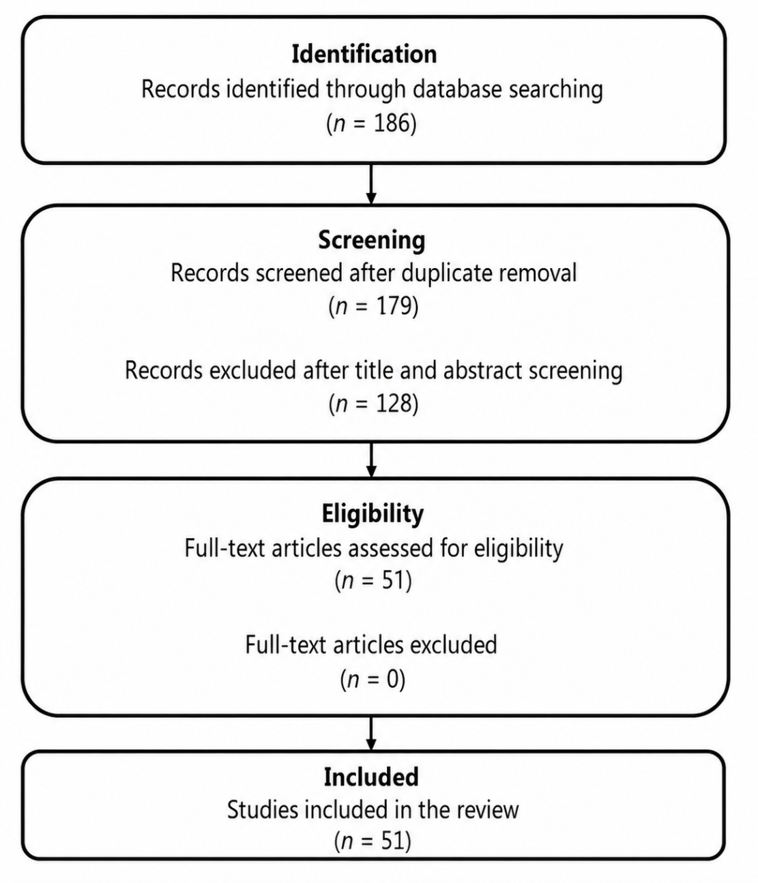
Figura 1. Diagrama de flujo del proceso de selección de estudios siguiendo el protocolo SPAR-4-SLR, con estructura tipo PRISMA
Source: Author’s own work.
Although Web of Science (WoS) is widely used in systematic reviews, this study prioritized Scopus, Redalyc, SciELO, ScienceDirect and Dialnet to achieve broader coverage of the social sciences literature, particularly research produced in Latin America. This decision reflects the nature of the research topic, which focuses on HEIs and sustainability practices in emerging contexts.
Inclusion and Exclusion Criteria
The inclusion criteria required studies to be published in peer-reviewed scientific journals; address the interplay among relationship marketing, the circular economy, and sustainability or responsible consumption; focus on HEIs; and be available in full text with verifiable access. Exclusion criteria comprised non-peer-reviewed documents; theses or conference papers without indexed publication; studies focused exclusively on technological processes without a relational component; research conducted in business or governmental contexts unrelated to HEIs; and duplicate or preliminary versions of the same study. Study selection was carried out in two stages: a preliminary review of titles and abstracts, followed by full‑text reading of potentially eligible articles. The process was executed independently by two reviewers, achieving an agreement rate of 92 %, as estimated using Cohen’s kappa coefficient, thereby strengthening the reliability and methodological consistency of the review. Any disagreements were resolved by consensus.
Analysis and Coding Procedures
The selected studies were systematized in an analytical matrix developed in Microsoft Excel. The matrix included bibliometric variables, such as publication year, country, journal, and study type, as well as conceptual variables, including theoretical approaches, relational mechanisms, implementation strategies, and reported circular outcomes. Thematic coding was then performed to identify recurring patterns and relationships among categories (
To ensure the traceability and replicability of the qualitative analysis, a thematic coding structure was established that combined a priori categories, derived from the theoretical framework and research objectives, with emergent categories, identified through the reading and comparison of the selected studies. The a priori categories were linked to relationship marketing, the circular economy, and responsible consumption in HEIs, whereas the emergent categories identified patterns, tensions, and contributions that had not been anticipated.
A descriptive bibliometric analysis was also undertaken to detect publication trends in terms of temporal evolution, geographic distribution, and the journals most frequently represented in the corpus. This analysis provided contextual insight into the development of the field and complemented the thematic interpretation. Table 1 presents the coding framework implemented in the review, including the analytical dimensions, categories, operational definitions, and indicators used to systematize the information and maintain interpretive consistency throughout the thematic synthesis of results.
Tabla 1. Estructura de codificación temática utilizada en la revisión
Analytical Dimension | Category | Category Type | Operational Definition | Indicators / Coding Examples |
Relationship Marketing | Trust | A priori | Degree to which university actors perceive institutional credibility, reliability, and coherence in sustainability initiatives | Information transparency, perceived legitimacy, uncertainty reduction |
Relationship Marketing | Commitment | A priori | Stakeholders’ willingness to maintain sustainable behaviors over time | Behavioral persistence, loyalty to sustainability programs |
Relationship Marketing | Two-way communication | A priori | Existence of reciprocal information flows between heis and their actors | Feedback, participation, institutional dialogue |
Relationship Marketing | Co-creation | A priori | Stakeholder participation in the design and implementation of sustainable practices | Living labs, collaborative design, participatory programs |
Circular Economy | Circular practices | A priori | Actions aimed at closing material and resource cycles on campus | Reuse, refill, repair, return, sharing |
Circular Economy | Circular outcomes | A priori | Operational and behavioral effects derived from the implementation of the circular economy | Waste reduction, life-cycle extension, efficient resource use |
Organizational Culture | Responsible consumption | A priori | Set of values, norms, and practices associated with conscious resource use | Informed decisions, consumption reduction, sustainable habits |
University Governance | Institutional participation | Emergent | Formal and informal forms of engagement by the university community | Committees, ambassadors, sustainability roundtables |
Institutional Strategy | Relational incentives | Emergent | Symbolic or social benefits for sustainable behaviors | Recognition, sense of belonging, reputation |
Assessment | Relational metrics | Emergent | Non-technical indicators used to assess sustainability | Trust, commitment, institutional identification |
Implementation | Organizational barriers | Emergent | Factors that limit the adoption of circular practices | Fragmentation, weak coordination, lack of internal alignment |
Quality Assessment
Each article was assessed according to criteria of methodological rigor and theoretical–empirical coherence, considering the clarity of the research objective, the validity of the study design, the consistency between methods and findings, and the relevance of the study to the field (
Of the 186 records initially selected, 51 studies met the quality standards after the removal of duplicates and the application of the inclusion and exclusion criteria and were therefore included in the final synthesis. This selection ensured disciplinary and geographic diversity within the corpus while providing the theoretical breadth required to analyze, systematize, and integrate findings in a review aimed at identifying advances and development trends in the interplay between relationship marketing and the circular economy in HEIs.
Integration of Findings
The final analysis consisted of an interpretive thematic synthesis aimed at identifying trends, gaps, and points of convergence between relationship marketing and the circular economy in higher education. This approach enabled the findings to be organized around three axes: relational mechanisms that facilitate sustainable behaviors; institutional strategies oriented toward responsible consumption; and challenges in integrating relationship marketing into circular management models. These three axes structured the interpretation of findings presented in the discussion section, where the proposed pro-circular relational model is examined.
4. RESULTS
Table 2 summarizes four analytical dimensions: conceptual foundations and definitional clarifications; relational mechanisms associated with the adoption of circular practices on campus; institutional strategies for promoting responsible consumption from a relational perspective; and metrics and assessment gaps. It brings together contributions from studies published between 2010 and 2025, with particular emphasis on frequently cited and methodologically robust research in university sustainability, social marketing, and the circular economy. Consistent with the research questions guiding this review, the table serves as an integrative map of the relational strategies identified, the mechanisms they activate, and their reported impacts within HEIs.
Tabla 2. Estrategias relacionales identificadas y sus impactos reportados en instituciones de educación superior
Relational Strategy | Activated Relational Mechanism | Associated Circular Practice/Responsible Consumption Behavior on Campus | Reported Impacts on HEIs (Type of Evidence) | Suggested (Operational and Relational) Monitoring Indicators |
Communities of practice and sustainability ‘ambassadors’ | Identity; descriptive and injunctive norms; social influence | Everyday practices such as reuse, waste sorting, exchange, and sustainable mobility | Wider diffusion and repetition of behaviors when role models and internal networks are activated (descriptive/ educational evidence) | Operational: participation in activities; adoption by school. Relational: sense of belonging, perceived norms, word-of-mouth diffusion |
Two-way communication and transparency (dialogue channels, accountability) | Trust; uncertainty reduction; alignment of expectations | Clear return and sorting guidelines; point-of-decision campaigns | Greater participation and engagement when information is understandable, feedback is provided, and institutional actions are consistent (descriptive evidence/implementation experiences) | Operational: return/recovery rate; use of collection stations. Relational: perceived trust, regulatory clarity, perceived institutional consistency |
Co-creation with internal stakeholders (students, faculty, administrative staff) | Commitment; ownership; legitimacy | Design of circular services (repair, exchange, refill), living labs, pilot initiatives | Co-designed programs report greater acceptance and long-term continuity through ownership and collective learning (case studies/living labs) | Operational: pilot projects scaled up; waste reduction. Relational: commitment, participation, perceived agency |
Symbolic and reputational recognition (awards, visibility, social gamification) | Relational benefits; motivation; behavioral loyalty | Continued engagement in sustainable behaviors (reusable bottle use, return schemes, resource stewardship) | Increased participation when the social value of behavior is reinforced and punitive approaches are avoided (social marketing/interventions) | Operational: behavioral recurrence; long-term persistence. Relational: pride, satisfaction, perceived recognition |
Relational segmentation (based on motivations and barriers) | Message relevance; friction reduction; self-efficacy | Tailored interventions: strategically located return points; profile-specific messaging | Greater effectiveness than undifferentiated mass campaigns; partial reduction of the intention–action gap (evidence of pro-environmental behavior) | Operational: adoption by segment; usage by location. Relational: perceived control, message usefulness, intention to continue |
Choice architecture and situated normative messages (campus nudges) | Salience; convenience; social norms | Refill, waste sorting, sustainable purchasing, selection of lower-impact alternatives | Higher adoption rates when effort is reduced and decisions are facilitated at the point of use (nudge/choice architecture reviews) | Operational: change in choice (%); waste reduction. Relational: acceptance of the nudge, perceived fairness and legitimacy |
Relational integration with suppliers and sustainable procurement (agreements, governance, rules) | Interorganizational trust; cooperation | Returnable bottles, reverse logistics, refurbishment, circularity clauses | More consistent outcomes when circularity is integrated into procurement and supply chain management (management/circular economy) | Operational: % of purchases meeting circular criteria; return agreements. Relational: supplier trust, perceived quality, compliance |
Feedback and public traceability systems (dashboards, targets, reports) | Transparency; collective learning; shared responsibility | Monitoring of material flows and sdg 12 targets | Greater stakeholder involvement when progress and targets are communicated regularly (sustainability in heis) | Operational: environmental metrics per user; progress toward targets. Relational: credibility, engagement, sustained participation |
Participatory governance (roundtables, committees) | Legitimacy; shared responsibility; coordination | Prioritization of circular initiatives and institutional scaling | Reduced discourse–practice gap when participatory structures and cross-functional coordination are present (sustainability in heis) | Operational: institutionalized initiatives; budget continuity. Relational: perceived voice, trust in decision-making, interdepartmental cohesion |
Curriculum–campus integration (real‑world project‑based learning) | Academic identity; meaning; internalization | Classroom projects addressing waste, consumption, repair, and mobility | Greater transfer to everyday habits when learning is connected to real campus practices (education for sustainability) | Operational: projects generating impact; outcomes by cohort. Relational: perceived learning, behavioral intention, identification with sustainability |
Conceptual Foundations and Definitional Clarifications
The review revealed a solid conceptual foundation on the circular economy, which allowed university initiatives to be examined using consistent criteria. The studies by
The review also found that the literature on sustainability in HEIs has reported consistent progress in policies, curricula, and operational practices while continuing to identify governance and cross-functional coordination gaps (
Against such backdrop, the findings are reported with particular emphasis on the added value of relationship marketing as a socio-organizational framework for mobilizing behaviors aligned with circularity. Finally, regarding the role of HEIs in sustainability transition, recent studies characterize these institutions as catalytic nodes of change through their four core missions: teaching, research, outreach, and social engagement (
Relational Mechanisms Associated with the Adoption of Circular Practices on Campus
The studies reviewed consistently reported that trust, commitment, and two-way communication were associated with sustained participation in responsible consumption initiatives within HEIs (
Similarly, evidence from social marketing research aimed at reducing consumption also highlighted the effectiveness of combining choice architecture with salient narratives and social norms. Across the studies reviewed, strategies that brought decision-making closer to the point of use—such as the placement of refill stations, proximal normative messages, and immediate feedback—were associated with higher rates of adoption and repetition. This pattern was observed in studies applying principles proposed by
Institutional Strategies for Promoting Responsible Consumption from a Relational Perspective
The findings revealed four broad families of strategies that collectively illustrate how HEIs integrated circular economy principles with the relational capabilities of relationship marketing:
Co-creation of services and redesign of sustainability journeys
Programs reporting the highest levels of adherence incorporated co-design processes involving students, faculty, and staff, and translated complex behaviors into journeys characterized by simple steps, visible enablers, and feedback milestones. The use of behavioral journeys was consistent with strategic customer relationship management (CRM) frameworks (
Relational segmentation based on barriers and motivations
The literature documented experiences in which HEIs segmented their internal audiences by motivations (e.g., savings, identification, social impact) and barriers (e.g., convenience, information availability, aesthetic perception), adapting messages and nudges accordingly. This approach was reported to be more effective than undifferentiated mass campaigns and aligned with evidence on the intention–action gap in environmental behavior (
Symbolic recognition and participation in communities
The studies reviewed described positive outcomes when institutions offered public recognition, visibility of achievements, and opportunities to participate in communities of practice (e.g., sustainability ambassadors, repair circles, exchange clubs). In these cases, continued engagement with circular practices was associated with relational benefits, including personalized treatment and recognition, in line with the services literature (
Integration of procurement and supply chains with circular criteria
The evidence indicated that the strongest campus initiatives combined relational work with suppliers (e.g., return agreements, refurbishing schemes, reusable bottles) with transparent communication of operational rules to the internal community. This combination enabled institutions to move beyond recycling-focused approaches and implement circular economy practices centered on prevention and life extension. It also reflected recommendations in the literature that frame the circular economy as a relational value rather than a merely technical proposition (
Metrics and Assessment Gaps
With regard to assessment, the studies reviewed exhibited substantial heterogeneity in the indicators employed, making comparisons across institutions difficult. Operational metrics predominated, including tons diverted to recycling, per-capita water and energy consumption, and the number of collection points. By contrast, relational indicators, such as trust, commitment, perceived norms, and identification with initiatives, were seldom incorporated systematically into sustainability dashboards. This pattern was consistent with implementation balances in HEIs reported by
In terms of feedback and transparency, the findings indicated that information devices located close to the point of decision (e.g., near‑real‑time dashboards, impact labeling, situated normative messages) were associated with greater adherence and repetition of circular behaviors. This finding was particularly evident in interventions inspired by social marketing (
The review also found that campus flow-tracking exercises served both as accountability mechanisms and as tools for stakeholder engagement. Descriptively, initiatives that shared material-flow maps and annual targets with the university community reported higher levels of participation in repair, exchange, and return programs, consistent with the role of living labs as platforms for collective learning (
Thematic Coverage and Persistent Gaps
The literature revealed a thematic concentration on waste, procurement, bottles or containers, and mobility, and, to a lesser extent, on curriculum design and the culture of use and maintenance of university assets (
- Combinations of infrastructure, environmental design, and salient norms were reported to produce higher rates of sorting and return than information campaigns alone. The evidence was supported by principles of social marketing (
Peattie & Peattie, 2009 ) and pro-environmental behavior (Bamberg & Möser, 2007 ). - HEIs that incorporated circularity clauses into supplier agreements recorded more consistent operational outcomes than those whose efforts were limited to recycling initiatives. These cases included co-creation mechanisms involving external stakeholders, in agreement with the service-dominant logic (
Vargo & Lusch, 2004 ). - Positive effects on congestion and emissions were observed when relational approaches (e.g., ambassadors, recognition, segmented communication) were combined with enabling measures, such as bicycle routes and parking facilities and real-time information. Although mobility was not the primary focus of the review, its inclusion helped illustrate how relational benefits can reinforce sustainable behaviors that are repeated on a daily basis.
Several persistent gaps were also identified. These included the scarcity of longitudinal studies examining the persistence of circular behaviors beyond the short term; the limited integration of relational metrics into institutional sustainability dashboards; and the low number of comparative studies involving HEIs with different governance models (public versus private), despite their potential to explain variations in outcomes.
SDG Alignment and Participatory Governance
Most of the documented initiatives were reported as being aligned with SDG 12. The findings indicated that this alignment became more tangible when HEIs translated the SDGs into both operational and relational targets. The literature on sustainability commitments and assessment in HEIs supported this dual perspective—operational and relational—as an indicator of institutional maturity (
5. DISCUSSION
Beyond the well-established roles of trust, commitment, communication, and co-creation, the present analysis identifies two findings that make distinct contributions to management and organizational studies. First, circular economy initiatives in HEIs often fail or remain at incipient stages when implemented through purely technical–operational approaches that overlook the relational dynamics shaping organizational actors’ behavior. Second, the review reveals tensions in the application of relationship marketing within HEIs, where bureaucracy, institutional hierarchies, and organizational fragmentation constrain the consolidation of enduring trust-based relationships. These findings shift the discussion from an instrumental perspective toward a more complex organizational understanding in which relationship management becomes a strategic element for implementing circular models.
On the other hand, the convergence of relationship marketing and the circular economy offers a promising avenue for fostering cultures of responsible consumption within universities. However, a comparison with the broader literature suggests that this integration faces structural, organizational, and symbolic barriers that limit its deployment in HEIs. Although numerous studies highlight the transformative potential of university sustainability, the evidence suggests that many initiatives fail to move beyond instrumental, fragmented, or declarative approaches (
Against this backdrop, the findings of the review demonstrate that the distinctive contribution of relationship marketing does not lie in strengthening environmental initiatives, but rather in reconfiguring the social conditions that make their sustainability possible over time. Nevertheless, important theoretical tensions also emerge within the relationship marketing literature itself. While the commitment–trust theory (
In summary, this literature review confirms the usefulness of relationship marketing while also delineating its boundaries and conditions of applicability within HEIs. Moreover, the findings extend the insights of the service-dominant logic (
From a practical standpoint, the review reveals that many HEIs face financial constraints, regulatory pressures, and administrative burdens that limit the implementation of strategies based on relationship marketing. For example, the Latin American literature highlights that the lack of institutional continuity, leadership turnover, and weak coordination between academic and administrative units are among the main obstacles to consolidating long-term circular programs (
The findings also reveal important limitations of relationship marketing within HEIs. In particular, relational strategies are limited by hierarchical organizational structures, bureaucratic dynamics, and competing institutional logics, all of which hinder the development of sustained trust. In some cases, these strategies lead to symbolic forms of participation or to the instrumentalization of stakeholder commitment without producing structural changes in sustainability practices. This underscores the need to acknowledge the potential unintended effects of relational approaches. Notably, the promotion of sustainable behaviors through symbolic recognition or institutional identity may generate dynamics of social pressure or exclusion, particularly in contexts where actors do not have equal opportunities to participate in circular practices. Finally, excessive reliance on relational incentives may weaken the internalization of sustainability values if it is not accompanied by structural transformations within the organization.
Proposed Integrative Model
As illustrated in Figure 2, the proposed pro-circular relational model brings together four interdependent dimensions that link relationship marketing and the circular economy within the university context. The first dimension, trust and commitment, serves as the foundation for sustained cooperation among institutional actors. The second, two-way communication and transparency, represents the flow of information and collective learning that enables the alignment of sustainability values, practices, and objectives. The third, co-creation with stakeholders, translates shared responsibility into the management of circular projects while strengthening the social legitimacy of environmental policies. Lastly, the fourth dimension, relational benefits and sense of belonging, reinforces the cultural dimension of circularity by embedding sustainability into organizational identity. Taken together, these dimensions configure a pro‑circular relational model that recognizes university sustainability as a dynamic network of human relationships supporting the transition toward cultures of responsible consumption. Rather than merely integrating variables previously identified in the literature, the model advances a reinterpretation of relationship marketing as an organizational infrastructure for sustainability. In doing so, it broadens the scope of relationship marketing from relationship management to cultural transformation in complex institutional settings such as HEIs.
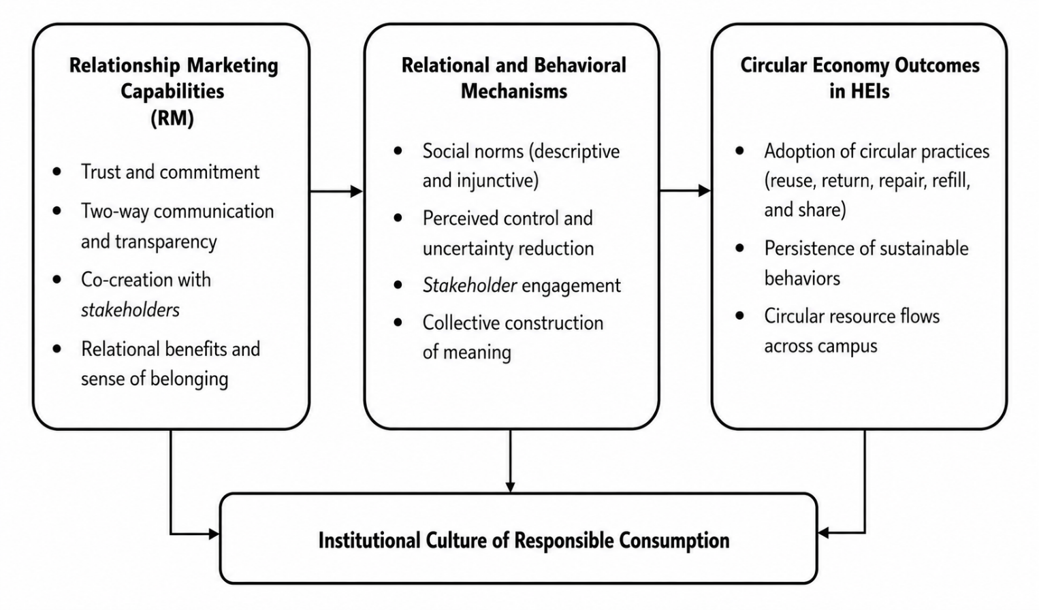
Figura 2. Modelo conceptual relacional-circular para fomentar una cultura de consumo responsable en instituciones de educación superior
Source: Author’s own work.
6. CONCLUSIONS
This literature review examined the interplay between relationship marketing and the circular economy in HEIs, with the primary aim of demonstrating that the integration of these two approaches has been addressed in a fragmented manner within the existing literature. Rather than establishing a novel connection between them, the study contributes by organizing and interpreting the links already identified and by highlighting the role of relational dynamics in promoting responsible consumption practices within HEIs.
From a theoretical perspective, the findings support the usefulness of the commitment–trust theory (
From an empirical perspective, the reviewed literature documents progress in the adoption of sustainability policies and programs within HEIs, while also revealing limitations related to institutional fragmentation, weak coordination among stakeholders, and the minimal incorporation of relational metrics. In this regard, the convergence between relationship marketing and the circular economy is best understood as a necessary analytical pathway for interpreting these tensions rather than as a direct or universally applicable solution.
From a practical standpoint, the findings suggest that sustainability strategies in HEIs could be strengthened by placing greater emphasis on relational dimensions, particularly communication, participation, and the construction of shared meaning. However, the outcomes of such strategies depend on specific organizational conditions, which limits the extent to which these findings can be generalized. Finally, the study proposes a conceptual articulation between relationship marketing and the circular economy that frames university sustainability as a relational process, without exhausting the explanatory possibilities of the phenomenon.
Among the limitations of the study, it should be noted that the review adopts a descriptive qualitative approach, which entails interpretations mediated by the analytical categories defined by the authors. In addition, although the selection of databases ensured substantial coverage of the Latin American literature, other relevant studies may have been excluded. Furthermore, the absence of empirical analysis limits the validation of the proposed model in real-world contexts.
Future research could therefore deepen the empirical analysis of the interplay between relational variables and circular outcomes in HEIs, while comparatively exploring different models of institutional governance. Thus, advancing toward HEIs oriented to sustainability requires moving beyond reliance on technical innovations and fostering an understanding of the relational dynamics that shape organizational behavior.
ACKNOWLEDGMENTS
The authors would like to express their gratitude to Institución Universitaria ITM and Universidad de Sucre for their institutional and academic support in the development of this study. They also acknowledge the research groups that promote reflection on sustainability, the circular economy, and relationship marketing within the Latin American higher education context.
CONFLICTS OF INTEREST
The authors declare that they have no financial, professional, or personal conflicts of interest that could have inappropriately influenced the results obtained or the interpretations presented in this article.
AUTHOR CONTRIBUTIONS
All authors participated in the research, reviewed and approved the final version of the manuscript, and declared that they made substantial contributions to its development.
Jorge Uribe-Piedrahita: Conceptualization of the study, methodological design, theoretical analysis, and drafting of the manuscript.
Cristian David Romero Martínez: Contribution to the structuring of the abstract, translation of the abstract, and final revision of the manuscript.
Rafael Ángel Salgado Pérez: Literature review, source systematization, and support in the development of the theoretical framework and discussion.
Julio Alberto Montoya: Documentary analysis, support in the interpretation of findings, and critical revision of the manuscript.
REFERENCES
- arrow_upward Abbate, S., Centobelli, P., Cerchione, R., Giardino, G., y Passaro, R. (2023). Coming out the egg: Assessing the benefits of circular economy strategies in agri-food industry. Journal of Cleaner Production, 385(18), art. 135665. https://doi.org/10.1016/j.jclepro.2022.135665
- arrow_upward Acevedo Agudelo, H., y Ruiz Loaiza, M. C. (2022). Aproximación a la gestión de los residuos de construcción y demolición en el área metropolitana del Valle de Aburrá. Revista CEA, 8(18), art. e2129. https://doi.org/10.22430/24223182.2129
- arrow_upward Ajzen, I. (1991). The theory of planned behavior. Organizational Behavior and Human Decision Processes, 50(2), 179-211. https://doi.org/10.1016/0749-5978(91)90020-T
- arrow_upward Alves, H., Mainardes, E. W., y Raposo, M. (2010). A Relationship Approach to Higher Education Institution Stakeholder Management. Tertiary Education and Management, 16(3), 159-181. https://doi.org/10.1080/13583883.2010.497314
- arrow_upward Andersen, A.-L., Brunoe, T. D., Bockholt, M. T., Napoleone, A., Hempdrup Kristensen, J., Colli, M., Vejrum Wæhrens, B., y Nielsen, K. (2023). Changeable closed-loop manufacturing systems: Challenges in product take-back and evaluation of reconfigurable solutions. International Journal of Production Research, 61(3), 839-858. https://doi.org/10.1080/00207543.2021.2017504
- arrow_upward Ávila-Rodríguez, O. E., Correa-Henao, S. J., Henao-Colorado, L. C., Monroy-Escudero, H. A., y Brand-Ortiz, J. I. (2021). Determinantes de la lealtad en la relación entre la Liga Antioqueña de Tenis de Campo y sus clientes. Revista CEA, 7(15), art. e1811. https://doi.org/10.22430/24223182.1811
- arrow_upward Bao, Z., Lu, W., Chi, B., Yuan, H., y Hao, J. (2019). Procurement innovation for a circular economy of construction and demolition waste: Lessons learnt from Suzhou, China. Waste Management, 99(6), 12-21. https://doi.org/10.1016/j.wasman.2019.08.031
- arrow_upward Bamberg, S., y Möser, G. (2007). Twenty years after Hines, Hungerford, and Tomera: A new meta-analysis of psycho-social determinants of pro-environmental behaviour. Journal of Environmental Psychology, 27(1), 14-25. https://doi.org/10.1016/j.jenvp.2006.12.002
- arrow_upward Barnett-Itzhaki, Z., Tifferet, S., Etstein, Y., Gefen, I., Ravid, O., Barokas, G., Vilnai-Yavetz, I., Carasso Romano, G. H., y Levi, A. (2025). A holistic approach to sustainability in higher education institutes: social, economic, educational, and mobility perspectives. Frontiers in Education, 10, art. 1588223. https://doi.org/10.3389/feduc.2025.1588223
- arrow_upward Booth, A., Sutton, A., y Papaioannou, D. (2012). Systematic Approaches to a Successful Literature Review. Sage Publications.
- arrow_upward Caeiro, S., Leal Filho, W., Jabbour, C., y Azeiteiro, U. M. (Eds.). (2013). Sustainability Assessment Tools in Higher Education Institutions: Mapping Trends and Good Practices Around the World. Springer.
- arrow_upward Celedón Guerra, Y. M., Aragón Corzo, I. E., y Montealegre Giraldo, J. F. (2025). La cultura ambiental y el desarrollo sostenible en estudiantes de la comunidad indígena de Laachon Mayapo: Un enfoque práctico y participativo. LATAM: Revista Latinoamericana de Ciencias Sociales y Humanidades, 5(6), 3766-3784. https://doi.org/10.56712/latam.v5i6.3277
- arrow_upward Cialdini, R. B., Kallgren, C. A., y Reno, R. R. (1991). A Focus Theory of Normative Conduct: A Theoretical Refinement and Reevaluation of the Role of Norms in Human Behavior. Advances in Experimental Social Psychology, 24, 201-234. https://doi.org/10.1016/S0065-2601(08)60330-5
- arrow_upward Conradi, M., y Sánchez-Moyano, J. E. (2022). Toward a sustainable circular economy for cigarette butts, the most common waste worldwide on the coast. Science of the Total Environment, 847(9), art. 157634. https://doi.org/10.1016/j.scitotenv.2022.157634
- arrow_upward Dimitrova, V., y Mitrovic, A. (2022). Choice Architecture for Nudges to Support Constructive Learning in Active Video Watching. International Journal of Artificial Intelligence in Education, 32(4), 892-930. https://doi.org/10.1007/s40593-021-00263-1
- arrow_upward Disterheft, A., Caeiro, S. S., Leal Filho, W., y Azeiteiro, U. M. (2016). The INDICARE-model – Measuring and caring about participation in higher education's sustainability assessment. Ecological Indicators, 63, 172-186. https://doi.org/10.1016/j.ecolind.2015.11.057
- arrow_upward Ellen MacArthur Foundation. (2015, 30 de noviembre). Towards a circular economy: Business rationale for an accelerated transition. https://www.ellenmacarthurfoundation.org/towards-a-circular-economy-business-rationale-for-an-accelerated-transition
- arrow_upward Elo, S., y Kyngäs, H. (2008). The qualitative content analysis process. Journal of Advanced Nursing, 62(1), 107-115. https://doi.org/10.1111/j.1365-2648.2007.04569.x
- arrow_upward Escalera Chávez, M. E., Vargas Hernández, J. G., y García Santillán, A. (2022). Organizational Capabilities of Retail Companies to Develop Green Marketing Strategies. Revista San Gregorio, (51), 62-77. https://doi.org/10.36097/rsan.v0i51.2041
- arrow_upward Espinosa Seguí, A., Cortés Samper, C., López Jiménez, J., Such Climent, M. P., de Juan Vigaray, M. D., y Navalón-García, R. (2023). Comunidad de aprendizaje de prácticas con pequeños grandes retos proambientales. Revista de Investigación y Evaluación Educativa, 10(2), 44-67. https://doi.org/10.47554/revie.vol10.num2.2023.pp44-67
- arrow_upward Geissdoerfer, M., Savaget, P., Bocken, N. M. P., y Hultink, E. J. (2017). The Circular Economy – A new sustainability paradigm? Journal of Cleaner Production, 143(6), 757-768. https://doi.org/10.1016/j.jclepro.2016.12.048
- arrow_upward Gómez Bayona, L. T., y Uribe Piedrahita, J. (2016). Marketing relacional: La evolución del concepto. Espacios, 37(25), 11. http://www.revistaespacios.com/a16v37n25/16372511.html
- arrow_upward Gómez-Bayona, L., y Arrubla-Zapata, J. P. (2020). Evolución del mercadeo en el sector universitario. Revista Venezolana de Gerencia, 25(89), 159-173. https://doi.org/10.37960/revista.v25i89.31388
- arrow_upward Grajales-Montoya, N., Gómez-Bayona, L., y Coronado-Ríos, B. (2021). La comunicación estratégica desde el mercadeo en instituciones educativas. Revista CEA, 7(13), art. e1684. https://doi.org/10.22430/24223182.1684
- arrow_upward Gummesson, E. (2002). Relationship Marketing in the New Economy. Journal of Relationship Marketing, 1(1), 37-57. https://doi.org/10.1300/J366v01n01_04
- arrow_upward Gwinner, K. P., Gremler, D. D., y Bitner, M. J. (1998). Relational benefits in services industries: The customer’s perspective. Journal of the Academy of Marketing Science, 26(2), 101-114. https://doi.org/10.1177/0092070398262002
- arrow_upward Kautish, P., Paço, A., y Thaichon, P. (2022). Sustainable consumption and plastic packaging: Relationships among product involvement, perceived marketplace influence and choice behavior. Journal of Retailing and Consumer Services, 67, art. 103032. https://doi.org/10.1016/j.jretconser.2022.103032
- arrow_upward Kirchherr, J., Reike, D., y Hekkert, M. (2017). Conceptualizing the circular economy: An analysis of 114 definitions. Resources, Conservation and Recycling, 127, 221-232. https://doi.org/10.1016/j.resconrec.2017.09.005
- arrow_upward Kitchenham, B., Pearl Brereton, O., Budgen, D., Turner, M., Bailey, J., y Linkman, S. (2009). Systematic literature reviews in software engineering – A systematic literature review. Information and Software Technology, 51(1), 7-15. https://doi.org/10.1016/j.infsof.2008.09.009
- arrow_upward Kutaula, S., Gillani, A., Leonidou, L. C., y Christodoulides, P. (2022). Integrating fair trade with circular economy: Personality traits, consumer engagement, and ethically-minded behavior. Journal of Business Research, 144(2), 1087-1102. https://doi.org/10.1016/j.jbusres.2022.02.044
- arrow_upward Leal Filho, W., Shiel, C., Paço, A., Mifsud, M., Veiga Avila, L., Londero Brandli, L., Molthan-Hill, P., Pace, P., Azeiteiro, U. M., Ruiz Vargas, V., y Caeiro, S. (2019). Sustainable Development Goals and sustainability teaching at universities: Falling behind or getting ahead of the pack? Journal of Cleaner Production, 232, 285-294. https://doi.org/10.1016/j.jclepro.2019.05.309
- arrow_upward Lindstrom, K. N., Tucker, J. A., y McVay, M. (2023). Nudges and choice architecture to promote healthy food purchases in adults: A systematized review. Psychology of Addictive Behaviors, 37(1), 87-103. https://doi.org/10.1037/adb0000892
- arrow_upward Lozano, R., Ceulemans, K., Alonso-Almeida, M., Huisingh, D., Lozano, F. J., Waas, T., Lambrechts, W., Lukman, R., y Hugé, J. (2015). A review of commitment and implementation of sustainable development in higher education: Results from a worldwide survey. Journal of Cleaner Production, 108(Part. A), 1-18. https://doi.org/10.1016/j.jclepro.2014.09.048
- arrow_upward Lozano, R., Lukman, R., Lozano, F. J., Huisingh, D., y Lambrechts, W. (2013). Declarations for sustainability in higher education: Becoming better leaders through addressing the university system. Journal of Cleaner Production, 48, 10-19. https://doi.org/10.1016/j.jclepro.2011.10.006
- arrow_upward Lüdeke-Freund, F., y Dembek, K. (2017). Sustainable business model research and practice: Emerging field or passing fancy? Journal of Cleaner Production, 168(3), 1668-1678. https://doi.org/10.1016/j.jclepro.2017.08.093
- arrow_upward Luukkonen, R., Närvänen, E., y Becker, L. (2024). Consumer collectives in the circular economy: A systematic review and research agenda. Sustainable Production and Consumption, 45, 281-293. https://doi.org/10.1016/j.spc.2024.01.006
- arrow_upward Martín-Santana, J. D., Olarte, C., Reinares-Lara, E., Reinares-Lara, P., y Samino García, R. (2019). Gestión de la comunicación: un enfoque integral. ESIC Editorial.
- arrow_upward Matos-Cámara, R. F., Ruiz Ruiz, J. M., Bernárdez-Vilaboa, R., Huerta-Zavala, P., y Lobato-Rincón, L.-L. (2023). La confianza y el compromiso afectivo como factores determinantes en el emprendimiento de estudiantes universitarios: Una construcción en el contexto del marketing relacional educativo. Ciencia ergo-sum, 30(2), art. e195. https://doi.org/10.30878/ces.v30n2a2
- arrow_upward Mayring, P. (2014). Qualitative content analysis: Theoretical foundation, basic procedures and software solution. Beltz Verlag.
- arrow_upward Morgan, R. M., y Hunt, S. D. (1994). The Commitment-Trust Theory of Relationship Marketing. Journal of Marketing, 58(3), 20-38. https://doi.org/10.1177/002224299405800302
- arrow_upward Ortega-Vivanco, M., Garcia-Tinisaray, D., y Espinosa-Vélez, M. P. (2023). Efecto del marketing relacional y redes sociales en la satisfacción de universitarios. Journal of Technology Management & Innovation, 18(1), 104-112. https://doi.org/10.4067/S0718-27242023000100104
- arrow_upward Payne, A., y Frow, P. (2005). A Strategic Framework for Customer Relationship Management. Journal of Marketing, 69(4), 167-176. https://doi.org/10.1509/jmkg.2005.69.4.167
- arrow_upward Peattie, K., y Peattie, S. (2009). Social marketing: A pathway to consumption reduction? Journal of Business Research, 62(2), 260-268. https://doi.org/10.1016/j.jbusres.2008.01.033
- arrow_upward Ramírez Molina, R. I., Lay Raby, N. D., Baez Palencia, D. A., y Sukier, H. B. (2025). Comunicación responsable: Dimensiones de cocreación y participación ciudadana en el contexto educativo. Revista Latina de Comunicación Social, (83), 1-15. https://doi.org/10.4185/RLCS-2025-2402
- arrow_upward Romero Valenzuela, D. M., y Camarena Gómez, B. O. (2023). El consumo sustentable y responsable: Conceptos y análisis desde el comportamiento del consumidor. Vértice Universitario, 25(94), art. e75. https://doi.org/10.36792/rvu.v25i94.75
- arrow_upward Quiroz-Fabra, J. (2024). Circular Economy within the Organization: Challenges and Opportunities. Revista CEA, 10(23), art. e3189. https://doi.org/10.22430/24223182.3189
- arrow_upward Sánchez-García, E., Martínez-Falcó, J., Marco-Lajara, B., y Manresa-Marhuenda, E. (2024). Revolutionizing the circular economy through new technologies: A new era of sustainable progress. Environmental Technology & Innovation, 33(19), art. 103509. https://doi.org/10.1016/j.eti.2023.103509
- arrow_upward Snyder, H. (2019). Literature review as a research methodology: An overview and guidelines. Journal of Business Research, 104, 333-339. https://doi.org/10.1016/j.jbusres.2019.07.039
- arrow_upward Stern, P. C. (2000). New Environmental Theories: Toward a Coherent Theory of Environmentally Significant Behavior. Journal of Social Issues, 56(3), 407-424. https://doi.org/10.1111/0022-4537.00175
- arrow_upward Terrones-Rodríguez, A.-L. (2023). Innovación educativa y ética de las profesiones: La experiencia del Ethos Living Lab como responsabilidad social de la universidad. Revista Iberoamericana de Educación Superior, 14(41), 196-207. https://doi.org/10.22201/iisue.20072872e.2023.41.1587
- arrow_upward Thaler, R. H., y Sunstein, C. R. (2008). Nudge: Mejorando las decisiones sobre salud, riqueza y felicidad. Yale University Press.
- arrow_upward Tranfield, D., Denyer, D., y Smart, P. (2003). Towards a Methodology for Developing Evidence‐informed Management Knowledge by Means of Systematic Review. British Journal of Management, 14(3), 207-222. https://doi.org/10.1111/1467-8551.00375
- arrow_upward United Nations. (2015). Transforming our world: The 2030 Agenda for Sustainable Development. Department of Economic and Social Affairs. https://sdgs.un.org/2030agenda
- arrow_upward Vargo, S. L., y Lusch, R. F. (2004). Evolving to a New Dominant Logic for Marketing. Journal of Marketing, 68(1), 1-17. https://doi.org/10.1509/jmkg.68.1.1.24036
- arrow_upward Vásquez Muñoz, A., Morales Huamán, H. I., Silva Siesquen, J. A., Rivas Manay, R. M., y García Calderón, O. M. (2022). Hábitos sobre consumo responsable en estudiantes de una universidad de la región de Lambayeque. Hacedor - AIAPÆC, 6(1), 37-51. https://doi.org/10.26495/rch.v6i1.2110
- arrow_upward Vicente-Molina, M. A., Fernández-Sáinz, A., y Izagirre-Olaizola, J. (2013). Environmental knowledge and other variables affecting pro-environmental behaviour: Comparison of university students from emerging and advanced countries. Journal of Cleaner Production, 61, 130-138. https://doi.org/10.1016/j.jclepro.2013.05.015
- arrow_upward Victor, V., Nair, A. M., y Meyer, D. F. (2023). Nudges and choice architecture in public policy: A bibliometric analysis. Journal of Behavioral and Experimental Economics, 104, art. 102020. https://doi.org/10.1016/j.socec.2023.102020

 Google