Computational Thinking in the University Context: A Literature Review of Assessment Instruments
Pensamiento computacional en el contexto universitario: Revisión de la literatura de instrumentos de evaluación
 PDF
Received: Enero 28, 2025
Accepted: Julio 07, 2025
Available: Septiembre 16, 2025
M. Corrales-Álvarez, Á. M. Muñoz-Muñoz, and S. A. Cardona-Torres, “Computational Thinking in the University Context: A Literature Review of Assessment Instruments,” TecnoLógicas, vol. 28, no. 64, e3394, 2025. https://doi.org/10.22430/22565337.3394
Highlights
Highlights
Abstract
Computational thinking (CT) is recognized as a skill that citizens of the current era must develop to perform effectively in various contexts. This highlights the need to incorporate it at all educational levels to strengthen the teaching, learning, and assessment processes. Considering assessment as one of the key processes to support CT, it is necessary to identify instruments with psychometric properties for its measurement. This systematic review aimed to identify and analyze the different instruments designed to assess CT within the university community (university students, future teachers, current teachers, and adults). The methodology involved a search from 2006 to February 2024 and the use of information sources Web of Science (WoS) and Scopus. A total of 266 articles were found, of which 27 met the inclusion criteria, and 17 instruments were identified that assess CT in the university community. The results showed that these instruments come in various formats, with scales and tests being the most common. The most frequently evaluated variables were algorithmic thinking, abstraction, and decomposition. Regarding psychometric properties, there was limited evidence on the procedures used for instrument validation. The findings revealed an open space for the development of instruments aimed at the university population that allow for the measurement of CT from dimensions beyond the cognitive one. In conclusion, it is identified that the focus of research has been on the assessment of CT skills in school populations and little evaluated in the university community.
Keywords: Bibliometric analysis, computational skills, higher education, psychometric properties, skills assessment.
Resumen
El pensamiento computacional (PC) es reconocido como una habilidad que los ciudadanos de la era actual deben desarrollar para desempeñarse en diferentes contextos. Esto advierte la necesidad de incorporarlo en todos los niveles educativos para fortalecer los procesos de enseñanza, aprendizaje y evaluación. Considerando la evaluación como uno de los procesos importantes para fundamentar el PC, se hace necesario el reconocimiento de instrumentos que cuenten con características psicométricas para su medición. Esta revisión sistemática tuvo como objetivo identificar y analizar los diferentes instrumentos diseñados para la evaluación del PC en la comunidad universitaria (estudiantes universitarios, futuros docentes, docentes y adultos) El periodo de búsqueda comprendió del 2006 a febrero de 2024. La metodología empleada consistió en el uso de las fuentes de información Web of Science (WoS) y Scopus. Se encontraron 266 artículos, de los cuales se seleccionaron 27 artículos que cumplían con los criterios de inclusión y de los cuales 17 instrumentos evalúan el PC en la comunidad universitaria. Con los resultados se identificó que estos instrumentos se presentan en diferentes formatos destacándose la escala y las pruebas. Las variables evaluadas con mayor frecuencia son el pensamiento algorítmico, la abstracción y la descomposición. Con respecto a las propiedades psicométricas se identificaron escasas evidencias sobre los procedimientos aplicados para la validación de los instrumentos. Los resultados obtenidos mostraron un espacio abierto para la construcción de instrumentos orientados a población universitaria que permitan la medición del PC desde dimensiones adicionales a la cognitiva. Como conclusión se identifica que el enfoque de las investigaciones se ha centrado en la valoración de habilidades de PC en poblaciones escolares y poco evaluado en la comunidad universitaria.
Palabras clave: Análisis bibliométrico, habilidades computacionales, educación superior, propiedades psicométricas, medición de habilidades.
1. INTRODUCTION
Computational Thinking (CT) has been proposed as an essential competence that should be addressed at different educational levels and that is indispensable for the performance of citizens in an increasingly technological world
Furthermore, prominent authors
In parallel, CT assessment has acquired a crucial role conditioned by those diverse conceptual meanings
In the systematic review proposed by
Considering this evidence, this systematic review of literature arises that aims to identify instruments that evaluate CT in the university community (university students, future teachers, teachers, and adults). A component of this review is related to the psychometric properties (reliability and validity) of the assessment instruments. Reliability is considered as the consistency of scores obtained on different occasions by the same evaluators
Recognizing the importance of evaluating CT, this article aims to identify and analyze the different instruments that have been designed for CT evaluation in the university community, recognizing the bibliometric components, the evaluation instruments, and their psychometric properties.
2. METHODOLOGY
This systematic review of literature followed the protocol substantiated in the Preferred Reporting Items for Systematic Reviews and Meta-Analyses (PRISMA) statement
Source: own elaboration.
| Component | Variables | Specific objectives | Research questions |
| Bibliometric | Source of information Year of publication Authors H-index (Google Scholar) Country and continent Magazine Quartiles Scientific Journal Rankings (SJR) Journal Citation Reports (JCR) of the journal | Recognize and present the evolution of publications with respect to the variables associated with the publications, authors, and journals where the research was published. | How have the publications in the sample evolved with respect to the bibliometric variables? |
| CT evaluation instruments | Population under study Sample size Number of items Variables evaluated | Analyze the instruments that have been proposed to evaluate CT in the university community and the variables used to measure CT. | What are the instruments that have been proposed to measure CT in the university community? What are the constructs or variables evaluated? |
| Psychometric properties | Pilot test Evidence of reliability and validity Methods used to determine them | Identify the psychometric properties of the instruments and the methods used to determine them. | What are the psychometric properties of the instruments? What statistical methods were used for the analysis of psychometric properties? |
2.1 Eligibility criteria
Original research and review articles published in scientific journals from 2006 (considering that this was the year in which the concept of CT first appeared) to February 2024 were included. Research that assesses CT and uses measurement instruments such as scales, tests, surveys, questionnaires, and tools that present evidence of reliability and validity applied in the university community was considered. Documents in the formats of reviews, editorials, books, letters, abstracts, posters, and proceedings of events were not considered. Articles that addressed CT assessment from an approach other than the use of measurement instruments (interviews, observations, and interventions) were also excluded. Articles that did not correspond to the population under study were excluded: kindergarten, elementary education, primary education, and secondary education.
2.2 Search strategy and databases
Initially, categories were defined that allowed the construction of the chain; the main category was computational thinking, and the complementary categories corresponded to the type of tool, action, and target population. With these categories, a set of keywords was obtained that converge in the search string: Computational thinking OR “pensamiento computacional” (Topic) AND instrument* OR tool* OR survey* OR scale* OR questionnaire* OR strateg* OR test* (Topic) AND evaluat* OR assess* OR valid* OR measur* OR reliability* OR psychometric* (Topic) AND teacher* OR educator* OR “higher education” OR “university students” OR “teaching students” OR “teaching assistants” (Topic) NOT preschool* OR child* OR elementary* OR infants* OR pre-K* OR “early age” OR “Primary education” OR “k12 education” OR “primary school” OR “preschool children’s” (Topic) and Article or Review Article (Document Types). The databases used were Web of Science (WoS) and Scopus.
2.3 Selection of studies
A total of 266 articles were identified in both databases, of which 89 were repeated. Subsequently, the summary was analyzed, and the exclusion and inclusion criteria were applied, which determined that 132 articles were discarded. A second sample of 45 studies was obtained, and, after an in-depth analysis of their content, a definitive sample of 27 articles was determined. The 18 studies discarded did not use any instrument to assess CT in the adult population or university students. of the 27 articles, 17 report the design of instruments and the remaining 10 make use of an instrument that has already been created. Figure 1 shows the literature selection flowchart.
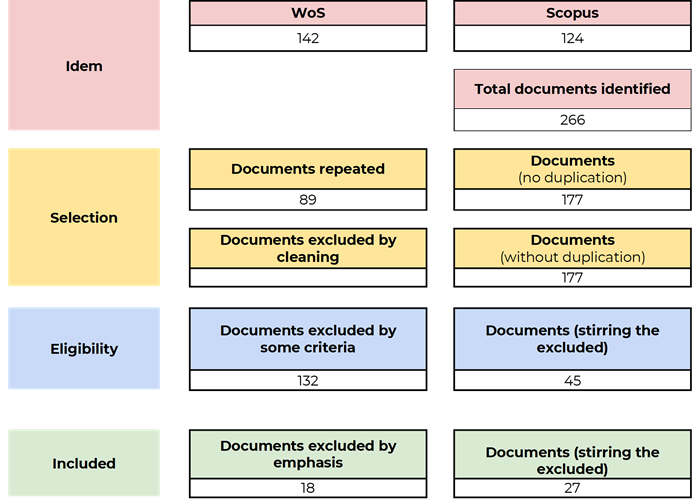
Source: adapted from
3. RESULTS AND DISCUSSION
From the 27 articles (see the appendix) that make up the sample, the results are approached from 3 components: (1) bibliometric variables: source of information, year of publication, authors, H index (Scholar google), country, journal, and the quartiles Scientific Journal Rankings (SJR) and Journal Citation Reports (JCR) of the journal; (2) CT assessment instruments: study population, sample size, number of items, response options, and variables assessed; (3) psychometric properties: pilot test, evidence of reliability and validity, and methods used to determine them; and (4) instruments used. VOS Viewer was used for the bibliometric analysis
3.1 Bibliometric
The development of this component is presented with the analysis of the variables: source of information, population under study, year of publication, authors, H index (Scholar google), country where the research was conducted, journal, quartiles Scientific Journal Rankings (SJR) and Journal Citation Reports (JCR) of the journal.
3.1.1 Sources of information
The search for information was carried out on WoS and Scopus. Nine articles appeared in WoS and seven in Scopus. The remaining eleven articles were identified in both.
3.1.2. Target population
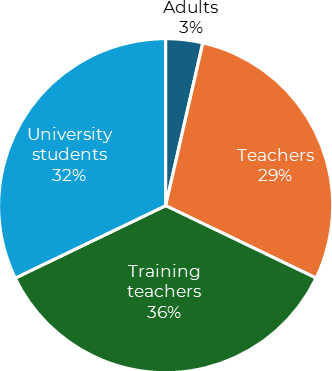
The studies were classified into university students, teachers in training, and adults. Figure 2 shows the distribution of the population according to the 27 articles.
3.1.3. Year of publication
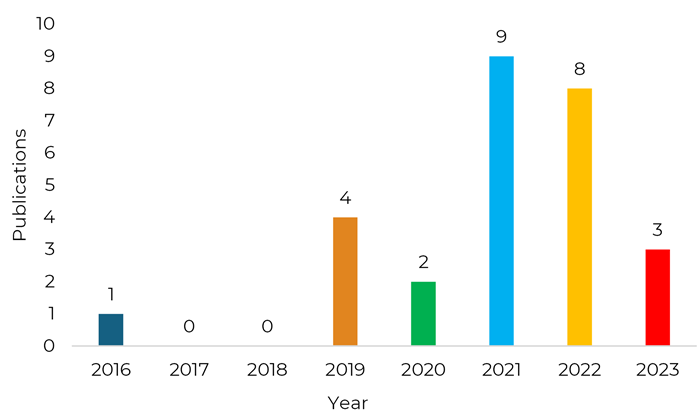
It is evident that the first research was initiated in 2016.
Source: own elaboration.
3.1.4. Authors and H-indexes (Scholar google)
Eric Wiebe was found to be the only author appearing in more than one publication
Source: own elaboration.
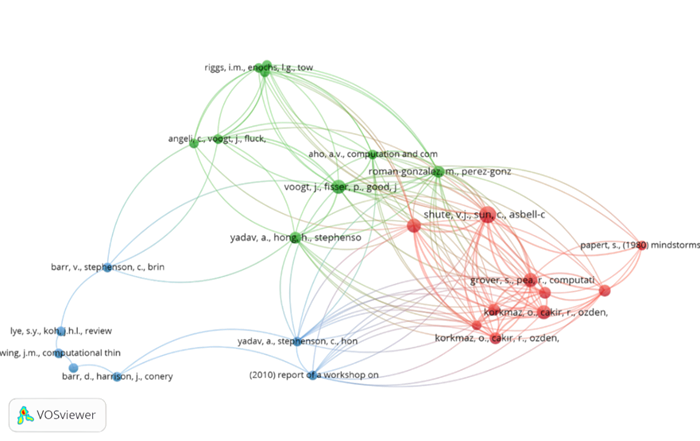
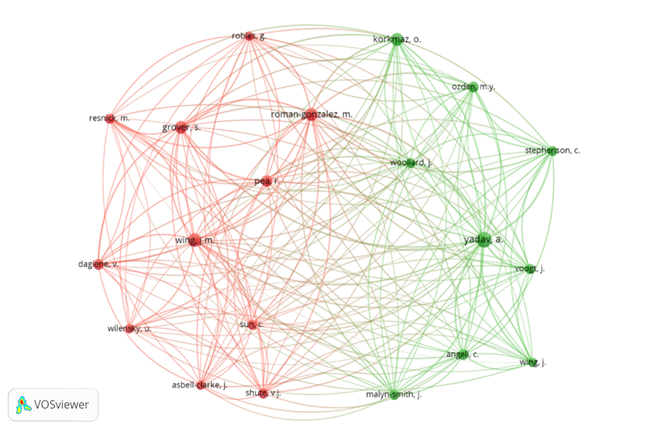
On the other hand, the co-citation between the authors is presented in Figure 5, considering a minimum of ten citations per author with two clusters. Number one (red) with 11 authors include Wing (20 citations), Grover (19 citations), and Román-González (19 citations), and in cluster two (green) the authors with the highest number of citations are Yadav (27 citations) and Korkmaz (18 citations). The co-citation network reveals two main clusters led by Wing, Yadav, and Brennan (green cluster), and Grover, Román-González, and Shute (red cluster), reflecting distinct yet interconnected research trajectories. Wing and Yadav drive a conceptual orientation focused on the curricular integration and theoretical framework of CT. In contrast, Grover, Román-González, and Shute lead efforts to develop and validate CT assessment tools, emphasizing psychometric rigor. Authors like Tang, Lye, and Voogt further strengthen their respective clusters through contributions in pedagogy and skill evaluation. Intermediary figures such as Shute and Román-González connect conceptual and evaluative domains. These patterns show how the centrality of citations reflects intellectual leadership and thematic convergence in CT scholarship.
3.1.5. Country
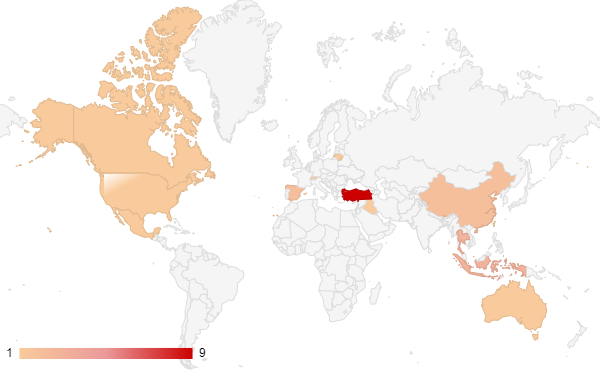
The country with the most publications is Türkiye with nine articles, followed by Indonesia and Thailand with three, China and Spain with two publications each. Switzerland, Iraq, Taiwan, Lithuania, Mexico, USA, Australia, and Canada have one publication, which can be seen in Figure 6.
Source: own elaboration.
3.1.6. Journal and quartile Scientific Journal Rankings (SJR) y Journal Citation Reports (JCR)
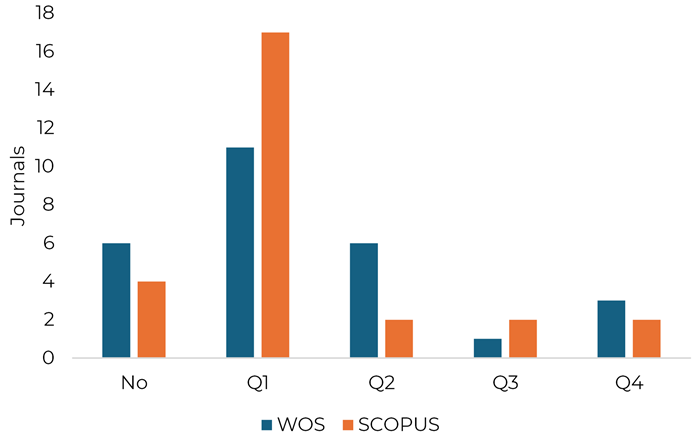
The journals with the highest representation in the publications are Education and Information Technologies with four articles and Journal of Educational Computing with two articles. With respect to quartiles, more than 50 % of the publications were published in journals with a Q1 and Q2 classification. This can be seen in Figure 7.
Source: own elaboration.
3.2 CT assessment instruments
The development of this component is presented with the analysis of the variables: sample size and pilot test, instrument, and variables evaluated.
3.2.1. Sample size and pilot
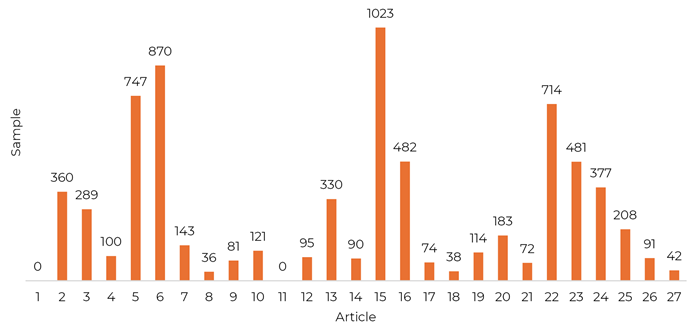
Figure 8 presents the number corresponding to the samples used in the 27 studies analyzed (to identify the studies, see Table 2). The largest sample size is represented by 1023 prospective science teachers
Source: own elaboration.
3.2.2. Instrument
A total of 17 instruments were presented and developed
3.2.3. Variables evaluated
Considering the 17 instruments, it was found that algorithmic thinking is assessed by 9 instruments, abstraction with 7 instruments, decomposition with 6 instruments, evaluation with 5 instruments, and problem solving with 4 instruments. Table 2 presents the 17 instruments found associated with the study population, the number of items, the variables evaluated, the response format, evidence of reliability and validity. In addition, the 10 articles where the instruments T-STEM CT, Bebras Tasks, and the Computational Thinking Scale CTS were used are presented
Source: own elaboration
| Ref. | Instrument used | Population | Items | Variables | Response format | Evidence | Apti-tudes | Atti-tudes | |
| Reliability | Validity | ||||||||
| Hi-ACT Holistic CT assessment | University students | 98 | Abstraction Algorithmic thinking Decomposition Debugging Evaluation, Generalization Troubleshooting Teamwork Communication Spiritual intelligence | Likert 7 | No evidence | Content | X | ||
| P-CTS Scale for development programming-oriented computational thinking | University students | 33 | Conceptual knowledge Algorithmic thinking Assessment | Unspecified | Cronbach's Alpha | Construct | X | ||
| ATTA Algorithmic thinking test for adults | Adults Bachelor's, Master’s, or Doctoral Students | 20 | Abstraction Decomposition Algorithmic thinking Pattern/recognition Evaluation/debugging | Multiple choice | Cronbach's Alpha | Content | X | ||
| T-STEM CT Instrument to measure self-efficacy of in-service teachers regarding teaching CT skills and practices to students | Teachers | 20 | Personal beliefs on teaching effectiveness Beliefs about the expectation of teaching results | Likert 5 | Cronbach's Alpha | Structural | X | ||
| Indonesian teachers | No evidence | No evidence | |||||||
| Test research instrument to measure CT level | University students | 24 | Unspecified | Multiple choice | Without specifying the coefficient | Construct and apparent | X | ||
| CT Questionnaire for students | Computer education students | 25 | The ability to: - Analyze and manage data - Use information to solve problems - The ability to design countermeasures - The ability to create workpieces -The ability to evaluate work pieces -The ability to analytically identify the causes -The ability to work collaboratively | Likert 5 | Reliability coefficient | Validity type is not specified | X | ||
| CTS Computational thinking scale | Future teachers and teachers | 29 | Creativity Algorithmic thinking Cooperativeness Critical thinking Problem resolution | Likert 5 | Cronbach's Alpha | No evidence | X | ||
| Mathematics teachers in Türkiye | Cronbach's Alpha | No evidence | |||||||
| Turkish trainee teachers | Cronbach's Alpha | No evidence | |||||||
| Mexican undergraduate students | Cronbach's Alpha | No evidence | |||||||
| Turkish trainee teachers | Cronbach's Alpha | Validity type is not specified | |||||||
| Teachers from Türkiye | Cronbach's Alpha | No evidence | |||||||
| University students from China | Cronbach's Alpha | Convergent | |||||||
| University students in Türkiye | Reliability coefficient | Validity type is not specified | |||||||
| Computer science and engineering students from Türkiye | Cronbach's Alpha | No evidence | |||||||
| CT test | Teachers in training | 10 | Sequences Loops Events Parallelism Conditional Operators Data | Multiple choice | Kuder Richardson | No evidence | X | ||
| CT Content knowledge test in teachers | Teachers | Nivel 1: 17 Nivel 2: 25 | Evidence Depuration Reuse Remix Abstraction Modularization Algorithmic thinking | Multiple choice open | Cohen's Kappa | No evidence | X | ||
| QCT CT questionnaire | Teachers | 22 | Decomposition Abstraction Design of algorithms Automation Data collection Analysis of data Representation of data Simulation Parallelization | Multiple choice | Cronbach's Alpha | Construct | X | ||
| Bebras Tasks | University students | 20 | Functional Thinking as a Compound of Problem Decomposition Pattern recognition Generalization Algorithmic thinking Abstraction | Unspecified | No evidence | No evidence | X | ||
| Australian trainee teachers | Coefficient K | Content and Criteria | |||||||
| CT Skills Test | Future teachers | 20 | Decomposition Pattern recognition Abstraction Algorithm design | Multiple choice | Cronbach's Alpha | No evidence | X | ||
| CT Skills self-confidence questionnaire | Future teachers | 34 | Self-confidence in CT Expectation Self-confidence Optimism Resilience Experience | Likert 5 | Cronbach's Alpha | Construct | X | ||
| Questionnaire to measure CT skills | University students | 27 | Abstraction Modeling Decomposition Algorithmic thinking Representation Generalization Assessment Adjustment | Unspecified | Cronbach's Alpha | No evidence | X | ||
| CTt Computational thinking test | Future teachers | 32 | Computational concepts: basic directions, ''repeat'', ''repeat to'', ''if'', ''if/if not'', ''while'' and simple functions | Multiple choice | No evidence | No evidence | X | ||
| CCTt Test Callysto CT | Future teachers | 31 | Non-cognitive attitudes towards CT Technology Troubleshooting, Coding Data Concepts Practices | Multiple choice | Cronbach's Alpha | Construct | X | X | |
| CT knowledge and understanding survey | Teachers | 10 | CT concept Experience in CT learning management Experience in participating in CT training Self-development Focus of learning activities | Likert 5 | No evidence | No evidence | X | ||
3.3 Psychometric properties
To evaluate the psychometric properties of the instruments, evidence of validity, reliability, and method was analyzed. Table 2 presents each study associated with the evidence of validity and reliability. Eighty percent present reliability analysis, and the most used method was Cronbach's Alpha. With respect to validity, 50 % of the studies do not present any evidence. The most used method was the Confirmatory Factor Analysis (CFA).
3.4 Instruments used
As a result, the instruments associated with the studies in which they were used or created and the process carried out are presented. The Hi-ACT Holistic CT Assessment
The test research instrument to measure the level of CT
The QCT CT Questionnaire
The CTS Computational Thinking Scale authored by
In
The Bebras Tasks: This instrument was used in two of the 27 publications analyzed. In
The assessment of CT using measurement instruments has been addressed at all educational levels. The aim of this systematic review of the literature was to identify instruments that have been used in the adult population. Twenty-seven investigations were identified that assessed CT in the adult population; 17 measurement instruments were extracted from these publications. According to the results, it was identified that most of the studies focused on CT evaluation in university students with a representation of 68 % of the studies, 29 % are made up of teachers, and 3 % are adults, which demonstrates the importance of having instruments that allow objective CT evaluation in the teaching population. It is highlighted that research using instruments to evaluate CT in the adult population is on the rise with 74 % of research in the years 2021, 2022, and 2023, taking into account that now the interest of the scientific community is oriented towards aspects related to the development of new assessment tools and their relationship with learning
This review of the literature makes it evident that information on validity testing must be collected in future studies; which is consistent with the findings obtained by
In the analysis of the 27 articles, it was identified that the instrument most frequently used was the Computational Thinking Scale CTS proposed by
In relation to teaching practice in the university context, there is a highlighted need to strengthen formative assessment processes of computational thinking. Currently, there is limited evidence on the psychometric properties of instruments reported in literature, highlighting the urgent need to develop and validate tools that serve as formal resources to support the evaluation of computational thinking at this level of academic training. Having valid instruments will enable instructors to objectively identify computational thinking skills, allowing for the adjustment of learning resources and pedagogical practices. The findings reveal opportunities for future research in the Latin American context, where instruments should consider cultural and social characteristics, as well as attitudinal elements that can influence the development of computational thinking.
4. CONCLUSIONS
From the review protocol, three elements associated with the variables under study, and the research questions, were proposed. How have the publications in the sample evolved with respect to the bibliometric variables? According to the analysis of bibliometric variables, the distribution over time of the research has increased since 2021. Regarding the authors in Figures 4 and 5 the relationships that exist between the authors are presented, where the coupling network emerges in 2019 and the author leading the network is Ata
What are the instruments that have been proposed to measure Computational Thinking in the adult population? Analysis of instruments designed to measure CT in adult populations, particularly among in-service and preservice teachers, reveals a diverse range in their design and focus. Although Bebras Tasks are used with university students, explicit evidence on their variables evaluated, reliability, and validity is lacking in the presented literature. In contrast, the Computational Thinking Scale (CTS) and the CT Questionnaire (QCT) are more consistently applied with preservice and in-service teachers, primarily assessing skills and, in some cases, attitudes such as creativity and cooperativeness. These instruments typically use Likert scales and report evidence of reliability (Cronbach's Alpha, Kuder Richardson) and validity (content, criterion, construct).
Other instruments, such as the CTt, the CT skills test, and the CT Test, focus on evaluating aptitudes and knowledge through multiple-choice formats. It is noteworthy that self-confidence in CT skills and teacher self-efficacy are key variables assessed by instruments such as the Self-confidence questionnaire on CT skills and the T-STEM CT. This highlights the importance of attitudinal and pedagogical factors in the integration of CT. The CCTt Callysto CT Test stands out for its broader approach, which evaluates skills, concepts, and practices, in addition to technological and data literacy. Although many instruments provide evidence of reliability and validity, gaps still exist, especially in the explicit reporting of all evidence for each adaptation or use of the instruments, as observed in some cases for Bebras Tasks and the T-STEM CT.
What are the constructs or variables evaluated? The most frequently found skill is algorithmic thinking present in 36 % of the instruments, followed by abstraction with presence in 28 %, then decomposition with a frequency of 24 %, evaluation with 20 %, and finally problem solving with 16 %. Two instruments evaluated specific programming variables (loops, conditionals, operators, basic directions, repeat, repeat until, if, if/if not, while, and simple functions). Variables related to personal and social practices were also examined, including competencies such as teamwork, communication, spiritual intelligence, personal belief systems, teaching effectiveness, beliefs regarding anticipated teaching outcomes, the ability to analyze and manage data, apply information to problem-solving, design appropriate interventions, produce and assess work artifacts, identify underlying causes analytically, collaborate effectively, as well as attributes such as self-confidence in critical thinking, expectations, general self-confidence, optimism, resilience, and professional experience. The presence of variables that value CT from a domain other than the cognitive domain is highlighted.
What are the psychometric properties of the instruments and what statistical methods were used for the analysis of the psychometric properties? It was identified that 21 studies presented evidence of reliability, highlighting the use of Cronbach's Alpha. Regarding validity, 12 studies showed evidence, and the most used method was confirmatory factor analysis (CFA). In the information collected, there is an absence of studies that evaluate CT in teachers considering approaches other than the assessment of the cognitive component, for example, evaluations that consider competencies to propose classroom practices that strengthen the development of CT in the classroom; furthermore, no studies were found in Latin America and the evidence of validity of the studies is scarce.
In the future, research can be proposed to evaluate CT with measurement instruments that are exclusive to the teaching population and address not only cognitive aspects, but also to propose instruments that assess attitudes and aptitudes related to programming. Finally, this review contributes to future research processes, making evident the progress in the assessment of CT from measurement instruments in the adult population. It is necessary to continue deepening proposals that allow for the assessment of CT from perspectives additional to the cognitive domains.
5. ACKNOWLEDGMENTS AND FUNDING
We acknowledge the Doctorate in Educational Sciences of the University of Quindío, which provides financial support to student Milena Corrales Álvarez to pursue her doctoral studies.
REFERENCES
- arrow_upward [1] M. Téllez, “Pensamiento computacional: una competencia del siglo XXI,” Educ. Super., vol. 6, no. 1, pp. 23-32, Mar. 2019. http://www.scielo.org.bo/scielo.php?pid=S2518-82832019000100007&script=sci_arttext
- arrow_upward [2] J. M. Wing, “Computational thinking,” Communic. ACM, vol. 49, no. 3, pp. 33-35, Mar. 2006. https://doi.org/10.1145/1118178.1118215
- arrow_upward [3] M. Román González, “Codigoalfabetización y pensamiento computacional en Educación Primaria y Secundaria: validación de un instrumento y evaluación de programas,” Tesis doctoral, Universidad Nacional de Educación a Distancia, Madrid, España, 2016. https://hdl.handle.net/20.500.14468/18800
- arrow_upward [4] C. Selby, and J. Woollard, “Computational Thinking: The Developing Definition,” University of Southampton, 2013. [Online]. Available: https://eprints.soton.ac.uk/356481/
- arrow_upward[5] C. C. Selby, “Relationships: Computational thinking, Pedagogy of programming, And Bloom’s taxonomy,” in ACM Int. Conf. Proceeding Ser., London, UK, Nov. 9-11, 2015, pp. 80-87. https://doi.org/10.1145/2818314.2818315
- arrow_upward [6] A. Csizmadia et al., Computational Thinking: A Guide for Teachers. London, UK: Computing at School, 2015. https://www.researchgate.net/publication/327302966__
- arrow_upward [7] O. Astrachan, S. Hambrusch, J. Peckham, and A. Settle, “The present and future of computational thinking,” ACM SIGCSE Bull., vol. 41, no. 1, pp. 549-550, Mar. 2009. https://doi.org/10.1145/1539024.1509053
- arrow_upward [8] F. J. García-Peñalvo, D. Reimann, M. Tuul, A. Rees, and I. Jormanainen, Taccle 3, O5: An overview of the most relevant literature on coding and computational thinking with emphasis on the relevant issues for teachers. Belgium: Taccle3 Consortium, 2016. https://doi.org/10.5281/zenodo.165123
- arrow_upward [9] F. Llorens Largo, F. J. García Peñalvo, X. Molero Prieto, and E. Vendrell Vidal, “La enseñanza de la informática, la programación y el pensamiento computacional en los estudios preuniversitarios,” Educ. Knowl. Soc., vol. 18, no. 2, pp. 7-17, Aug. 2017. https://doi.org/10.14201/eks2017182717
- arrow_upward [10] M. Román-González, J. C. Pérez-González, and C. Jiménez-Fernández, “Which cognitive abilities underlie computational thinking? Criterion validity of the Computational Thinking Test,” Comput. Human Behav., vol. 72, pp. 678-691, Jul. 2017. https://doi.org/10.1016/j.chb.2016.08.047
- arrow_upward [11] M.-J. Tsai, J.-C. Liang, and C.-Y. Hsu, “The Computational Thinking Scale for Computer Literacy Education,” J. Educ. Comput. Res., vol. 59, no. 4, pp. 579-602, Nov. 2021. https://doi.org/10.1177/0735633120972356
- arrow_upward [12] A. V. Aho, “Computation and computational thinking,” Comput. J., vol. 55, no. 7, pp. 833-835, Jul. 2012. https://doi.org/10.1093/comjnl/bxs074
- arrow_upward [13] A. Piatti et al., “The CT-cube: A framework for the design and the assessment of computational thinking activities,” Comput. Hum. Behav. Reports, vol. 5, p. 100166 Mar. 2022. https://doi.org/10.1016/j.chbr.2021.100166
- arrow_upward [14] L. Sun, X. You, and D. Zhou, “Evaluation and development of STEAM teachers’ computational thinking skills: Analysis of multiple influential factors,” Educ. Inf. Technol., vol. 28, pp. 14493-14527, Apr. 2023. https://doi.org/10.1007/s10639-023-11777-7
- arrow_upward [15] C. Aumgri, and S. Petsangsri, “Computational thinking for preservice teachers in Thailand: A confirmatory factor analysis,” Espacios, vol. 40, no. 29, pp. 6-7, Sep. 2019. https://www.revistaespacios.com/a19v40n29/a19v40n29p12.pdf
- arrow_upward [16] S. Kılıç, S. Gökoğlu, and M. Öztürk, “A Valid and Reliable Scale for Developing Programming-Oriented Computational Thinking,” J. Educ. Comput. Res., vol. 59, no. 2, pp. 257-286, Oct. 2020. https://doi.org/10.1177/0735633120964402
- arrow_upward [17] D. E. Sondakh, K. Osman, and S. Zainudin, “A Proposal For Holistic Assessment Of Computational Thinking for Undergraduate: Content Validity,” European Journal of Educational Research, vol. 9, no. 1, pp. 33-50, Jan. 2020. https://doi.org/10.12973/eu-jer.9.1.33
- arrow_upward [18] C. Lu, R. Macdonald, B. Odell, V. Kokhan, C. Demmans Epp, and M. Cutumisu, “A scoping review of computational thinking assessments in higher education,” J. Comput. High. Educ., vol. 34, no. 2, pp. 416-461, Jan. 2022. https://doi.org/10.1007/s12528-021-09305-y
- arrow_upward [19] M. Cutumisu, C. Adams, and C. Lu, “A Scoping Review of Empirical Research on Recent Computational Thinking Assessments,” J. Sci. Educ. Technol., vol. 28, no. 6, pp. 651-676, Nov. 2019. https://doi.org/10.1007/s10956-019-09799-3
- arrow_upward [20] X. Tang, Y. Yin, Q. Lin, R. Hadad, and X. Zhai, “Assessing computational thinking: A systematic review of empirical studies,” Comput. Educ., vol. 148, p. 103798, Apr. 2020. https://doi.org/10.1016/j.compedu.2019.103798
- arrow_upward [21] J. Acevedo-Borrega, J. Valverde-Berrocoso, and M. del C. Garrido-Arroyo, “Computational Thinking and Educational Technology: A Scoping Review of the Literature,” Educ. Sci., vol. 12, no. 1, Jan. 2022. https://doi.org/10.3390/educsci12010039
- arrow_upward [22] M. Tekdal, “Trends and development in research on computational thinking,” Educ. Inf. Technol., vol. 26, no. 5, pp. 6499-6529, Jun. 2021. https://doi.org/10.1007/s10639-021-10617-w
- arrow_upward [23] H. İ. Haseskİ, and U. İlİc, “An Investigation of the Data Collection Instruments Developed to Measure Computational Thinking,” Informatics in Education, vol. 18, no. 2, pp. 297-319, Oct. 2019. https://doi.org/10.15388/infedu.2019.14
- arrow_upward [24] A. Anastasi, and S. Urbina, Test Psicológicos. Mex.: Pearson Ed., 1998.
- arrow_upward [25] L. R. Aiken, Tests psicológicos y evaluación. Mex.: Pearson Ed., 2003.
- arrow_upward [26] J. Aliaga Tovar, “Psicometria: Tests Psicométricos, Confiabilidad y Validez,” Psicol. Tópicos Actual., vol. 8, pp. 85-108, 2007. https://gc.scalahed.com/recursos/files/r161r/w25645w/Psicometria_ Test_%20psicometricos_confiabilidad_validez_RS6.pdf
- arrow_upward [27] R. J. Cohen, and M. E. Swerdlik, Pruebas y evaluación psicológicas: Introducción a las pruebas y a la medición. McGraw-Hill, 2001.
- arrow_upward [28] E. Almanasreh, R. Moles, and T. F. Chen, “Evaluation of methods used for estimating content validity,” Res. Soc. Adm. Pharm., vol. 15, no. 2, pp. 214-221, Feb. 2019. https://doi.org/10.1016/j.sapharm.2018.03.066
- arrow_upward [29] A. C. Tricco et al., “PRISMA extension for scoping reviews (PRISMA-ScR): Checklist and explanation,” Ann. Intern. Med., vol. 169, no. 7, pp. 467-473, Sep. 2018. https://doi.org/10.7326/M18-0850
- arrow_upward [30] N. J. Van Eck, and L. Waltman, VOSviewer Manual. Leiden, NL: Univeristeit Leiden, 2023. https://www.vosviewer.com/documentation/Manual_VOSviewer_1.6.20.pdf
- arrow_upward [31] V. Dolgopolovas, T. Jevsikova, V. Dagiené, and L. Savulioniené, “Exploration of computational thinking of software engineering novice students based on solving computer science tasks,” Int. J. Eng. Educ., vol. 32, no. 3, pp. 1107-1116, 2016. https://dialnet.unirioja.es/servlet/articulo?codigo=6910621
- arrow_upward[32] M. S. Günbatar, and H. Bakırcı, “STEM teaching intention and computational thinking skills of pre-service teachers,” Educ. Inf. Technol., vol. 24, no. 2, pp. 1615-1629, Dec. 2019. https://doi.org/10.1007/s10639-018-9849-5
- arrow_upward [33] F. M. Esteve-Mon, J. Adell-Segura, M. Á. Llopis Nebot, G. Valdeolivas Novella, and J. Pacheco Aparicio, “The development of computational thinking in student teachers through an intervention with educational robotics,” J. Inf. Technol. Educ. Innov. Pract., vol. 18, pp. 139-152, 2019. https://doi.org/10.28945/4442
- arrow_upward [34] R. Ata, and M. Çevik, “Understanding predictor effects of computational thinking skills and media and technology use and attitudes of pre-service teachers for STEM awareness,” Kedi J. Educ. Policy, vol. 17, no. 1, pp. 99-121, 2020. https://www.researchgate.net/publication/342551812_Understanding_predictor_effects_of_computational_thinking_ skills_and_media_and_technology_use_and_attitudes_of_pre-service_teachers_for_STEM_awareness
- arrow_upward[35] Ü. Çakıroğlu, and S. Kiliç, “Assessing teachers’ PCK to teach computational thinking via robotic programming,” Interact. Learn. Environ., vol. 31, no. 2, pp. 818-835, Sep. 2020. https://doi.org/10.1080/10494820.2020.1811734
- arrow_upward [36] F.-H. Tsai, H.-S. Hsiao, K.-C. Yu, and K.-Y. Lin, “Development and effectiveness evaluation of a STEM-based game-design project for preservice primary teacher education,” Int. J. Technol. Des. Educ., vol. 32, no. 5, pp. 2403-2424, Nov. 2022. https://doi.org/10.1007/s10798-021-09702-5
- arrow_upward [37] K. Bati, and M. İkbal Yetişir, “Examination of Turkish Middle School STEM Teachers’ Knowledge about Computational Thinking and Views Regarding Information and Communications Technology,” Comput. Sch., vol. 38, no. 1, pp. 57-73, Mar. 2021. https://doi.org/10.1080/07380569.2021.1882206
- arrow_upward [38] G. Rodríguez-Abitia, M. S. Ramírez-Montoya, E. O. López-Caudana, and J. M. Romero-Rodríguez, “Factores para el desarrollo del pensamiento computacional en estudiantes de pregrado,” Campus Virt., vol. 10, no. 2, pp. 153-164, Jul. 2021. http://www.uajournals.com/campusvirtuales/journal/19/10.pdf
- arrow_upward [39] D. C. Boulden, A. Rachmatullah, K. M. Oliver, and E. Wiebe, “Measuring in-service teacher self-efficacy for teaching computational thinking: development and validation of the T-STEM CT,” Educ. Inf. Technol., vol. 26, no. 4, pp. 4663-4689, Mar. 2021. https://doi.org/10.1007/s10639-021-10487-2
- arrow_upward [40] V. Amnouychokanant, S. Boonlue, S. Chuathong, and K. Thamwipat, “Online Learning Using Block-based Programming to Foster Computational Thinking Abilities During the COVID-19 Pandemic,” Int. J. Emerg. Technol. Learn., vol. 16, no. 13, pp. 227-247, Jul. 2021. https://doi.org/10.3991/ijet.v16i13.22591
- arrow_upward [41] J. Bilbao, E. Bravo, O. García, C. Rebollar, and C. Varela, “Study to find out the perception that first year students in engineering have about the Computational Thinking skills, and to identify possible factors related to the ability of Abstraction,” Heliyon, vol. 7, no. 2, p. e06135, Feb. 2021. https://doi.org/10.1016/j.heliyon.2021.e06135
- arrow_upward [42] R. Çakır, H. Şahin, H. Balci, and M. Vergili, “The effect of basic robotic coding in-service training on teachers’ acceptance of technology, self-development, and computational thinking skills in technology use,” J. Comput. Educ., vol. 8, no. 2, pp. 237-265, Jan. 2021. https://doi.org/10.1007/s40692-020-00178-1
- arrow_upward [43] O. Kocak, M. Coban, A. Aydin, and N. Cakmak, “The mediating role of critical thinking and cooperativity in the 21st century skills of higher education students,” Think. Ski. Creat., vol. 42, p. 100967, Dec. 2021. https://doi.org/10.1016/j.tsc.2021.100967
- arrow_upward [44] Y. Özkan Hidiroglu, and C. Naci Hidiroglu, “The Relationship between Mathematics Teachers’ Mind Types and Computational Thinking Skills,” Pamukkale Üniv. Eğitim Fakültesi Dergisi, vol. 52, pp. 301-325, 2021. https://doi.org/10.9779/pauefd.696511
- arrow_upward [45] K.-D. Boom, M. Bower, J. Siemon, and A. Arguel, “Relationships between computational thinking and the quality of computer programs,” Educ. Inf. Technol., vol. 27, no. 6, pp. 8289-8310, Mar. 2022. https://doi.org/10.1007/s10639-022-10921-z
- arrow_upward [46] M. Cutumisu, C. Adams, F. Glanfield, C. Yuen, and C. Lu, “Using Structural Equation Modeling to Examine the Relationship Between Preservice Teachers’ Computational Thinking Attitudes and Skills,” IEEE Trans. Educ., vol. 65, no. 2, pp. 177-183, May. 2022. https://doi.org/10.1109/TE.2021.3105938
- arrow_upward [47] S.-C. Kong, and M. Lai, “Effects of a teacher development program on teachers’ knowledge and collaborative engagement, and students’ achievement in computational thinking concepts,” Br. J. Educ. Technol., vol. 55, no. 2, pp. 489-512, Jul. 2022. https://doi.org/10.1111/bjet.13256
- arrow_upward [48] M. Lafuente Martínez, O. Lévêque, I. Benítez, C. Hardebolle, and J. Dehler Zufferey, “Assessing Computational Thinking: Development and Validation of the Algorithmic Thinking Test for Adults,” J. Educ. Comput. Res., vol. 60, no. 6, pp. 1436-1463, Feb. 2022. https://doi.org/10.1177/07356331211057819
- arrow_upward [49] B. Hassan Majeed, L. Fouad Jawad, and H. T. Salim Alikirabi, “Computational Thinking (CT) Among University Students,” Int. J. Interact. Mob. Technol., vol. 16, no. 10, pp. 244-252, May. 2022. https://doi.org/10.3991/ijim.v16i10.30043
- arrow_upward [50] Ş. Şen, “Relations between preservice teachers’ self-efficacy, computational thinking skills and metacognitive self-regulation,” Eur. J. Psychol. Educ., vol. 38, pp. 1251-1269, Nov. 2022. https://doi.org/10.1007/s10212-022-00651-8
- arrow_upward [51] S. Syafril, T. Rahayu, and G. Ganefri, “Prospective science teachers’ self-confidence in computational thonking skills,” J. Pendidik. IPA Indones., vol. 11, no. 1, pp. 119-128, Mar. 2022. https://doi.org/10.15294/jpii.v11i1.33125
- arrow_upward [52] X. Zhou, and C. W. Tsai, “The Effects of Socially Shared Regulation of Learning on the Computational Thinking, Motivation, and Engagement in Collaborative Learning by Teaching,” Educ. Inf. Technol., vol. 28, pp. 8135-8152, Dec. 2022. https://doi.org/10.1007/s10639-022-11527-1
- arrow_upward [53] A. Rachmatullah, and E. N. Wiebe, “Changes and Sources of Changes of Middle School Teachers’ Self-efficacy for Teaching Science in A Computationally Rich Environment: A Mixed-Methods Study,” J. Sci. Teacher Educ., vol. 34, no. 2, pp. 132-156, Apr. 2022. https://doi.org/10.1080/1046560X.2022.2035990
- arrow_upward [54] A. Kaur, and K. Kaur Chahal, “Exploring Personality and Learning Motivation Influences on Students’ Computational Thinking Skills in Introductory Programming Courses,” J. Sci. Educ. Technol., vol. 32, pp. 778-792, May. 2023. https://doi.org/10.1007/s10956-023-10052-1
- arrow_upward [55] C. Chookhampaeng, C. Kamha, and S. Chookhampaeng, “Problems and Needs Assessment to Learning Management of Computational Thinking of Teachers at the Lower Secondary Level,” J. Curric. Teach., vol. 12, no. 3, pp. 172-178, May. 2023. https://doi.org/10.5430/jct.v12n3p172
- arrow_upward [56] V. J. Shute, C. Sun, and J. Asbell-Clarke, “Demystifying computational thinking,” Educ. Res. Rev., vol. 22, pp. 142-158, Nov. 2017. https://doi.org/10.1016/j.edurev.2017.09.003
- arrow_upward [57] D. Weintrop et al., “Defining Computational Thinking for Mathematics and Science Classrooms,” J. Sci. Educ. Technol., vol. 25, no. 1, pp. 127-147, Feb. 2016. https://doi.org/10.1007/s10956-015-9581-5
- arrow_upward [58] S. Grover, and R. Pea, “Computational Thinking: A Competency Whose Time Has Come,” in Computer Science Education: Perspectives on Teaching and Learning in School, S. Sentance, E. Barendsen, and C. Schulte, Eds., London: Bloomsbury Academic, 2018, pp 19-38. https://doi.org/10.5040/9781350057142.ch-003
- arrow_upward [59] Ö. Korkmaz, R. M. Çaki, and M. Yaşar Özden, “A validity and reliability study of the computational thinking scales (CTS),” Comput. Human Behav., vol. 72, pp. 558-569, Jul. 2017. https://doi.org/10.1016/j.chb.2017.01.005
- arrow_upward [60] J. Voogt, P. Fisser, J. Good, P. Mishra, and A. Yadav, “Computational thinking in compulsory education: Towards an agenda for research and practice,” Educ. Inf. Technol., vol. 20, no. 4, pp. 715-728, Jun. 2015. https://doi.org/10.1007/s10639-015-9412-6
- arrow_upward [61] A. Yadav, C. Stephenson, and H. Hong, “Computational thinking for teacher education,” Commun. ACM, vol. 60, no. 4, pp. 55-62, Mar. 2017. https://doi.org/10.1145/2994591
- arrow_upward [62] M. S. Günbatar, “Computational thinking within the context of professional life: Change in CT skill from the viewpoint of teachers,” Educ. Inf. Technol., vol. 24, no. 5, pp. 2629-2652, Apr. 2019. https://doi.org/10.1007/s10639-019-09919-x
- arrow_upward [63] S. C. Kong, and M. Lai, “Validating a computational thinking concepts test for primary education using item response theory: An analysis of students’ responses,” Comput. Educ., vol. 187, p. 104562, Oct. 2022. https://doi.org/10.1016/j.compedu.2022.104562
- arrow_upward[64] L. Sun, L. Hu, D. Zhou, and W. Yang, “Evaluation and developmental suggestions on undergraduates’ computational thinking: a theoretical framework guided by Marzano’s new taxonomy,” Interact. Learn. Environ., vol. 31, no. 10, pp. 6588-6610, Mar. 2022. https://doi.org/10.1080/10494820.2022.2042311
- arrow_upward [65] R. Çakır, Ö. Korkmaz, Ö. İdil, and F. Uğur Erdoğmuş, “The effect of robotic coding education on preschoolers’ problem solving and creative thinking skills,” Think. Ski. Creat., vol. 40, p. 100812, Jun. 2021. https://doi.org/10.1016/j.tsc.2021.100812
CONFLICTS OF INTEREST
The authors declare no conflicts of interest that could influence the work presented in this article.
AUTHOR CONTRIBUTIONS
The authorship recognition of this article is based on the contributions of each author:
Milena Corrales-Álvarez: methodology, conceptualization, research, writing, review, and editing.
Ángela María Muñoz Muñoz: methodology, conceptualization, research, writing, review, and editing.
Sergio Augusto Cardona-Torres: conceptualization, research, writing, review, and editing.
APPENDIX
| Article | Authors | h-index Google Scholar |
| A proposal for holistic assessment of computational thinking for undergraduate: Content validity |
Debby Erce Sondakh | 6 |
| Kamisah Osman | 45 | |
| Suhaila Zainudin | 16 | |
| A Valid and Reliable Scale for Developing Programming-Oriented Computational Thinking |
Kılıç, Servet | No evidence |
| Seyfullah Gökoğlu | 12 | |
| Mücahit Öztürk | 10 | |
| Assessing Computational Thinking: Development and Validation of the Algorithmic Thinking Test for Adults |
Marc Lafuente Martínez | No evidence |
| Olivier Leveque | 21 | |
| Isabel Benítez Baena | 19 | |
| Cécile Hardebolle | No evidence | |
| Jessica Dehler Zufferey | 14 | |
| Changes and Sources of Changes of Middle School Teachers' Self-efficacy for Teaching Science in A Computationally Rich Environment: A Mixed-Methods Study |
Arif Rachmatullah | 17 |
| Eric Wiebe | 48 | |
| Computational Thinking (CT) Among University Students |
Ban Hassan Majeed | 16 |
| Lina Fouad Jawad | 7 | |
| Haider TH. Salim ALRikabi | 38 | |
| Computational thinking for preservice teachers in Thailand: A confirmatory factor analysis |
Charinthorn Aumgri | 3 |
| Sirirat Petsangsri | 11 | |
| Computational thinking within the context of professional life: Change in CT skill from the viewpoint of teachers |
Mustafa Serkan Günbatar | 13 |
| Development and effectiveness evaluation of a STEM-based game-design project for preservice primary teacher education |
Fu-Hsing Tsai | 13 |
| Hsien-Sheng Hsiao | 25 | |
| Kuang-Chao Yu | 18 | |
| Kuen-Yi Lin | 22 | |
| Effects of a teacher development program on teachers' knowledge and collaborative engagement, and students' achievement in computational thinking concepts |
Siu-Cheung Kong | 37 |
| Ming Lai | No evidence | |
| Examination of Turkish Middle School STEM Teachers' Knowledge about Computational Thinking and Views Regarding Information and Communications Technology |
Kaan BATI | 12 |
| Mehmet İkbal Yetişir | No evidence | |
| Exploration of Computational Thinking of Software Engineering Novice Students Based on Solving Computer Science Tasks |
Vladimiras Dolgopolovas | 9 |
| Tatjana Jevsikova | No evidence | |
| Valentina Dagienė | No evidence | |
| Loreta Savulionienė | No evidence | |
| Factors for the development of computational thinking in undergraduate students |
Guillermo Rodríguez Abitia | 9 |
| María-Soledad Ramírez Montoya | 60 | |
| Edgar Omar López Caudana | 16 | |
| José-María Romero-Rodríguez | 34 | |
| Measuring in-service teacher self-efficacy for teaching computational thinking: development and validation of the T-STEM CT |
Danielle Cadieux Boulden | 12 |
| Arif Rachmatullah | 17 | |
| Kevin M. Oliver | No evidence | |
| Eric Wiebe | 48 | |
| Online Learning Using Block-based Programming to Foster Computational Thinking Abilities During the COVID-19 Pandemic |
Virawan Amnouychokanant | 2 |
| Surapon Boonlue | 6 | |
| Saranya Chuathong | No evidence | |
| Kuntida Thamwipat | No evidence | |
| Prospective Science Teachers’ Self-Confidence In Computational Thinking Skills |
Syafrimen Syafril | 19 |
| Titik Rahayu | 12 | |
| Ganefri Ganefri | 15 | |
| Relations between preservice teachers' self-efficacy, computational thinking skills and metacognitive self-regulation
|
Şen Şenol | No evidence |
| Relationships between computational thinking and the quality of computer programs |
Kay-Dennis Boom | 4 |
| Matt Bower | 42 | |
| Jens Siemon | No evidence | |
| Amaël Arguel | 17 | |
| Study to find out the perception that first year students in engineering have about the Computational Thinking skills, and to identify possible factors related to the ability of Abstraction |
Javier Bilbao | No evidence |
| Eugenio Bravo | No evidence | |
| Olatz García | No evidence | |
| Carolina Rebollar | No evidence | |
| Concepción Varela | No evidence | |
| The development of computational thinking in student teachers through an intervention with educational robotics |
Francesc M. Esteve Mon | 34 |
| Jordi Adell Segura | 49 | |
| María Ángeles Llopis Nebot | 10 | |
| Gracia Valdeolivas Novella | 4 | |
| Julio Pacheco Aparicio | No evidence | |
| The effect of basic robotic coding in-service training on teachers' acceptance of technology, self-development, and computational thinking skills in technology use
|
Recep Çakır | 34 |
| Hüsnü Şahin | No evidence | |
| Hasan Balci | No evidence | |
| Mehmet Vergili | 3 | |
| The Effects of Socially Shared Regulation of Learning on the Computational Thinking, Motivation, and Engagement in Collaborative Learning by Teaching |
Zhou, Xiaodan | No evidence |
| Tsai Chia-Wen | 32 | |
| The mediating role of critical thinking and cooperativity in the 21st century skills of higher education students |
Omer Kocak | 12 |
| Murat Coban, | No evidence | |
| Abdulkerim Aydin | 4 | |
| Nermin Cakmak | 10 | |
| The Relationship between Mathematics Teachers' Mind Types and Computational Thinking Skills |
Yeliz Özkan Hidiroğlu | 8 |
| Çağlar Naci Hıdıroğlu | 16 | |
| Understanding predictor effects of computational thinking skills and media and technology use and attitudes of pre-service teachers for STEM awareness |
Ridvan Ata | 11 |
| Çevik, Mustafa | 17 | |
| Using Structural Equation Modeling to Examine the Relationship Between Preservice Teachers' Computational Thinking Attitudes and Skills |
Maria Cutumisu | 29 |
| Catherine Adams | 23 | |
| Florence Glanfield | No evidence | |
| Levina Yuen | 3 | |
| Chang Lu | 8 | |
| Exploring Personality and Learning Motivation Influences on Students’ Computational Thinking Skills in Introductory Programming Courses |
Amanpreet Kaur | No evidence |
| Kuljit Kaur Chahal | 9 | |
| Problems and Needs Assessment to Learning Management of Computational Thinking of Teachers at the Lower Secondary Level |
Chowwalit Chookhampaeng | 4 |
| Chantraporn Kamha | No evidence | |
| Sumalee Chookhampaeng | 10 |

 Google