Occurrence, Environmental Risk, and Treatment of Erythromycin in Water: A Systematic Study and Meta-analysis
Presencia, riesgo ambiental y tratamiento de la eritromicina en el agua: estudio sistemático y metaanálisis
 PDF
Received: Marzo 31, 2025
Accepted: Marzo11, 2026
Available: Abril 10, 2026
L. E. Herrera Arteaga, A. Rubio-Clemente, and D. C. Rodríguez Loaiza, “Occurrence, Environmental Risk, and Treatment of Erythromycin in Water: A Systematic Study and Meta-analysis,” TecnoLógicas, vol. 29, no. 65, e3448, 2026. https://doi.org/10.22430/22565337.3448
Highlights
Highlights
Abstract
Erythromycin (ERY) is an antibiotic widely used to treat infectious diseases in animals and humans. However, its presence in water can have effects on health and the environment. The objective of this study was to analyze globally reported ERY concentrations in water, the risks these concentrations pose to aquatic organisms and antimicrobial resistance, and the advanced oxidation processes (AOPs) used to remove this emerging contaminant from water. The methodology consisted of an exploratory-descriptive systematic study and a critical meta-analysis in the study area. The results showed that the ERY concentrations found in different countries ranged from 0.2 ng/L to 252824 ng/L. It was determined that 40.74% of the maximum reported concentrations represent a high ecological risk to aquatic organisms, while 25.93% represent a potential risk of antimicrobial resistance. As an alternative to this global problem, AOPs such as the nickel ferrite photocatalyst incorporated into chitosan, and photo-electro-Fenton, electro-Fenton, and oxalic acid-assisted photo-electro-Fenton systems have been used, achieving removals close to 100% of the initial dose of ERY in the studied water. However, it is concluded that the degradation by-products, as well as the technical, economic, and environmental viability of these advanced treatments, and their potential for deactivating bacteria and antimicrobial resistance genes, should be further analyzed considering a future scale-up.
Keywords: Advanced oxidation, antibiotic, antimicrobial resistance, ecological risk, emerging pollutant.
Resumen
La eritromicina (ERI) es un antibiótico usado ampliamente para tratar enfermedades infecciosas en animales y seres humanos. Sin embargo, su presencia en el agua puede tener efectos sobre la salud y el ambiente. El objetivo de este trabajo fue analizar las concentraciones de ERI en el agua reportadas a nivel mundial, los riesgos que estas concentraciones representan para los organismos acuáticos y la resistencia antimicrobiana, así como los procesos de oxidación avanzada (POA) empleados para eliminar este contaminante emergente del agua. La metodología utilizada consistió en la realización de un estudio sistemático de tipo exploratorio-descriptivo y un metaanálisis crítico en el área de estudio. Los resultados obtenidos mostraron que las concentraciones de ERI encontradas en distintos países oscilaron entre 0.2 ng/L y 252824 ng/L. Se determinó que el 40.74 % de las concentraciones máximas reportadas representan un alto riesgo ecológico para los organismos acuáticos, mientras que el 25.93 % representa un riesgo potencial de resistencia antimicrobiana. Como alternativa a esta problemática global, se han empleado POA como el fotocatalizador de ferrita de níquel incorporado en quitosano, y los sistemas foto-electro-Fenton, electro-Fenton y foto-electro-Fenton asistido con ácido oxálico, logrando eliminaciones cercanas al 100 % de la dosis inicial de ERI en el agua estudiada. No obstante, se concluye que deben analizarse más detalladamente los subproductos de degradación, así como la viabilidad técnica, económica y ambiental de estos tratamientos avanzados, y el potencial de desactivación de bacterias y genes de resistencia antimicrobiana, con fines de escalado posterior.
Palabras clave: Oxidación avanzada, antibiótico, resistencia antimicrobiana, riesgo ecológico, contaminante emergente.
1. INTRODUCTION
Antibiotics are pharmaceutical products widely used for the treatment of infectious diseases in animals and humans
While there are different groups of antibiotics, that conformed by macrolides is the most common
After administration, ERY is metabolized in the liver, but around 5% of the active ingredient is excreted through urine, allowing it to reach water
The incomplete removal of ERY from water constitutes a global problem
Although various studies on the presence and treatment of ERY in water have been reported in the literature, from the authors' knowledge, there are very few studies that comprehensively analyze simultaneously (i) global patterns of occurrence, (ii) risk assessment based on real-world data, and (iii) comparative efficiency of specific AOP technologies. Under this context, this study was conducted to collect, analyze, and compare worldwide ERY concentrations in water, evaluate environmental and antimicrobial resistance risks, and assess AOP-based treatment technologies.
2. METHODOLOGY AND MATERIALS
2.1 Information acquisition
A structured literature study of scientific documents quantifying concentrations of ERY in water and/or employing AOPs for the removal of this pharmaceutical product in water was conducted from 2017 to 2023, being 01/04/2024 the last access to the documents found. The search was carried out in Scopus, using [TITLE-ABS-KEY ((“erythromycin” AND “water”) OR (“erythromycin” AND “wastewater”) OR (“erythromycin” AND “rivers”) OR (“erythromycin” AND “seawater”) OR (“erythromycin” AND “advanced oxidation processes”)) AND PUBYEAR > 2017 AND PUBYEAR < 2024 AND (LIMIT-TO (DOCTYPE , "research") OR LIMIT-TO ( DOCTYPE , "review"))] as the search string.
As inclusion criteria, papers published from 2018 onwards and that were fully available online were considered. Choosing the observation window (2018–2023) allowed to balance timeliness, relevance, and methodological rigor of the files found and used during this study.
On the other hand, as exclusion criteria, articles analyzing the removal of ERY in water by treatments other than AOPs were taken into account. Subsequently, the obtained information was analyzed using VOSviewer® software, through co-authorship analysis by countries and co-occurrence of author keywords.
To compare the reported results related to the presence of ERY in water, all concentration data were converted to ng/L unit. The types of water for concentration analysis were classified as surface water (marine and freshwater), WW (influent and effluent), leachates, and drinking water. The water types used in ERY removal through AOPs were classified as synthetic water and WW.
2.2 Environmental risk assessment
The development of antimicrobial resistance and the ecological toxicity to aquatic organisms were considered for the environmental risk assessment
2.2.1 Ecological risk for aquatic organisms
The ecological risk assessment was conducted by calculating the risk quotient, defined by (1)
 (1)
The use of PEC and PNEC values were selected to objectively quantify the environmental risk through the RQ, adopt a precautionary principle in the face of uncertainty and sublethal effects, contextualize the findings within international regulatory frameworks, and provide a solid basis for management recommendations and public policies. This transforms the study from a mere quantification of pollutants into an impact assessment with direct practical implications for the protection of ecosystems and public health. The PNEC value utilized was 200 ng/L
Source: own elaboration.
| RQenv VALUE | Classification |
| >1 | High |
| 0.1 ≤ 1 | Medium |
| <0.1 | Low |
2.2.2 Possible risk of antimicrobial resistance
Eq. (2) was used to calculate indirectly the risk associated with antimicrobial resistance
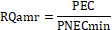 (2)
The PNECmin value used was 1000 ng/L
3. RESULTS AND DISCUSSION
3.1 Preliminary results
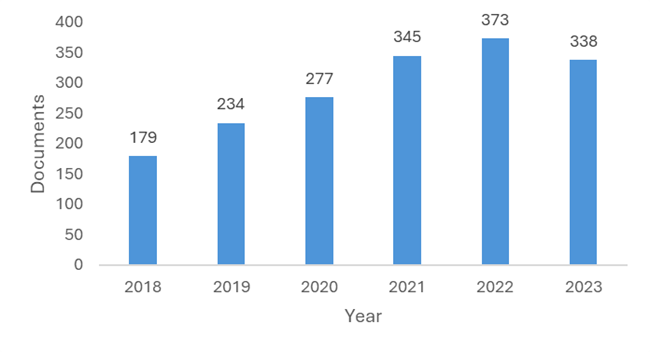
The search yielded a total of 1746 documents published between the years 2018 and 2023. Of these, 90.09% were original papers and 9.91% were state-of-the-art studies. An increase in the number of publications was identified in the period 2018-2022, indicating a growing interest from the scientific community in understanding the dynamics of ERY in water (Figure 1). However, in 2023, there was a decrease of 2.00% in the number of publications compared to 2022. This may have been due to the decline in research in leading countries, given the large amount of research on the topic up to 2022. As a matter of fact, Australia, India, and Spain reduced their publications in 2023 by 56.25%, 17.14%, and 16.67% respectively, compared to 2022. On the other hand, as of the analysis date (April 1, 2024), 104 documents have been reported in 2024.
Source: own elaboration.
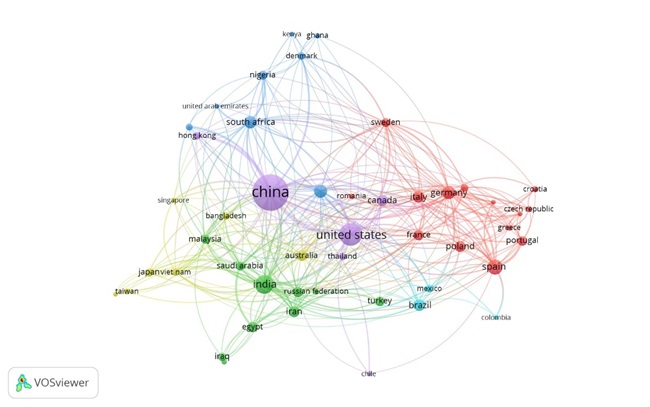
A total of 48 countries has conducted more than 10 publications on the topic, with China being the country with the most publications (520), followed by the United States with 204, and India with 141 (Figure 2). The number of publications by Asian countries that met the analysis criteria represented 65.75% of the total published documents, indicating that this continent led the research on the topic. In addition, 6 scientific communities were identified, each dominated by Spain, India, the United Kingdom, Australia, China, and Brazil. Furthermore, it was observed that the countries with the highest number of international collaborations were China and the United States, each with a total of 34 collaborations. The strongest co-authorship relationship was between China and the United States, both of which belong to the same scientific community. Countries from all continents are conducting research on the topic, demonstrating that the study of ERY environmental presence is of global interest. Furthermore, it was observed that 97.77% of the publications were in English, becoming the preferred language for publishing on the subject.
Source: own elaboration through VOSviewer® software.
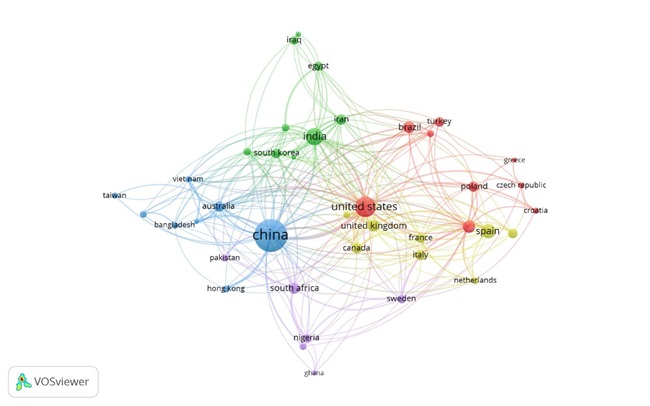
It is noteworthy that during the period comprised between 2018 and 2022, 5 scientific communities were identified (Figure 3). The concentration of ERY studies in waters from these communities reflects a strategic sampling of different global risk scenarios. These regions were prioritized for monitoring since they represent: (1) countries with high analytical capacity and regulatory mandates (e.g., United States and Europe), where monitoring is preventive and systematic; and (2) countries with massive antibiotic production and consumption combined with limited treatment infrastructure (e.g., India and China), where industrial and urban discharges generate extreme environmental concentrations. Together, these regions cover the full spectrum of discharge pathways: from effluents from advanced treatment plants (European/American case) to direct industrial discharges (Asian case). This geographic distribution does not indicate the absence of the problem in other regions, but rather a focus of research resources on areas where the magnitude of the problem or the measurement capacity justified prioritization. However, starting from the year 2023, a new scientific community emerged in Latin America, represented by Brazil, Mexico, and Colombia. This could be attributed to the fact that interest in the issue has shifted to Latin American countries, where research on the impacts of ERY on water resources is recently addressed compared to Asian and European countries. This dynamic in Latin America represents progress in the prevention and mitigation of negative environmental impacts on water resources, given that, in South America, the percentage of over-the-counter antibiotics is higher than in Asia and Southern and Eastern Europe
Source: own elaboration through VOSviewer® software.
An analysis of author keywords co-occurrence was conducted. Out of a total of 4645 words, 23 met the criterion of appearing at least 20 times (Figure 4). The most frequently occurring word was "antibiotics" with a total of 270 appearances, followed by "antibiotic resistance" with 135 appearances. Some of the words most frequently occurring alongside "antibiotics" were "antibiotic resistance genes", "risk assessment", "wastewater", "surface water", and "ecological risk". Additionally, it was observed that one of the strongest relationships for "antibiotic resistance" and "antimicrobial resistance" was with "wastewater". This allows us to conclude that, in research on the presence of ERY in water worldwide, WW is considered an important factor, probably because it is considered one of the main pathways for the entry of this drug into the environment.
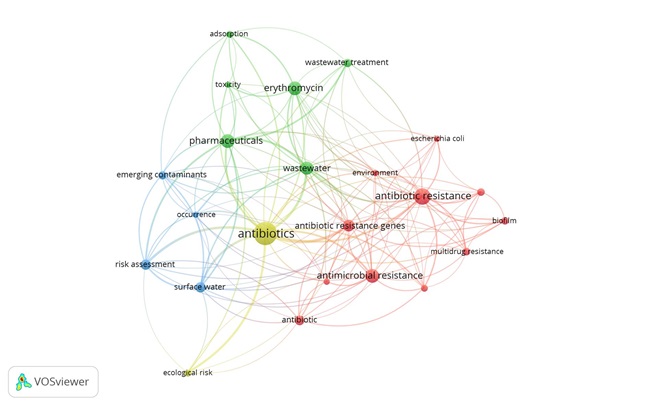
Source: own elaboration through VOSviewer® software.
3.2 Concentrations of ERY in water
The presence of ERY in water in different countries exhibited varied ranges (Table 2). According to
Source: own elaboration.
| Country | Type of water | Concentration range (ng/L) | RQenv | RQamr | Ref. |
| Argentina | Surface water | 3.8 – 38.8 | 0.19 | 0.04 | |
| Brazil | Surface water | 225.55 – 683.77 | 3.42 | 0.68 | |
| China | Surface water | 5.05 – 22.53 | 0.11 | 0.02 | |
| Wastewater (WW) (effluent) | 4.32 – 8.34 | 0.04 | 0.01 | ||
| Hospital WW | 80.58 - 1880.3 | 9.40 | 1.88 | ||
| Surface water | Undetected - 0.46 | 0.00 | 0.00 | ||
| Surface water | Undetected – 0.85 | 0.00 | 0.00 | ||
| Surface water | <4.2 – 54.1 | 0.27 | 0.05 | ||
| Surface water | 6942 – 16725 | 83.63 | 16.73 | ||
| WW (influent) | 258.64 | 1.29 | 0.26 | ||
| WW (effluent) | 148.21 | 0.74 | 0.15 | ||
| Colombia | WW (influent) | 16 – 56 | 0.28 | 0.06 | |
| WW (effluent) | 20 – 62 | 0.31 | 0.06 | ||
| Hospital WW (influent) | 31 – 1850 | 9.25 | 1.85 | ||
| Spain | Surface water | 0.2 – 609 | 3.05 | 0.61 | |
| WW (effluent) | <0.08 – 62.2 | 0.31 | 0.06 | ||
| Surface water | <0.08 – 32.7 | 0.16 | 0.03 | ||
| WW (influent) | <1000 – 171000 | 855.00 | 171.00 | ||
| WW (effluent) | <1000 – 45800 | 229.00 | 45.80 | ||
| WW (influent) | 196 | 0.98 | 0.20 | ||
| WW (effluent) | 195 | 0.98 | 0.20 | ||
| United States | Surface water | <1.0 – 1.20 | 0.01 | 0.00 | |
| Ghana | Hospital WW (effluent) | 7944 – 10613 | 53.07 | 10.61 | |
| WW (influent) | 96 – 1931 | 9.66 | 1.93 | ||
| WW (effluent) | 47 – 882 | 4.41 | 0.88 | ||
| Surface water | 7 – 1149 | 5.75 | 1.15 | ||
| India | WW (influent) | 185.6 - 341.9 | 1.71 | 0.34 | |
| Surface water | <0.096 – 485.6 | 2.43 | 0.49 | ||
| Iran | Surface water | 18.02 – 45.43 | 0.23 | 0.05 | |
| WW (influent) | 93.12 – 159.5 | 0.80 | 0.16 | ||
| WW (effluent) | 51.37 – 193.5 | 0.97 | 0.19 | ||
| WW (influent) | 9.34 | 0.05 | 0.01 | ||
| Italy | Landfill leachate | 8510 – 252824 | 1264.12 | 252.82 | |
| Kosovo | Surface water | 7100 – 85200 | 426.00 | 85.20 | |
| Morrocco | Surface water | <7.8 – 114 | 0.57 | 0.11 | |
| Poland | WW (influent) | 28 – 58 | 0.29 | 0.06 | |
| WW (effluent) | 16 – 21 | 0.11 | 0.02 | ||
| Leachate from WW treatment plants | 30 | 0.15 | 0.03 | ||
| Surface water | <0.7 – 10 | 0.05 | 0.01 | ||
| Drinking water | <0.14 – 57 | 0.29 | 0.06 | ||
| Surface water | <7.0 – 1020 | 5.10 | 1.02 | ||
| Portugal | Surface water | <0.69 – 45.6 | 0.23 | 0.05 | |
| WW (influent) | 365 - 452 | 2.26 | 0.45 | ||
| Qatar | Hospital WW (effluent) | <10 – 5170 | 25.85 | 5.17 | |
| WW (influent) | <10 – 2035 | 10.18 | 2.04 | ||
| WW (effluent) | <10 – 167 | 0.84 | 0.17 | ||
| United Kingdom | Surface water | <11.2 – 263 | 1.32 | 0.26 | |
| South Africa | WW (influent) | 0.21 – 0.58 | 0.00 | 0.00 | |
| WW (effluent) | Undetected – 0.10 | 0.00 | 0.00 | ||
| Surface water | Undetected – 0.16 | 0.00 | 0.00 | ||
| Palestinian Territories | WW (influent) | 0.2 – 12.8 | 0.06 | 0.01 | |
| WW (effluent) | 0.2 – 20.7 | 0.10 | 0.02 | ||
| Uganda | Surface water | 10 – 66 | 0.33 | 0.07 | |
| Vietnam | Surface water | <0.9 – 48517 | 242.59 | 48.52 |
The ERY highest concentrations were found in Italy and Spain, with values of 252824 ng/L and 171000 ng/L, respectively
It is noteworthy that the third highest concentration was found in Kosovo at a water intake point for human consumption, which becomes a health and environmental alarm, as the purification treatments are not designed to remove this type of contaminants
The lowest concentration of ERY reported above the limits of quantification of the different methods was observed in Spain in surface water
In surface water, in turn, the reported concentrations were lower than those reported in WW. According to
3.3 Environmental risk
3.3.1 Ecological risk for aquatic organisms
The highest risk quotient values were observed in countries where the highest levels of ERY in water were reported. The high values in Spain and Italy represent a concerning risk for aquatic organisms and highlight the need for better regulation. 40.74% of the reported maximum concentrations represented a high ecological risk for aquatic organisms, 40.74% represented a medium risk, and 18.52% represented a low risk.
It is worth noting that the PNEC value used was determined based on freshwater species (Daphnia magna, green algae, fish), which is more suitable for assessing ecological risk in freshwater than in seawater. Furthermore, the possible dilution of WW in water bodies should be considered, which could decrease ERY concentrations and contribute to reducing the calculated risk quotient value
The limits of detection may cause an underestimation of potential risk, as concentrations below these limits do not rule out the possibility of negative effects on aquatic organisms
Moreover, the toxicity resulting from the combination of ERY with other types of contaminants should be considered
Source: Own work
| Species | Concentration range | Main effects | Exposure time | Ref. |
| Oncorhynchus mykiss | 0.001–10 mg/L | Histopathological alterations. | 96 h | |
| 0.05–0.8 μg/L | Histopathological alterations. | 28 d | ||
| Labeo rohita | 10, 50 and 100 μg/L | Changes in the activity of the enzyme superoxide dismutase (SOD), catalase (CAT), GPx, and lipid peroxidation (LPO) in liver and gills. | 96 h | |
| Changes in CAT, SOD, LPO, and GPx activities in liver and gills. | 35 d | |||
| Oryzias latipes | 200, 20, 2 µg/L, and 2 mg/L | Reduction in swimming ability. | 96 h | |
| Danio rerio | 200, 20, 2 µg/L, and 2 mg/L | 96 h | ||
| 0.001, 0.01, 0.1, 1, and 10 μg/L | Delay in hatching, decreased survival rate, increased heart rate, behavioral alterations in larvae. | between 120 min and 96 h post-fertilization (hpf) | ||
| Navicula sp. | 1 mg/L | Growth inhibition, change in the photosynthetic pigment content, in the antioxidant system and in the contents of some soluble protein. | 96 h |
Finally, to avoid the uncertainty ascribed to the use of maximum concentrations of pollutants, future risk assessments should adopt a dynamic aquatic landscape approach, where risk is assessed as a spatial-temporal field interacting with ecological heterogeneity instead of a single number. Only in this way will the illusion of precision provided by maximum concentration values be overcome and move toward truly protective management of aquatic ecosystems. This perspective is particularly crucial for contaminants such as ERY, where the most significant effects (i.e., resistance selection, microbiome disruption) depend on complex exposure patterns that maximal concentration values cannot capture.
3.3.2 Potential risk of antimicrobial resistance
Water bodies constitute a medium that favors antibiotic resistance, which poses a challenge to human health by reducing the effectiveness of infectious disease treatment
Several studies have found the presence of ERY-resistant bacteria in different water bodies in countries such as China, India, Iran, Canada, the United States, and Nigeria (Table 4). It has been established that the dynamics of urban water can contribute to antibiotic resistance. In this context, suspended solids become a key factor in promoting antimicrobial resistance, either by protecting exopolymer matrices or by facilitating the proximity between bacteria for the transfer of ARG. However, there is still no clarity about the relationship between environmental dynamics and antimicrobial resistance
Source: own elaboration. *Some species cannot be differentiated because they have the same V3+V4 DNA sequence.
| Genus | Species | Country | Ref. | |
| Acinetobacter | A. junii, A. calcoaceticus, A. pittii* | China | ||
| Aeromonas | A. punctata, A. hydrophila subsp. anaerogenes, A. jandaei | |||
| Aeromonas sp. | India | |||
| Arcobacter | A. butzleri | Canada | ||
| Pseudomonas | P. aeruginosa, P. alcaligenes, P. otitidis, P. pseudoalcaligenes | China | ||
| Pseudomonas sp. | Iran | |||
| India | ||||
| Enterobacter | E. aerogenes, E. kobei, E. cloacae subsp. cloacae, E. ludwigii, E. cloacae subsp. dissolvens, E. hormaechei | China | ||
| Enterobacter sp. | India | |||
| Escherichia | E. coli O157:H7 str. Sakai | China | ||
| Salmonella | S. bongori, S. entérica | |||
| Klebsiella | Klebsiella variicola, Klebsiella pneumoniae | |||
| Streptococcus | S. pneumoniae | India | ||
| Shewanella | Shewanella sp. | India | ||
| Providencia | Providencia sp. | |||
| Photobacterium | Photobacterium sp. | |||
| Enterococcus | E. faecalis | India | ||
| Nigeria | ||||
| United States | ||||
| E. faecium, E. mundtii | ||||
| Brevundimonas | Brevundimonas sp. | Iran | ||
| Vibrio | V. rotiferianus, V. parahaemolyticus, V. navarrensis, V. mimicus, V. fluviales, V. cidicii, V. cholerae, V. anguillarum, V. campbelli, V. fujianensis, V. harveyi, V. maritimus, V. japonicus, V. neocaledonicus, V. neptunius, V. sinaloensis, V. tetradonis | India |
On the other hand, it is worth noting that spatial variability creates pollution "hotspots" near sources such as treatment plants, hospitals, or agricultural runoff. Temporal variability, on the other hand, shows seasonal peaks, for example, in winter due to increased medical use or after rainfall that washes pollutants and contributes to the spread of resistance genes from emission sources to larger aquatic ecosystems. This fluctuation makes it difficult to accurately assess ecotoxicological and human health risks, while also acting as a multiplier of environmental and health risks, thus requiring an integrated surveillance approach that incorporates dynamic monitoring strategies to capture both critical points and periods of highest risk.
3.4 Efficiency of advanced oxidation processes in ERY removal from water
Several studies have informed that conventional treatments do not efficiently remove ERY from water
Source: own elaboration. *Synthetic water (SW) - Wastewater (WW)
| AOP | Results | Water type* | Experimental conditions | Ref. |
| Electro-oxidation | Mineralization less than 10% | SW and WW | [ERY] = 50 mg/L; current = 5 A; time = 240 min Cathode: TiO2–Ti with a surface area of 118 cm2 Anode: DSA® Ru0,3Ti0,7O2–Ti with a surface area of 475.2 cm2 | |
| Photo-electrocatalysis | 38% mineralization | SW and WW | [ERY] = 50 mg/L; current = 5 A; time = 240 min UV sources: 125 W or a 250 W high-pressure Hg vapor lamp (HPL-N), mainly emitting at 254 nm pH = 7 ± 0.2 Cathode: TiO2–Ti with a surface area of 118 cm2 Anode: DSA® Ru0,3Ti0,7O2–Ti with a surface area of 475.2 cm2 | |
| High photonic flux photocatalysis | 16% mineralization | SW and WW | [ERY] = 50 mg/L; pH = 7 ± 0.2; time = 240 min Cathode: TiO2–Ti with a surface area of 118 cm2 Anode: DSA® Ru0,3Ti0,7O2–Ti with a surface area of 475.2 cm2 UV sources: 125 W or a 250 W HPL-N, mainly emitting at 254 nm | |
| Sonochemistry | 40% removal | WW | [ERY] = 0.05 μg/L; volume = 300 mL; pH initial = 7.48; time = 90 min Frequency ultrasound = 375 kHz Reactor temperature = 20°C Transduction efficiency of the reactor = 13% Actual power density = 88 W/L | |
| Sono-Fenton | 60% removal | WW | [ERY] = 0.05 μg/L; volume = 300 mL; pH initial = 7.48; time = 90 min; [Fe2+] = 5 mg/L Frequency ultrasound = 375 kHz Reactor temperature = 20°C Transduction efficiency of the reactor = 13% Actual power density = 88 W/L | |
| Sono-photo-Fenton | 60% removal | WW | [ERY] = 0.05 μg/L; pH initial = 7.48; time = 90 min; [Fe2+] = 5 mg/L Frequency ultrasound = 375 kHz Reactor temperature = 20°C Transduction efficiency of the reactor =13% Volume = 300 mL Actual power density = 88 W/L Sylvania® UVA-lamp (BLB) of 4 W | |
| Sono-photo-Fenton/oxalic acid | 80% removal | WW | [ERY] = 0.05 μg/L; pH initial = 7.48; time = 90 min; [Fe2+] = 5 mg/L; [oxalic acid] = 2 mg/L Frequency ultrasound = 375 kHz Reactor temperature = 20 °C Transduction efficiency of the reactor = 13% Volume = 300 mL Actual power density = 88 W/L Sylvania® UVA-lamp (BLB) of 4 W | |
| Electro-Fenton | 35% mineralization | SW | [ERY] = 10 mg/L; pH = 2.8; [Fe2+] = 10 mg/L Oxygen flow rate = 2 L/min O2 | |
| Peroxyelectrocoagulation | 70% mineralization | SW | [ERY] = 10 mg/L; pH = 2.8 Anode density = 5 mA cm2 Oxygen flow rate = 2 L/min O2 Electrical charge = 0.32 Ah/L | |
| Photocatalysis with immobilized TiO2 coatings under natural solar irradiation | 99.4% removal | WW | [ERY] = 179.9 ng/L; pH = 7.46 Accumulated UV dose = 33 Wh/m2 t 30W = 66 min | |
| Photocatalysis with immobilized TiO2 coatings under controlled irradiation | 43.1% removal | WW | [ERY] = 185.3 ng/L; pH = 7.46 Accumulated UV dose = 55 Wh/m2 t 30W = 110 min | |
| UV-LED/chlorine | 98% removal | SW | [ERY] = 10 mg/L; [chlorine]: 5-20 mg/L; pH = 6 - 9; Temperature = 20 ± 2°C; time = 60 min UV source = 275-nm UV-LED Photon flux per hour of the system = 996 μE/L | |
| Bi2O3-loaded titanium silicalite-1 molecular sieve (Bi2O3/TS-1) | 98.02% removal | WW | [ERY] = 5.8 mg/L; pH = 7 Bi% = 5.5% Catalyst dose = 0.6 g/L | |
| Photo-electro-Fenton assisted with oxalic acid | ~100% removal | WW | UV source: UV lamp with an irradiance of 350 mW/cm2 at 368 nm and 9 W of output Cathode: carbon felt (2.0 cm2) Anode: Boron-Doped Diamond (BDD; 2.0 cm2) [Fe2+] = 3.6 × 10⁻⁵ M; pH ∼ 6.8; time = 1 h Direct current of 3.46 mA/cm2 [Na₂SO₄] = 0.05 M; [oxalic acid] = 2.2 × 10⁻⁵ M | |
| Electro-Fenton | ~100% removal | WW | [Fe2+] = 3.6 × 10⁻⁵ M; pH ∼ 6.8; time = 1 h Cathode: carbon felt (2.0 cm2) Anode: Boron-Doped Diamond (BDD; 2.0 cm2) Direct current of 3.46 mA/cm2 [Sodium sulfate] = 0.05 M | |
| Photo-electro-Fenton | ~100% removal | WW | UV source: UV lamp of 9 W of output and with an irradiance of 350 mW/cm2 at 368 nm [Fe2+] = 3.6 × 10⁻⁵ M; pH ∼ 6.8; time = 1 h Cathode: carbon felt (2.0 cm2) Anode: BDD; 2.0 cm2 Direct current of 3.46 mA/cm2 [Na₂SO₄] = 0.05 M | |
| Photocatalysis by SnFe2O4@monoZIF-8 | 91% removal | SW | [ERY] = 5 mg/L; time = 90 min Amount of catalyst = 0.02 g Light illumination source = Xe lamp (150 W) | |
| Photocatalysis by Chitosan incorporated nickel ferrite catalyst | ~100% removal | SW | [ERY] = 1 - 5 mg/L; time = 120 min NiFe2O4@Chitosan = 0.01 – 0.5 g Xe solar simulator of 150 W pH = 2 - 10 |
According to the information compiled in Table 5, the photo-electro-Fenton, electro-Fenton, and photo-electro-Fenton assisted by oxalic acid systems removed near 100% of ERY in the water
The UV-LED/chlorine process performance is noteworthy, achieving not only 98% elimination but also confirming the absence of residual antibiotics, inactivation of ARG and ARB, and only the generation of two by-products more toxic than ERY, which at low concentrations did not cause acute toxicity
The lowest degradation occurred when the ultrasound treatment was used, which increased between 20% and 40% when iron (II), UV-A light, and oxalic acid were added. This rise was due to OH that were formed from reactions between iron and sonogenerated hydrogen peroxide (H2O2), as well as a greater iron availability to form more radicals in the presence of oxalic acid added. Nonetheless, despite the improved performance, the application of high-frequency ultrasound implies high energy consumption. These improved effects can be extended to other cavitation-based systems, such as hydrodynamic cavitation, which involves lower costs
Source: own elaboration.
| Advanced oxidation process | Removal efficiency (%) | Cost (USD/m3) | EEO (kWh/m³) | Scalability |
| Electro-oxidation | 80-90 | 2.5-5.0 | 2.0-4.0 | Low-medium |
| UV/H2O2 system | 85-95 | 1.5-3.0 | 0.5-1.5 | Medium-High |
| Photo-Fenton | 95-99 | 0.8-2.0 | 0.3-1.0 | Low |
| Heterogeneous photocatalysis with solar radiation | 60-85 | 1.8-4.0 | 0.1-0.8 | Medium |
The viability of AOPs as an environmental remediation technology hinge on a three-dimensional assessment that integrates economic analysis, scalability studies, and energy impact audits. Omitting these dimensions reduces their practical applicability. The criterion for technological validation should focus on effective implementation at an industrial scale, simultaneously ensuring economic sustainability and minimizing environmental footprints. This paradigm shift is essential to transform the theoretical potential of AOPs into tangible contributions to mitigating pharmaceutical contaminants in aquatic systems. This holistic approach acquires critical relevance within the framework of the circular economy and decarbonization, where technological innovation must demonstrate synergy with macro sustainability objectives. In addition, choosing the most suitable treatment, interactions with other contaminants contained in water and the behavior of other water quality parameters should be taken into account. Likewise, it is necessary to analyze degradation mechanisms, generated by-products, and treatment application costs. Especially for ERY, the effects of treatment on the inactivation of ARB and ARG present in water should also be considered. Several AOPs, including advanced ozonation coupled with activated carbon, should also be studied to overcome the problem of ERY in water.
4. CONCLUSIONS
The presence of ERY in water has been detected in several countries around the world at concentrations that may pose a risk to both human health and aquatic life. These high concentrations have been observed in countries that even have regulations governing the presence of ERY in water, which may indicate the ineffectiveness of established regulatory measures. This situation highlights the need for the implementation of effective policies that promote water resource quality worldwide, especially considering that antibiotic resistance knows no boundaries between countries. As an alternative to this issue, AOPs constitute an option for the removal of ERY from water alternative to conventional treatment processes, particularly nickel ferrite photocatalyst incorporated into chitosan, and photo-electro-Fenton, electro-Fenton, and oxalic acid-assisted photo-electro-Fenton systems, since they achieved ~100% removal of ERY. However, future research should evaluate ERY degradation pathways, by-product toxicity, and ARG deactivation under real treatment conditions. Additionally, unified international monitoring standards are urgently needed, particularly in scenarios where concentrations in water resources are low or undetectable and their long-term effects. Moreover, for scaling up purposes, the viability of AOPs as an environmental remediation technology hinge on a three-dimensional assessment that integrates economic, technical and energy analyses.
5. ACKNOWLEDGMENTS
We thank the Ministry of Science, Technology, and Innovation of Colombia and the Universidad de Antioquia for financial support in the master's studies of one of the authors.
REFERENCES
- arrow_upward [1] D. Shen et al., “The fate of erythromycin in soils and its effect on soil microbial community structure,” Sci. Total Environ., vol. 820, p. 153373, May. 2022. https://doi.org/10.1016/J.SCITOTENV.2022.153373
- arrow_upward[2] A. Ashraf et al., “Recent trends in advanced oxidation process-based degradation of erythromycin: Pollution status, eco-toxicity and degradation mechanism in aquatic ecosystems,” Sci. Total Environ., vol. 772, p. 145389, Jun. 2021. https://doi.org/10.1016/J.SCITOTENV.2021.145389
- arrow_upward [3] E. Y. Klein et al., “Global increase and geographic convergence in antibiotic consumption between 2000 and 2015,” Proc. Natl. Acad. Sci. U.S.A., vol. 115, no. 15, pp. E3463-E3470, Apr. 2018. https://doi.org/10.1073/pnas.1717295115
- arrow_upward [4] K. Wang et al., “Seasonal occurrence of multiple classes of antibiotics in East China rivers and their association with suspended particulate matter,” Sci. Total Environ., vol. 853, p. 158579, Dec. 2022. https://doi.org/10.1016/J.SCITOTENV.2022.158579
- arrow_upward [5] B. H. Schafhauser, L. A. Kristofco, C. M. R. de Oliveira, and B. W. Brooks, “Global review and analysis of erythromycin in the environment: Occurrence, bioaccumulation and antibiotic resistance hazards,” Environ. Pollut., vol. 238, no. 1, pp. 440-451, Jul. 2018. https://doi.org/10.1016/J.ENVPOL.2018.03.052
- arrow_upward [6] Q. Yuan et al., “Migration, transformation and removal of macrolide antibiotics in the environment: A review,” Environ. Sci. Pollut. Res., vol. 29, no. 18, pp. 26045-26062, Apr. 2022. https://doi.org/10.1007/s11356-021-18251-2
- arrow_upward[7] A. G. Ayankojo, J. Reut, V. Ciocan, A. Öpik, and V. Syritski, “Molecularly imprinted polymer-based sensor for electrochemical detection of erythromycin,” Talanta, vol. 209, p. 120502, Mar. 2020. https://doi.org/10.1016/J.TALANTA.2019.120502
- arrow_upward [8] D. Jelić, and R. Antolović, “From erythromycin to azithromycin and new potential ribosome-binding antimicrobials,” Antibiotics, vol. 5, no. 3, p. 29, Sep. 2016. https://doi.org/10.3390/ANTIBIOTICS5030029
- arrow_upward [9] Y. Yang, W. Song, H. Lin, W. Wang, L. Du, and W. Xing, “Antibiotics and antibiotic resistance genes in global lakes: A review and meta-analysis,” Environ. Int., vol. 116, pp. 60-73, Jul. 2018. https://doi.org/10.1016/J.ENVINT.2018.04.011
- arrow_upward [10] S. Yan et al., “Effects of erythromycin and roxithromycin on river periphyton: Structure, functions and metabolic pathways,” Chemosphere, vol. 316, p. 137793, Mar. 2023. https://doi.org/10.1016/j.chemosphere.2023.137793
- arrow_upward [11] S. Royano, A. De la Torre, I. Navarro, and M. Á. Martínez, “Pharmaceutically active compounds (PhACs) in surface water: Occurrence, trends and risk assessment in the Tagus River Basin (Spain),” Sci. Total Environ., vol. 905, p. 167422, Dec. 2023. https://doi.org/10.1016/J.SCITOTENV.2023.167422
- arrow_upward [12] Decisión de Ejecución (UE) 2025/439 de la Comisión, de 28 de febrero de 2025, por la que se establece una lista de observación de sustancias a efectos de seguimiento a nivel de la Unión en el ámbito de la política de aguas, de conformidad con la Directiva 2008/105/CE del Parlamento Europeo y del Consejo, 2025/439, Comisión Europea, Dirección General de Medio Ambiente, 2025. [Online]. Available: https://eur-lex.europa.eu/legal-content/ES/ALL/?uri=CELEX:32025D0439
- arrow_upward [13] EPA United States Environmental Protection Agency, “Contaminant candidate list (CCL) and regulatory determination,” epa.gov. Accessed: May. 21, 2023. [Online]. Available: https://www.epa.gov/ccl/contaminant-candidate-list-3-ccl-3#ccl3-list
- arrow_upward [14] A. Adewuyi, O. A. Ogunkunle, and R. A. Oderinde, “Synthesis of tin ferrite-dopped zeolitic imidazolate framework and its application in the photocatalytic degradation of sulfamethoxazole, ciprofloxacin, erythromycin and ampicillin in water,” Catal. Commun., vol. 183, p. 106769, Oct. 2023. https://doi.org/10.1016/J.CATCOM.2023.106769
- arrow_upward [15] D. Kanakaraju, B. D. Glass, and M. Oelgemöller, “Advanced oxidation process-mediated removal of pharmaceuticals from water: A review,” J. Environ. Manage., vol. 219, pp. 189-207, Aug. 2018. https://doi.org/10.1016/J.JENVMAN.2018.04.103
- arrow_upward [16] C. Cai et al., “Hydrothermal treatment of erythromycin fermentation residue: Harmless performance and bioresource properties,” Resour. Conserv. Recycl., vol. 161, p. 104952, Oct. 2020. https://doi.org/10.1016/J.RESCONREC.2020.104952
- arrow_upward[17] M. Islas-Espinoza, S. Aydin, A. de las Heras, C. A. Ceron, S. G. Martínez, and J. C. Vázquez-Chagoyán, “Sustainable bioremediation of antibacterials, metals and pathogenic DNA in water,” J. Clean. Prod., vol. 183, pp. 112-120, May. 2018. https://doi.org/10.1016/J.JCLEPRO.2018.02.068
- arrow_upward [18] A. Muñoz-Calderón, H. Zúñiga-Benítez, S. H. Valencia, A. Rubio-Clemente, S. A. Upegui, and G. A. Peñuela, “Use of low frequency ultrasound for water treatment: Data on azithromycin removal,” Data Br., vol. 31, p. 105947, Aug. 2020. https://doi.org/10.1016/J.DIB.2020.105947
- arrow_upward [19] A. L. Camargo-Perea, A. Rubio-Clemente, and G. A. Peñuela, “Use of ultrasound as an advanced oxidation process for the degradation of emerging pollutants in water,” Water, vol. 12, no. 4, p. 1068, Apr. 2020. https://doi.org/10.3390/W12041068
- arrow_upward [20] N. H. Tran et al., “Occurrence and risk assessment of multiple classes of antibiotics in urban canals and lakes in Hanoi, Vietnam,” Sci. Total Environ., vol. 692, pp. 157-174, Nov. 2019. https://doi.org/10.1016/J.SCITOTENV.2019.07.092
- arrow_upward [21] N. Mheidli, A. Malli, F. Mansour, and M. Al-Hindi, “Occurrence and risk assessment of pharmaceuticals in surface waters of the Middle East and North Africa: A review,” Sci. Total Environ., vol. 851, no. Part 2, p. 158302, Dec. 2022. https://doi.org/10.1016/J.SCITOTENV.2022.158302
- arrow_upward [22] O. Solaun et al., “Contaminants of emerging concern in the Basque coast (N Spain): Occurrence and risk assessment for a better monitoring and management decisions,” Sci. Total Environ., vol. 765, p. 142765, Apr. 2021. https://doi.org/10.1016/J.SCITOTENV.2020.142765
- arrow_upward [23] C. Salgado Costa et al., “First evidence of environmental bioaccumulation of pharmaceuticals on adult native anurans (Rhinella arenarum) from Argentina,” Environ. Pollut., vol. 334, p. 122231, Oct. 2023. https://doi.org/10.1016/J.ENVPOL.2023.122231
- arrow_upward [24] M. P. Gomes, J. C. M. Brito, F. Vieira, R. S. A. Kitamura, and P. Juneau, “Emerging contaminants in streams of Doce River Watershed, Minas Gerais, Brazil,” Front. Environ. Sci., vol. 9, p. 801599, Jan. 2022. https://doi.org/10.3389/fenvs.2021.801599
- arrow_upward [25] H. Wu et al., “Ecological risk assessment of the typical anti-epidemic drugs in the Pearl River Delta by tracing their source and residual characteristics,” J. Hazard. Mater., vol. 463, p. 132914, Feb. 2024. https://doi.org/10.1016/J.JHAZMAT.2023.132914
- arrow_upward [26] L. Jiang et al., “Antibiotics and antibiotic resistance genes in the water sources of the Wuhan stretch of the Yangtze River: Occurrence, distribution, and ecological risks,” Environ. Res., vol. 239, no. Part 1, p. 117295, Dec. 2023. https://doi.org/10.1016/J.ENVRES.2023.117295
- arrow_upward [27] N. Wang et al., “Comprehensive overview of antibiotic distribution, risk and priority: A study of large-scale drinking water sources from the lower Yangtze River,” J. Environ. Manage., vol. 344, p. 118705, Oct. 2023. https://doi.org/10.1016/J.JENVMAN.2023.118705
- arrow_upward [28] X. Jiang et al., “PPCPs in a drinking water treatment plant in the Yangtze River Delta of China: Occurrence, removal and risk assessment,” Front. Environ. Sci. Engin., vol. 13, no. 2, pp. 1-13, Apr. 2019. https://doi.org/10.1007/s11783-019-1109-4
- arrow_upward [29] J. Hu, J. Zhou, S. Zhou, P. Wu, and Y. Fai Tsang, “Occurrence and fate of antibiotics in a wastewater treatment plant and their biological effects on receiving waters in Guizhou,” Process Saf. Environ. Prot., vol. 113, pp. 483-490, Jan. 2018. https://doi.org/10.1016/J.PSEP.2017.12.003
- arrow_upward [30] A. M. Botero-Coy et al., “An investigation into the occurrence and removal of pharmaceuticals in Colombian wastewater,” Sci. Total Environ., vol. 642, pp. 842-853, Nov. 2018. https://doi.org/10.1016/j.scitotenv.2018.06.088
- arrow_upward [31] D. Sol et al., “Occurrence of selected emerging contaminants in Southern Europe WWTPs: Comparison of simulations and real data,” Processes, vol. 10, no. 12, p. 2491, Dec. 2022. https://doi.org/10.3390/pr10122491
- arrow_upward [32] E. T. Alexa, M. de los Á. Bernal-Romero del Hombre Bueno, R. González, A. V. Sánchez, H. García, and D. Prats, “Occurrence and removal of priority substances and contaminants of emerging concern at the WWTP of Benidorm (Spain),” Water, vol. 14, no. 24, p. 4129, Dec. 2022. https://doi.org/10.3390/W14244129
- arrow_upward [33] E. Hain et al., “Geospatial and co-occurrence analysis of antibiotics, hormones, and UV filters in the Chesapeake Bay (USA) to confirm inputs from wastewater treatment plants, septic systems, and animal feeding operations,” J. Hazard. Mater., vol. 460, p. 132405, Oct. 2023. https://doi.org/10.1016/J.JHAZMAT.2023.132405
- arrow_upward [34] D. Azanu, B. Styrishave, G. Darko, J. Juhl Weisser, and R. C. Abaidoo, “Occurrence and risk assessment of antibiotics in water and lettuce in Ghana,” Sci. Total Environ., vol. 622-623, pp. 293-305, May. 2018. https://doi.org/10.1016/j.scitotenv.2017.11.287
- arrow_upward [35] R. Shukla, D. Kumar Prasad, and S. Ziauddin Ahammad, “Investigating antimicrobial resistance determinants and micropollutants in urban sewage treatment plants of India: Occurrence, removal and ecotoxicological risk,” J. Environ. Chem. Engin., vol. 12, no. 1, p. 111654, Feb. 2024. https://doi.org/10.1016/J.JECE.2023.111654
- arrow_upward[36] S. Arun, L. Xin, O. Gaonkar, B. Neppolian, G. Zhang, and P. Chakraborty, “Antibiotics in sewage treatment plants, receiving water bodies and groundwater of Chennai city and the suburb, South India: Occurrence, removal efficiencies, and risk assessment,” Sci. Total Environ., vol. 851, no. Part 2, p. 158195, Dec. 2022. https://doi.org/10.1016/J.SCITOTENV.2022.158195
- arrow_upward [37] R. Mirzaei, A. Mesdaghinia, S. Sajjad Hoseini, and M. Yunesian, “Antibiotics in urban wastewater and rivers of Tehran, Iran: Consumption, mass load, occurrence, and ecological risk,” Chemosphere, vol. 221, pp. 55-66, Apr. 2019. https://doi.org/10.1016/J.CHEMOSPHERE.2018.12.187
- arrow_upward [38] R. Kafaei et al., “Occurrence, distribution, and potential sources of antibiotics pollution in the water-sediment of the northern coastline of the Persian Gulf, Iran,” Sci. Total Environ., vol. 627, pp. 703-712, Jun. 2018. https://doi.org/10.1016/J.SCITOTENV.2018.01.305
- arrow_upward [39] P. He, J. Huang, Z. Yu, X. Xu, R. Raga, and F. Lü, “Antibiotic resistance contamination in four Italian municipal solid waste landfills sites spanning 34 years,” Chemosphere, vol. 266, p. 129182, Mar. 2021. https://doi.org/10.1016/J.CHEMOSPHERE.2020.129182
- arrow_upward [40] A. Veseli, F. Mullallari, F. Balidemaj, L. Berisha, Ľ. Švorc, and T. Arbneshi, “Electrochemical determination of erythromycin in drinking water resources by surface modified screen-printed carbon electrodes,” Microchem. J., vol. 148, pp. 412-418, Jul. 2019. https://doi.org/10.1016/J.MICROC.2019.04.086
- arrow_upward [41] O. Chaib et al., “Occurrence and seasonal variation of antibiotics in Fez-Morocco surface water,” Am. J. Environ. Sci., vol. 15, no. 4, pp. 127-136, Aug. 2019. https://doi.org/10.3844/AJESSP.2019.127.136
- arrow_upward [42] J. Giebułtowicz, G. Nałęcz-Jawecki, M. Harnisz, D. Kucharski, E. Korzeniewska, and G. Płaza, “Environmental risk and risk of resistance selection due to antimicrobials’ occurrence in two Polish wastewater treatment plants and receiving surface water,” Molecules, vol. 25, no. 6, p. 1470, Mar. 2020. https://doi.org/10.3390/MOLECULES25061470
- arrow_upward [43] J. Giebułtowicz et al., “Occurrence of antimicrobial agents, drug-resistant bacteria, and genes in the sewage-impacted Vistula River (Poland),” Environ. Sci. Pollut. Res., vol. 25, no. 6, pp. 5788-5807, Feb. 2018. https://doi.org/10.1007/s11356-017-0861-x
- arrow_upward [44] J. C. G. Sousa, M. O. Barbosa, A. R. L. Ribeiro, N. Ratola, M. F. R. Pereira, and A. M. T. Silva, “Distribution of micropollutants in estuarine and sea water along the Portuguese coast,” Mar. Pollut. Bull., vol. 154, p. 111120, May. 2020. https://doi.org/10.1016/J.MARPOLBUL.2020.111120
- arrow_upward [45] C. Silva et al., “Occurrence and seasonality of pharmaceutical compounds in urban wastewaters in two Portuguese regions,” Urban Water J., vol. 18, no. 6, pp. 465-478, Mar. 2021. https://doi.org/10.1080/1573062X.2021.1893365
- arrow_upward [46] S. Al-Maadheed, I. Goktepe, A. B. A. Latiff, and B. Shomar, “Antibiotics in hospital effluent and domestic wastewater treatment plants in Doha, Qatar,” J. Water Process Eng., vol. 28, pp. 60-68, Apr. 2019. https://doi.org/10.1016/J.JWPE.2019.01.005
- arrow_upward [47] E. E. Burns, L. J. Carter, D. W. Kolpin, J. Thomas-Oates, and A. B. A. Boxall, “Temporal and spatial variation in pharmaceutical concentrations in an urban river system,” Water Res., vol. 137, pp. 72-85, Jun. 2018. https://doi.org/10.1016/J.WATRES.2018.02.066
- arrow_upward [48] O.-o. Loveth Oharisi, S. Ncube, H. Nyoni, M. L. Madikizela, O. J. Olowoyo, and B. Rejoice Maseko, “Occurrence and prevalence of antibiotics in wastewater treatment plants and effluent receiving rivers in South Africa using UHPLC-MS determination,” J. Environ. Manage., vol. 345, p. 118621, Nov. 2023. https://doi.org/10.1016/J.JENVMAN.2023.118621
- arrow_upward [49] H. A. Craddock, S. Panthi, Y. Rjoub, C. Lipchin, A. Sapkota, and A. R. Sapkota, “Antibiotic and herbicide concentrations in household greywater reuse systems and pond water used for food crop irrigation: West Bank, Palestinian Territories,” Sci. Total Environ., vol. 699, p. 134205, Jan. 2020. https://doi.org/10.1016/J.SCITOTENV.2019.134205
- arrow_upward [50] F. Nantaba, J. Wasswa, H. Kylin, W.-U. Palm, H. Bouwman, and K. Kümmerer, “Occurrence, distribution, and ecotoxicological risk assessment of selected pharmaceutical compounds in water from Lake Victoria, Uganda,” Chemosphere, vol. 239, p. 124642, Jan. 2020. https://doi.org/10.1016/J.CHEMOSPHERE.2019.124642
- arrow_upward [51] D. Martínez-Pachón, A. M. Botero-Coy, F. Hernández, N. León López, R. A. Torres-Palma, and A. Moncayo-Lasso, “Elimination of contaminants of emerging concern and their environmental risk in world-real municipal wastewaters by electrochemical advanced oxidation processes,” J. Environ. Chem. Engin., vol. 10, no. 3, p. 107803, Jun. 2022. https://doi.org/10.1016/J.JECE.2022.107803
- arrow_upward [52] J. Yang et al., “Evaluating the combined effects of erythromycin and levofloxacin on the growth of Navicula sp. and understanding the underlying mechanisms,” Plants, vol. 12, no. 13, p. 2547, Jul. 2023. https://doi.org/10.3390/PLANTS12132547
- arrow_upward [53] Y. Li, and J. Zhang, “The Effect of acute erythromycin exposure on the swimming ability of zebrafish (Danio rerio) and medaka (Oryzias latipes),” Int. J. Environ. Res. Public Health, vol. 17, no. 10, p. 3389, May. 2020. https://doi.org/10.3390/IJERPH17103389
- arrow_upward [54] S. Renuka, S. Umamaheswari, C. Shobana, M. Ramesh, and R. Krishnan Poopal, “Response of antioxidants to semisynthetic bacteriostatic antibiotic (erythromycin) concentrations: A study on freshwater fish,” Acta Ecol. Sin., vol. 39, no. 2, pp. 166-172, Apr. 2019. https://doi.org/10.1016/J.CHNAES.2018.08.002
- arrow_upward [55] S. Rodrigues, S. C. Antunes, B. Nunes, and A. T. Correia, “Histopathological effects of the antibiotic erythromycin on the freshwater fish species Oncorhynchus mykiss,” Ecotoxicol. Environ. Saf., vol. 181, pp. 1-10, Oct. 2019. https://doi.org/10.1016/J.ECOENV.2019.05.067
- arrow_upward [56] V. Toffolo Minski, C. Garbinato, N. Thiel, and A. M. Siebel, “Erythromycin in the aquatic environment: deleterious effects on the initial development of zebrafish,” Sci. Total Environ., vol. 84, no. 2, pp. 56-66, Oct. 2020. https://doi.org/10.1080/15287394.2020.1834477
- arrow_upward [57] A. Kumar, A. Kumar, and K. Suranjit Prasad, “Antibiotic-resistant bacteria in municipal sewage water joining river Ganga, at Prayagraj (India),” Gene Rep., vol. 23, p. 101175, Jun. 2021. https://doi.org/10.1016/J.GENREP.2021.101175
- arrow_upward [58] T. Fang, H. Wang, Q. Cui, M. Rogers, and P. Dong, “Diversity of potential antibiotic-resistant bacterial pathogens and the effect of suspended particles on the spread of antibiotic resistance in urban recreational water,” Water Res., vol. 145, pp. 541-551, Nov. 2018. https://doi.org/10.1016/J.WATRES.2018.08.042
- arrow_upward [59] A. Abdulaziz et al., “Distribution and antibiotic resistance of vibrio population in an urbanized tropical lake —the Vembanad— in the southwest coast of India,” Environ. Sci. Pollut. Res., vol. 30, no. 54, pp. 116066-116077, Nov. 2023. https://doi.org/10.1007/s11356-023-30565-x
- arrow_upward [60] I. U. H. Khan, W. Chen, M. Cloutier, D. R. Lapen, E. Craiovan, and G. Wilkes, “Pathogenicity assessment of Arcobacter butzleri isolated from Canadian agricultural surface water,” BMC Microbiol., vol. 24, no. 1, p. 17, Dec. 2024. https://doi.org/10.1186/s12866-023-03119-x
- arrow_upward [61] R. Aali et al., “Tracking of chloramphenicol, erythromycin, and sulfamethoxazole antibiotic-resistant bacteria from untreated wastewater effluents to receiving river,” Environ. Health Eng. Manag. J., vol. 6, no. 2, pp. 89-96, Jun. 2019. URL
- arrow_upward [62] O. M. Emurotu, K. J. Ndukwe, O. I. Owemidu, and F. R. Aminu, “Detection of Enterococcus faecalis and antibiotic resistance genes in wastewater facilities from two Nigerian university campuses,” Trop. J. Nat. Prod. Res., vol. 7, no. 11, pp. 5316-5326, Dec. 2023. URL
- arrow_upward [63] A. M. Ibekwe, A. C. Obayiuwana, and S. E. Murinda, “Enterococcus species and their antimicrobial resistance in an urban watershed affected by different anthropogenic sources,” Water, vol. 16, no. 1, p. 116, Jan. 2024. https://doi.org/10.3390/w16010116
- arrow_upward [64] B. Lee Phoon et al., “Conventional and emerging technologies for removal of antibiotics from wastewater,” J. Hazard. Mater., vol. 400, p. 122961, Dec. 2020. https://doi.org/10.1016/J.JHAZMAT.2020.122961
- arrow_upward [65] A. Rubio-Clemente, E. Chica, and G.A. Peñuela, “Optimization method to determine the kinetic rate constants for the removal of benzo[a]pyrene and anthracene in water through the Fenton process,” Water, vol. 14, no. 21, p. 3381, Oct. 2022. https://doi.org/10.3390/w14213381
- arrow_upward[66] A. Rubio-Clemente, E. Chica, and G. Peñuela, “Total coliform inactivation in natural water by UV/H2O2, UV/US, and UV/US/H2O2 systems,” Environ. Sci. Pollut. Res., vol. 26, no. 5, pp. 4462-4473, Feb. 2019. https://doi.org/10.1007/s11356-018-3297-z
- arrow_upward [67] C. Parra-Enciso, B. S. Avila, A. Rubio-Clemente, and G. A. Peñuela, “Degradation of diclofenac through ultrasonic-based advanced oxidation processes at low frequency,” J. Environ. Chem. Eng., vol. 10, no. 5, p. 108296, Oct. 2022. https://doi.org/10.1016/J.JECE.2022.108296
- arrow_upward [68] C. Parra-Enciso, B. S. Avila, A. Rubio-Clemente, and G. A. Peñuela, “Degradation of carbamazepine by the photo-Fenton process. Approach towards the elucidation of degradation by-products,” J. Photochem. Photobiol. A Chem, vol. 442, p. 114801, Aug. 2023. https://doi.org/10.1016/J.JPHOTOCHEM.2023.114801
- arrow_upward [69] L. Franzen Ramos, S. W. da Silva, D. E. Schneider, M. A. S. Rodrigues, and A. M. Bernardes, “Mineralization of erythromycin by UV-based and electro-oxidation processes,” J. Water Proc. Engin., vol. 33, p. 101039, Feb. 2020. https://doi.org/10.1016/J.JWPE.2019.101039
- arrow_upward [70] E. A. Serna-Galvis et al., “Degradation of seventeen contaminants of emerging concern in municipal wastewater effluents by sonochemical advanced oxidation processes,” Water Res., vol. 154, pp. 349-360, May. 2019. https://doi.org/10.1016/J.WATRES.2019.01.045
- arrow_upward [71] A. Serra-Clusellas et al., “Erythromycin abatement from water by electro-Fenton and peroxyelectrocoagulation treatments,” Water, vol. 13, no. 8, p. 1129, Apr. 2021. https://doi.org/10.3390/W13081129
- arrow_upward [72] J. J. Rueda-Márquez, C. Palacios-Villarreal, M. Manzano, E. Blanco, M. Ramírez del Solar, and I. Levchuk, “Photocatalytic degradation of pharmaceutically active compounds (PhACs) in urban wastewater treatment plants effluents under controlled and natural solar irradiation using immobilized TiO2,” Solar Ener., vol. 208, pp. 480-492, Sep. 2020. https://doi.org/10.1016/J.SOLENER.2020.08.028
- arrow_upward [73] T.-K. Kim, T. Kim, Y. Cha, and K.-D. Zoh, “Energy-efficient erythromycin degradation using UV-LED (275 nm)/chlorine process: Radical contribution, transformation products, and toxicity evaluation,” Water Res., vol. 185, p. 116159, Oct. 2020. https://doi.org/10.1016/J.WATRES.2020.116159
- arrow_upward [74] Q. Shang et al., “Optimization of Bi2O3/TS-1 preparation and photocatalytic reaction conditions for low concentration Erythromycin wastewater treatment based on artificial neural network,” Proc. Saf. Environ. Prot., vol. 157, pp. 297-305, Jan. 2022. https://doi.org/10.1016/J.PSEP.2021.11.031
- arrow_upward [75] N. A. Hassan Mohammed, R. Nabil Shamma, S. Elagroudy, and A. Adewuyi, “Chitosan incorporated nickel ferrite photocatalyst for complete photocatalytic degradation of ciprofloxacin, ampicillin and erythromycin in water,” Result. Chem., vol. 7, p. 101307, Jan. 2024. https://doi.org/10.1016/J.RECHEM.2024.101307
- arrow_upward [76] A. Rubio-Clemente, E. Chica, and G. A. Peñuela, “Photovoltaic array for powering advanced oxidation processes: Sizing, application and investment costs for the degradation of a mixture of anthracene and benzo[a]pyrene in natural water by the UV/H2O2 system,” J. Environ. Chem. Eng., vol. 6, no. 2, pp. 2751-2761, Apr. 2018. https://doi.org/10.1016/J.JECE.2018.03.046
CONFLICTS OF INTEREST
The authors declare that they have no conflict of interest.
AUTHORSHIP CONTRIBUTION
Lyan Ernedis Herrera Arteaga: Investigation, Conceptualization, Writing-original draft preparation, Methodology, Formal analysis and Writing-review and Editing.
Ainhoa Rubio-Clemente: Conceptualization, Writing-original draft preparation, Writing-review and Editing, Methodology, Formal analysis, and Supervision.
Diana Catalina Rodríguez Loaiza: Conceptualization, Writing-original draft preparation, Methodology, Writing-review and Editing, Formal analysis, and Supervision.

 Google