Generative Artificial Intelligence and Educational Research in Mexico*
Inteligencia artificial generativa e investigación educativa en México
 PDF
Received: December 23, 2025
Accepted: July 9, 2026
Acuña-Gamboa, L.-A., Mérida-Martínez, Y., Gutiérrez-Benítez, J.-G., & Valdez-Gil, R. (2026). Generative Artificial Intelligence and Educational Research in Mexico. Trilogía Ciencia Tecnología Sociedad , 18(39), e3860. https://doi.org/10.22430/21457778.3860
Abstract
The purpose of this article is to explore the uses and applications of generative artificial intelligence in advancing knowledge within the field of educational research in Mexico. It also aims to examine the positions adopted by the academic community regarding the advantages, disadvantages, and future prospects that this technology presents in the professional sphere. To this end, an exploratory study was conducted using a predominantly quantitative approach, complemented by qualitative methods. Through non-probabilistic convenience sampling, a sample of 140 active educational researchers registered in the National System of Researchers in Mexico was selected for the study, representing 27 states across the country. Data were collected by means of a specially designed digital questionnaire. Quantitative analyses (including descriptive statistics and chi-square tests) were performed in SPSS, while the qualitative data were analyzed through thematic coding in ATLAS.ti. The results reveal an emerging yet consistent association between the use of generative artificial intelligence and knowledge production in the field of educational research. At the same time, participants expressed significant reservations concerning its advantages, disadvantages, and future prospects. In conclusion, the findings emphasize the need to develop regulatory frameworks that promote the ethical use of these emerging technologies, while also highlighting the importance of restructuring the education and training of new generations of educational researchers.
Keywords: academic ethics, educational research in Mexico, generative artificial intelligence, higher education, knowledge production.
Resumen
El presente artículo tiene como finalidad estimar los usos y aplicaciones de la inteligencia artificial generativa en el desarrollo del conocimiento en la investigación educativa mexicana, así como las posturas asumidas por parte de su comunidad académica en cuanto a las ventajas, desventajas y horizontes que esta representa en el escenario profesional. Para ello, se desarrolló un estudio exploratorio con un enfoque predominantemente cuantitativo y con complementariedad cualitativa. A través de un muestreo no probabilístico por conveniencia, se conformó una muestra de 140 personas investigadoras educativas vigentes en el Sistema Nacional de Investigadoras e Investigadores, abarcando 27 entidades federativas del país. Los datos se recabaron mediante un cuestionario digital ex profeso; el análisis cuantitativo (estadística descriptiva y Chi cuadrado) se procesó en SPSS, mientras que el componente cualitativo se analizó mediante codificación temática en ATLAS.ti. Los resultados evidencian una correlación incipiente pero constante entre el uso de la inteligencia artificial generativa y la producción de conocimiento en el campo de la investigación educativa, aunque con reservas significativas en las ventajas y desventajas, así como en los horizontes asumidos por las personas participantes. En conclusión, se enfatiza en la necesidad de diseñar marcos regulatorios para el uso ético de estas tecnologías emergentes y en la reestructuración de la formación de nuevas generaciones de personas investigadoras en educación.
Palabras clave: ética académica, investigación educativa en México, inteligencia artificial generativa, educación superior, producción de conocimiento.
INTRODUCTION
Given current global social dynamics, Generative Artificial Intelligence (GenAI) has become one of the most widely used tools in education. Its emulation of human cognition is based on the development of complex computer systems that learn and adapt as they gather more information to solve tasks (
Internet use through various international platforms such as Google and Bing has generated a vast amount of information, a significant portion of which consists of textual content (
Nowadays, GenAI plays a fundamental role in the day-to-day operations of international education systems at all levels. In turn, these systems focus on improving teaching and learning processes (
In the broad field of Educational Research (ER), the incorporation of GenAI is advancing at a rapid pace, sparking epistemic debates regarding frequency of use, applicability, and ethical challenges. At the same time, students and scholars are quickly adopting these emerging technologies for academic and research activities, despite the limited understanding of regulatory policies on the use of GenAI in education (
The widespread use of GenAI within ER on a global scale is becoming established as a supplementary methodology integrated into multiple phases of the research process. These stages include literature review, methodological design, qualitative data analysis, and the writing of scientific texts (
Furthermore, various authors point out that this application to scientific productivity may be associated with ethical risks, potential biases in results, usage regulations, and the possibility of plagiarism or misattribution of authorship in research (
The Mexican Society for Computing in Education notes that the use of GenAI in academic research represents the future, provided that it is used with transparency and ethical standards (
Regardless of theoretical, philosophical, and ethical discrepancies, the use of GenAI in Mexico within ER is shaped by various country-specific factors. One aspect that stands out is the inequal distribution of researchers across regions, which can be interpreted as an indirect reflection of the country’s historical digital and knowledge divides. This is evidenced by the geographically heterogeneous distribution of the SNII community, which reveals an asymmetry across different sectors of the national academic landscape. This technological and geographic perspective tends to exacerbate and reinforce a trend toward inequality between educational institutions—which serve as affiliations for researchers—and the country’s geographic regions.
Compounding this scenario is the gap in the development of specialized human capital, which requires mastery of advanced digital competencies in the educational sphere. In Mexico, public education policies indicate that the development of these competencies lacks uniformity across the research community, as there is no sustained allocation of resources to education and training programs in this technological field (
METHODOLOGY
The objective of this study is to explore the uses and applications of GenAI in the advancement of knowledge within the field of ER in Mexico. It also aims to examine the perspectives held by researchers recognized by the SNII regarding the advantages, disadvantages, and prospects that this tool represents in this professional field. To achieve this objective, the study was conducted using a predominantly quantitative approach with an exploratory design (
- To identify the assumptions held by Mexican educational researchers regarding the uses and applications of GenAI in their day-to-day research activities. This objective will allow for the recognition of the meanings, perceptions, and evaluations that the academic community attributes to emerging technologies in their research processes.
- To analyze the correspondences and divergences between these assumptions and the willingness to incorporate GenAI-mediated tools in the development of research projects and the production of scientific knowledge within the field of education. This objective aims to contrast collective imaginaries with actual practices, identifying possible tensions or resistance to technological adoption.
- explore the limitations, challenges, and prospects faced by the Mexican research community regarding the use of GenAI as a methodological and epistemological resource in ER. In doing so, the study seeks to offer a critical and forward-looking perspective on the transformative potential that GenAI could bring to the country’s scientific endeavors.
Based on the foregoing, the methodological design made it possible to analyze the data to identify patterns within the sample. Such behaviors include the frequency of occurrence of certain relevant attributes or characteristics, which opened up opportunities to systematically describe the general characteristics of the study group (
Unit of Analysis
secihti’s SNII is the flagship policy program in the fields of Science, Humanities, Technology, and Innovation (shti) in Mexico. It is responsible for recognizing academics who generate knowledge, develop human capital, and bring science to the general public within the country in some of the nine areas recognized by SECIHTI. Therefore, the SNII represents the most important academic community in this field in Mexico.
Accordingly, the present study employed non-probabilistic convenience sampling to select participants, who were chosen based on ease of access, availability, and interest in the study (
Data Collection Instrument
To collect the empirical data, a questionnaire was specifically designed, consisting of 14 items organized into four thematic dimensions (see Appendix 1). Throughout the process, the study strictly maintained the anonymity of the participants, who signed an informed consent clarifying that the data were being collected solely and exclusively for academic purposes. Therefore, all participants completed the questionnaire voluntarily and with the assurance that their data were protected. The first dimension aimed to identify the GenAI tools most frequently used by educational researchers. The second sought to determine the research activities and processes in which these tools are used. The third focused on identifying the perceived advantages of incorporating these tools into research practice. The fourth examined the disadvantages, challenges, and prospects associated with the use of these tools in ER.
The questionnaire was created in digital format using Google Forms, which facilitated its nationwide distribution and the collection of responses. The items included multiple-choice questions, category selection questions, and open-ended questions, with the aim of capturing both quantifiable trends and the participants’ discursive expressions. Sociodemographic and academic variables were also included, such as gender, age, years of experience in ER, state of residence, affiliated institution, level of education, and type of locality where professional work is carried out.
To strengthen the instrument’s validity, a qualitative content validation process was conducted through the expert judgment of three ER specialists from Mexico, Peru, and Ecuador. The review focused on the relevance of the items to the study’s objectives, the semantic clarity of the questions, the correspondence between dimensions and indicators, and the adequacy of the response options for capturing the participant’s perceptions. Based on the feedback received, wording adjustments and conceptual clarifications were made, and the questionnaire was reorganized internally to ensure that each item corresponded directly to the study’s analytical dimensions.
An overall statistical reliability test—such as Cronbach’s alpha—was not applied due to the exploratory nature of the study and the diversity of response formats included in the questionnaire. Moreover, the instrument was not designed as a unidimensional psychometric scale or as a test for measuring latent traits. Instead, the quality of the questionnaire was grounded in content validity, peer review, and methodological consistency among objectives, dimensions, items, and analytical procedures. This decision is consistent with the study’s purpose, which focuses on estimating the uses, perceptions, advantages, disadvantages, and prospects of GenAI in ER in Mexico from an exploratory perspective.
Data Collection Procedure
Given that the questionnaire primarily aimed at gathering participants’ perceptions, conceptions, and collective imaginaries of uses and applications of GenAI in ER in Mexico, a systematic search for email addresses was conducted on websites and institutional repositories. This search covered the study population consisting of 1,312 educational researchers recognized by the SNII, a figure updated through the third quarter of 2025 (
The data collection phase took place over a period of approximately four months, between June and September 2025. Once the data collection was complete, a database was created containing all the retrieved records. Subsequently, the data were cleaned to ensure the consistency of the information and reduce potential biases resulting from incomplete or duplicate responses. This process involved the removal of records that could not be included in the analysis. Of the 185 responses initially collected, only those—140—that met the established criteria for analysis were included in the study.
Data Analysis Procedure
Once the data cleaning process was complete, each response from the questionnaire was analyzed individually, resulting in the following four main processes:
- The participants’ demographic and professional composition was analyzed, taking into account variables such as level of academic education and years of experience in research, in line with Objective I.
- The extent of use and application of the most common GenAI tools among educational researchers was examined, in relation to Objective II.
- The areas and processes of ER in which GenAI is incorporated were identified, in agreement with Objective II.
- The motivational factors and perceptions regarding the advantages and limitations that participants attribute to GenAI in their professional practice were evaluated, in accordance with Objective III.
The cleaned database was migrated to SPSS Statistics, version 28 (
Chi-square tests were formulated under a null hypothesis and an alternative hypothesis. The null hypothesis assumed that there is no statistically significant association between the categorical variables analyzed. The alternative hypothesis predicted that there is a statistically significant association between these variables. Specifically, for the cross-tabulations between years of experience and perceived advantages, the null hypothesis held that the perception of the advantages of GenAI is independent of the number of years of experience in ER; the alternative hypothesis proposed that both variables are associated. For the cross-tabulations between academic background and perceived advantages or disadvantages, the null hypothesis stated that perceptions of GenAI are independent of the level of academic background; the alternative hypothesis posited that these perceptions vary depending on the participants’ academic background.
Data reduction was carried out in two stages. In the quantitative component, multiple-choice responses were grouped according to the dimensions of the instrument and the study’s objectives. Subsequently, analytical categories were constructed to group related responses and facilitate their statistical analysis. In the qualitative component, open-ended responses were reviewed to identify minimal units of meaning—defined as expressions, phrases, or ideas that provided relevant information on the uses, advantages, disadvantages, and prospects of GenAI in ER. These units were coded, grouped, and refined to avoid repetitions, unify semantically equivalent expressions, and retain the categories with the greatest interpretive relevance.
For the qualitative analysis of the open-ended responses,
The coding results revealed that the open-ended responses centered on the following five main interpretive themes: 1) GenAI as a support tool for optimizing research tasks; 2) concerns about bias, the reliability of information, and the absence of original sources; 3) the enduring nature of irreplaceable human capabilities, such as creativity, critical thinking, contextual interpretation, and ethical decision-making; 4) the need for specific training in the responsible use of GenAI; and 5) the urgency of establishing institutional criteria and regulatory frameworks for incorporating GenAI into ER. This organizational approach made it possible to link the qualitative results with the quantitative findings and to strengthen the coherence among the objectives, the instrument, and the analytical procedures.
RESULTS
GenAI represents one of the most significant technological advances of the 21st century, with uses and applications that are revolutionizing such important fields as scientific research. In this context, this study analyzed the integration of these technological resources into the development of ER in Mexico, focusing on distinguished academics within the SNII. The most important findings of the study are presented below, organized according to the following lines of analysis:
- Use of GenAI tools in ER.
- Advantages and disadvantages of the uses and applications of GenAI in ER.
- Future prospects for GenAI in ER.
Use of GenAI in Educational Research in Mexico
Participants report that GenAI tools are largely used in drafting theoretical sections, problem statements, and methodological frameworks, as well as in editing the style of academic texts (see Table 1). ChatGPT, Jasper AI, Claude, and Grammarly are the most commonly used tools for these purposes.
| Text | Audio | Image | Analytics | Other |
| ChatGPT Jasper AI Claude Elicit Consensus Grammarly Sudowrit QuillBot | ElevenLabs Otter.ai Amper Music Descript | DALL E Canva Craiyon Midjourney Dreamlike | Research Rabbit ScispaceATALS.tiZoteroMendeley | Gemini Copilot Google Translate Bing Meta AI |
Furthermore, GenAI tools are used for data analysis to strengthen the findings or discussion of a research study, searching for scientific information, and citing and referencing sources in accordance with certain international standards. In this regard, Research Rabbit, ATLAS.ti, and Zotero play a leading role in ER.
GenAI tools for generating audio and images are used to a lesser extent. These serve only to design products that translate academic language into colloquial language in this field of study (universal access to knowledge), so that more people can benefit from shti advances in Mexico. Notably, a very small percentage (4.28%) of the sample reported not using GenAI for professional purposes, confirming the growing integration of these tools into ER.
Advantages and Disadvantages of GenAI in Educational Research in Mexico
GenAI is situated within a dichotomous debate: while many people regard it as a beneficial technological advancement that contributes to human development, others perceive it as a mechanism that marginalizes the workforce, human thought, and creativity (
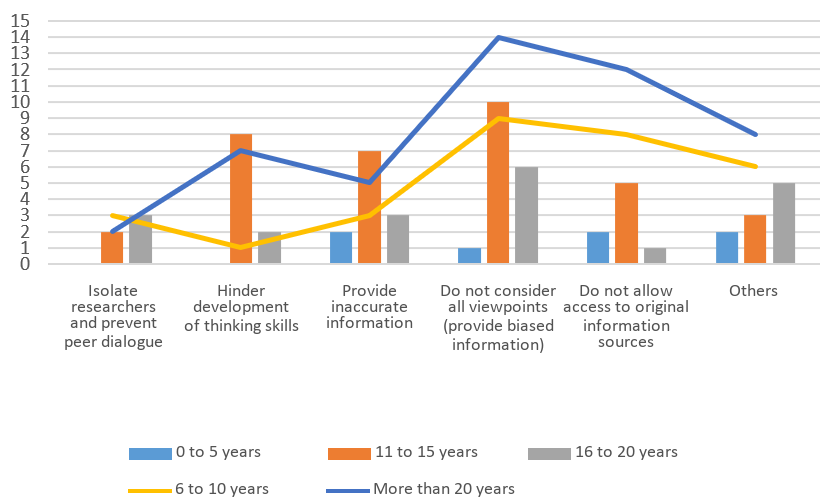
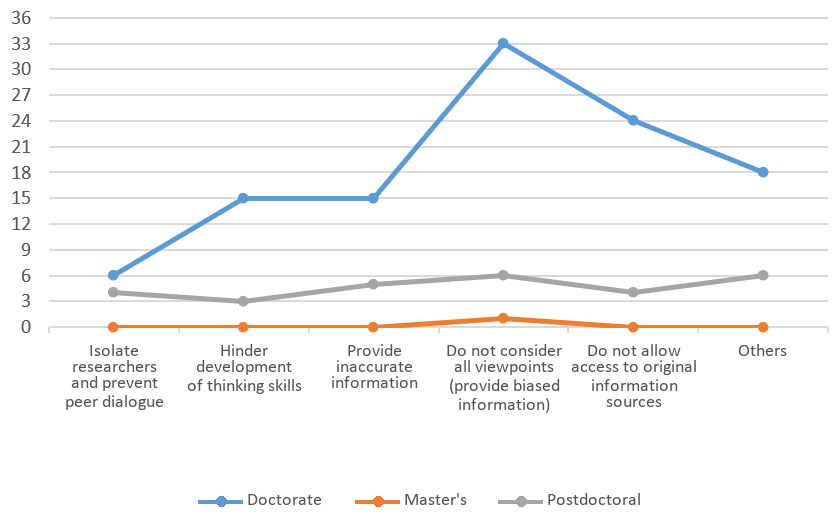
Throughout history, the technological advances brought about by the industrial revolutions have transformed the social realities of their respective eras, giving rise to contrasting views among populations worldwide. Against this backdrop, the following paragraphs examine the advantages (see Figures 1 and 2) and disadvantages (see Figures 3 and 4) that educational researchers in Mexico identify in relation to the incorporation of GenAI into their professional practice. These findings are compared across groups according to the number of years participants have devoted to ER.
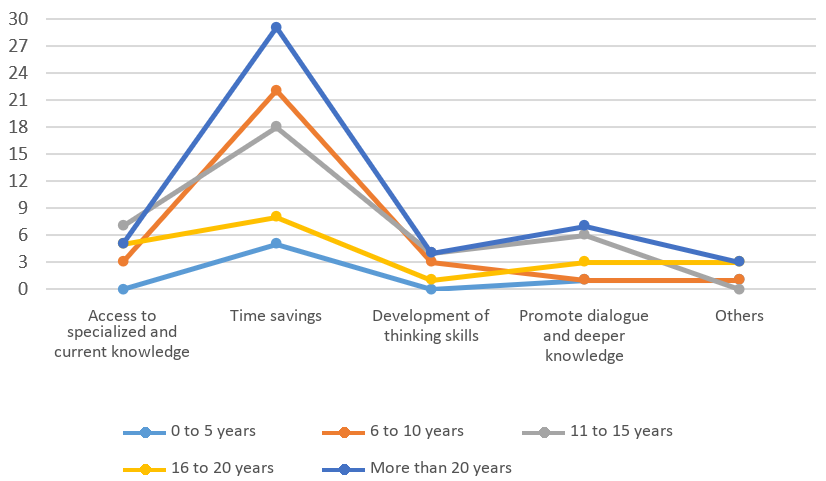
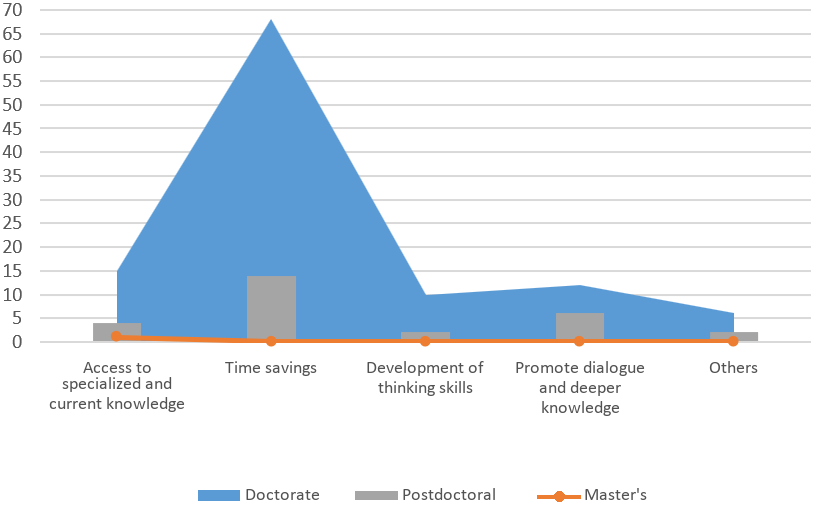
As shown in the figures above, time savings was one of the most widely recognized advantages of GenAI in ER. This benefit was reported most frequently by researchers with fewer years of experience (between 0 and 15 years) and by those holding doctoral degrees, accounting for 54.88% and 82.93% of the responses, respectively. These gains in efficiency may be attributed to the ability of GenAI to perform certain research tasks at a speed that surpasses human capabilities, particularly information retrieval and the drafting of sections of academic documents.
Access to specialized and up-to-date knowledge ranked second among the advantages identified by participants. This benefit was consistently highlighted by researchers with between six and more than 20 years of experience (100%) and was particularly prominent among respondents with doctoral degrees (75%).
The promotion of dialogue and the deepening of knowledge emerged as the third leading advantage of these technologies. This benefit was most often noted by researchers with 16 to more than 20 years of experience (55.56%) and was also notably represented among respondents with postdoctoral training (33.33%).
Finally, the development of thinking skills and the “other” category—which includes aspects related to idea generation and lateral thinking—were the least widely recognized advantages among the participants, accounting for 8.57% and 5.71% of the responses, respectively.
Regarding the disadvantages associated with the incorporation of GenAI into research practices, the issue that raises the greatest concern among educational researchers (see Figures 3 and 4) is the persistence of biases in the information generated when prompts are used to perform specific tasks. This concern was most prevalent among researchers with between six and ten years of experience and those with more than 20 years of experience (57.5%), as well as among respondents holding master’s, doctoral, and postdoctoral degrees (2.5%, 82.5%, and 15%, respectively). At the national level, this drawback has gained increasing attention within the ER community.
The limited access to original and reliable sources of information constitutes another disadvantage of GenAI in ER. This aspect is closely related to the first drawback discussed above, namely, biases in the information generated by these tools. Accordingly, this second challenge was reported most frequently by researchers with 16 or more years of experience (46.43%) and by participants holding doctoral degrees (85.71%).
Moreover, participants identified other disadvantages associated with the use of GenAI. These include ethical concerns and dishonest use, as well as excessive dependence on GenAI in ER. These concerns were raised by 54.17% of researchers with 16 or more years of experience and by respondents holding doctoral and postdoctoral degrees (75% and 25%, respectively).
Lastly, participants pointed to a reduction in dialogue among peers as a consequence of increased reliance on GenAI. This issue was consistently expressed by researchers with between six and more than 20 years of experience (100%) and was most particularly prevalent among those with doctoral degrees (60%). Taken together, these findings suggest that researchers with higher academic qualifications and greater experience in ER tend to identify more disadvantages associated with the use of GenAI as a contemporary research tool.
Future Prospects of GenAI in Educational Research in Mexico
It is evident that the development of GenAI will continue to demonstrate its potential in the near future across fields such as research. Therefore, it is important to examine the positions adopted by researchers regarding this technology, as doing so makes it possible to understand the assumptions emerging within academic communities around a field as promising as GenAI. The following subsections present the perspectives of the study participants concerning the present state and future of advances in GenAI, both nationally and internationally.
What is considered unique to educational researchers and cannot be replaced by GenAI?
Although we are currently in the era of “weak” GenAI—characterized by its limitations and its inability to perform activities beyond those for which it has been programmed—it is necessary to explain why human intelligence remains indispensable to the development of the fields of SHTI. In this context, Figure 5 shows the keywords identified in participants’ responses, which collectively provide an outline of the meaning underlying the guiding question.
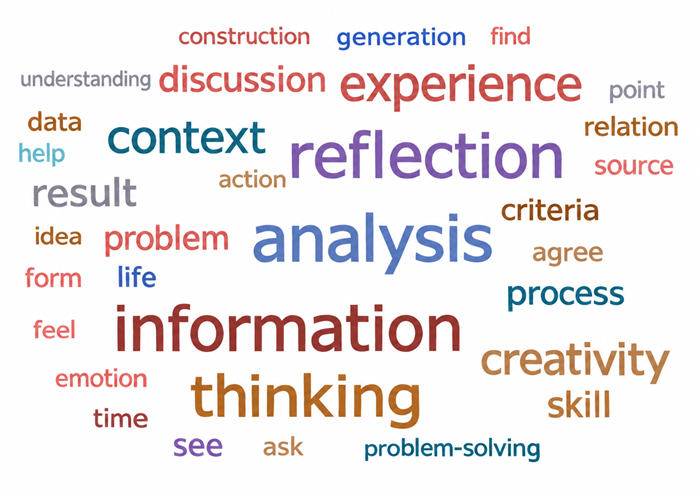
Mexican educational researchers recognized within the SNII emphasize that there are human intellectual capacities that GenAI, at least to date, has not been able to replace. These capacities are fundamental to the development of knowledge in this field of study and include the following:
- - Creative capacity, which enables researchers to approach an educational problem from different perspectives and, in turn, generate new approaches to its improvement or resolution.
- - Critical and heuristic thinking and discernment, which contribute to the identification and prioritization of relevant information for informed and rigorous decision-making in the field of research.
- - Empirical knowledge and an understanding of educational needs, challenges, and demands within the regional contexts in which they arise, which allow researchers to design and conduct studies that are more rigorous and responsive to local circumstances.
- - The capacities for interaction, communication, and discussion, which play an essential role in the production of knowledge in ER, as the diversity of perspectives gives rise to new and more effective educational proposals.
As can be seen, the participants largely draw upon Foucault’s notion of epimeleia heautou (care of the self) to make clear that, although GenAI may be regarded as an innovative tool in ER, it cannot replace the necessary collective pursuit of truth in addressing educational problems (
How do you envision the future of ER and educational researchers in light of the development of GenAI?
Exploring the future of GenAI in ER from the perspective of the researchers who are shaping this field is important for understanding the potential, challenges, and opportunities associated with these technologies within Mexico’s educational landscape. In this regard, Figure 6 presents the main findings concerning the future of ER and educational researchers, as described by the participants through the reflections shared in this study.
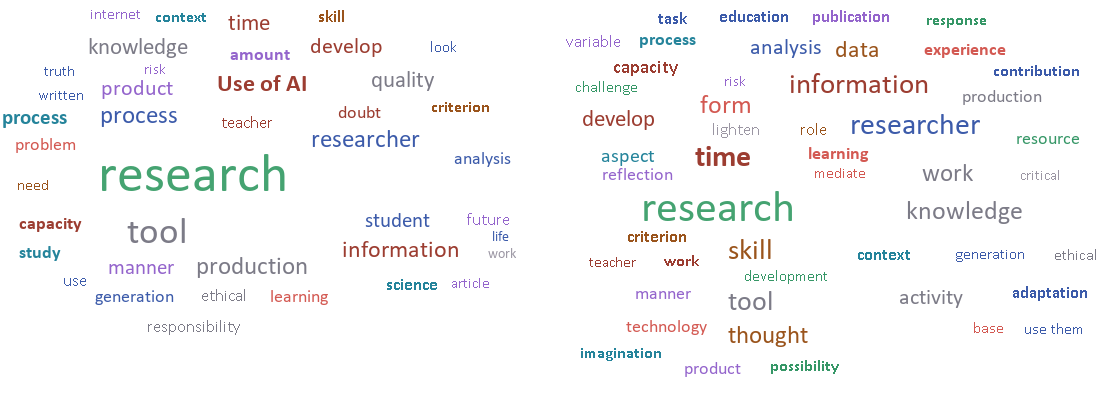
The future of ER is viewed as a domain characterized by both opportunities and challenges as the field continues to evolve. Much will depend on the extent to which GenAI is conceived as a highly valuable tool for optimizing the time devoted to tasks that have traditionally required a substantial proportion of the research process. These tasks include searching the academic literature to build corpora for systematic reviews, as well as analyzing quantitative and qualitative data in ways that may yield insights beyond those provided by conventional software such as SPSS, MAXQDA, and ATLAS.ti.
At the same time, one of the most pressing challenges concerns ethics and copyright protection in the production of scientific knowledge supported by GenAI. Excessive or inappropriate use of these technologies may encourage research practices that lack scientific rigor and may contribute to increased plagiarism resulting from academic negligence and intellectual complacency within the scholarly community.
With regard to the future of educational researchers, the findings point to the need for a fundamental shift in the competencies, skills, and attitudes traditionally associated with ER. In this sense, the development of new generations of educational researchers who are better equipped to navigate the dynamics of the digital era should be encouraged. These researchers will need to address technological change as a constant factor influencing the relevance and longevity of scientific knowledge. Consequently, developing digital competencies that help optimize information retrieval, data collection, and analysis, among other activities, will be essential for enabling more timely and sustainable responses to current and emerging educational challenges.
Moreover, it is important to recognize that GenAI is, and should remain, an assistive and collaborative tool intended to streamline research activities. It should not be forgotten that human intelligence remains the foundation of the knowledge produced within the field of education. Otherwise, the development of the fields of SHTI in Mexico is likely to encounter significant obstacles, while the uncontrolled use of GenAI could raise ethical concerns related to intellectual property in the production of scientific knowledge. These concerns continue to foster skepticism, uncertainty, and resistance among some members of the ER community in Mexico.
DISCUSSION
Regarding areas of convergence with the international literature, the results confirm that GenAI is one of the contemporary technological developments increasingly transforming the scientific landscape worldwide, as it has fundamentally reshaped professional practice in the fields of SHTI from its very foundations, particularly research training. At the same time, these changes have generated speculation and resistance to the use of such technologies in ER, especially among researchers with more years of experience in the field.
A second area of convergence concerns the need for more rigorous regulation of the use of GenAI in research through governmental and institutional policies, as well as ethical frameworks that safeguard human critical thinking and underscore the role of AI as a technological support tool for the fields of SHTI (
Finally, several authors highlight that GenAI contributes positively to research activities such as literature reviews, methodological design, and qualitative data analysis (
Turning to the areas of divergence, the present study differs from the existing literature in various respects. For instance, participants with more years of experience were more supportive of incorporating GenAI into ER, in contrast to findings from other international studies indicating that younger generations tend to be more receptive to the adoption of GenAI (
A second area of divergence relates to the results reported by
Lastly, the findings of the present study clearly diverge from the notion that GenAI is currently undermining creativity and intellectual capacity in ER. Even though the use of this technology undoubtedly introduces a degree of uncertainty, participants emphasized that knowledge production in this field remains intrinsically linked to human intelligence and capabilities.
CONCLUSIONS
The significance of this article lies in capturing the assumptions and expectations of Mexican educational researchers recognized within the SNII. In particular, the findings suggest that this scientific community is not opposed to advances in technologies applied to research. Rather, it advocates for their appropriate and rigorous integration through training in the use of GenAI for research, together with regulations that address both ethical issues in knowledge production and respect for copyright. The current laxity surrounding the use of these technologies could transform ER into a field of emulations and simulations driven by prompts and large language models, creating the illusion that the country’s socio-educational problems are only one click away from being solved.
It is important to recognize that GenAI represents more than an asymmetric competition between humans and algorithms. Instead, it constitutes an opportunity to rethink ER and strengthen the evidence supporting findings in this field through the use of big data, access to which was once considered unthinkable. This, in turn, makes it possible to undertake more complex and far-reaching scientific studies that would be difficult to conduct using traditional methods because of the financial, human, and time resources required to obtain large volumes of data from society.
The limitations of the present study should also be acknowledged. First, the sampling strategy does not allow the findings to be generalized to the entire community of educational researchers recognized within the SNII. Therefore, future studies could employ stratified probability sampling by region to examine this phenomenon across the diverse contexts in which ER is conducted in Mexico. Second, although participants represent 27 of the country’s 32 federal entities, no information was obtained from researchers in the remaining five. This limitation opens avenues for future research examining the heterogeneity of Mexico’s scientific landscape across its 32 federal entities, taking into account regional social and professional inequalities and the institutional resources available for professional practice in the fields of SHTI.
Finally, although this study provides an overview of the development of ER from the perspective of the national academic community that has recently adopted GenAI, further scientific initiatives are needed to promote emerging lines of inquiry in this field. These include exploring the economic and generational dimensions of GenAI adoption in ER, critically analyzing the role of GenAI in the research process to assess the quality and biases of its outputs, investigating the impact of GenAI on researchers’ creative capacity to address educational problems, and examining regulatory frameworks governing the use of GenAI to safeguard research ethics and copyright.
CONFLICTS OF INTEREST
The authors declare that there are no conflicts of interest related to this article.
AUTHORSHIP CONTRIBUTION
Luis-Alan Acuña-Gamboa: First author and corresponding author. He contributed to the development of the study corpus for the literature review, reviewed and helped structure the methodology, analyzed the database underlying this study, and participated in drafting all sections of the manuscript.
Yliana Mérida-Martínez: She actively contributed to the methodological design of the article and to the analysis of the databases supporting the findings presented herein, as well as to the organization and writing of the Results and Introduction sections.
Jorge-Gustavo Gutiérrez-Benítez: He contributed to the methodological design of the manuscript and the statistical validation of the findings. He also collaborated in drafting the abstract and keywords.
Raúl Valdez-Gil: He contributed to the development of the study corpus, as well as to the writing of the literature review and the Introduction section.
ARTIFICIAL INTELLIGENCE USE STATEMENT
No artificial intelligence tools were used in the organization, structuring, or writing of any section of this article.
FOOTNOTES
- arrow_upward * This article reports on the findings of the research project “Artificial Intelligence and Educational Research: New Trends in the Development of Scientific Knowledge in Education?”, Registration No. 04/ARQ/RPR/027/24, filed with the General Directorate of Research and Graduate Studies at the Universidad Autónoma de Chiapas. It was funded by the researchers who make up the working group.
REFERENCES
- arrow_upward Acuña-Gamboa, L.-A. (2025). Inteligencia artificial e investigación educativa en los contextos internacional y mexicano: Revisión de la literatura. Revista Paraguaya de Educación a Distancia (REPED), 6(2), 111-122. https://doi.org/10.56152/reped2025-vol6num2-art9
- arrow_upward Acuña-Gamboa, L.-A., Mérida-Martínez, Y., & Gutiérrez-Benítez, J. G. (Coords.). (2026). Inteligencia Artificial y Educación Superior. Hacia la comprensión del campo. Universidad Autónoma de Chiapas; Universidad Autónoma de Baja California. https://doi.org/10.31644/CE2026B6
- arrow_upward Ali, O., Murray, P. A., Momin, M., Dwivedi, Y. K., & Malik, T. (2024). The effects of artificial intelligence applications in educational settings: Challenges and strategies. Technological Forecasting & Social Change, 199, art. 123076. https://doi.org/10.1016/j.techfore.2023.123076
- arrow_upward Alvarado Rodríguez, F. J. (2023, August 18). El Papel de la Inteligencia Artificial en la brecha educativa y digital en México. Universidad Autónoma de Guadalajara. https://www.uag.mx/es/mediahub/el-papel-de-la-inteligencia-artificial-en-la-brecha-educativa-y-digital-en-mexico/2023-08
- arrow_upward Andere, E. (2025). Monstruo o prodigio. Cómo la IA está transformando la escuela, el trabajo y la vida. Siglo XXI Editores.
- arrow_upward Aparicio-Gómez, O.-Y., & Cortés Gallego, M. A. (2024). Desafíos éticos de la Inteligencia Artificial en la personalización del aprendizaje. Revista Interamericana de Investigación, Educación y Pedagogía, 17(2), 377-392. https://doi.org/10.15332/25005421.10000
- arrow_upward Asiamah, N., Mensah, H. K., & Oteng-Abayie, E. F. (2022). Non-Probabilistic Sampling in Quantitative Clinical Research: A Typology and Highlights for Students and Early Career Researchers. International Journal of Applied Research on Public Health Management (IJARPHM), 7(1), 1-18. https://doi.org/10.4018/IJARPHM.290379
- arrow_upward ATLAS.ti. (n.d.). Domine sus proyectos de investigación con el poder de la Inteligencia Artificial [software]. https://atlasti.com/es
- arrow_upward Baños, G. (2024). El sueño de la inteligencia artificial. El proyecto de construir máquinas pensantes: Una historia de la IA. Shackleton Books.
- arrow_upward Ben-Shachar, M. S., Patil, I., Thériault, R., Wiernik, B. M., & Lüdecke, D. (2023). Phi, Fei, Fo, Fum: Effect Sizes for Categorical Data That Use the Chi-Squared Statistic. Mathematics, 11(9), art. 1982. https://doi.org/10.3390/math11091982
- arrow_upward Carbajal-Degante, E., Hernández Gutiérrez, M., & Sánchez-Mendiola, M. (2023). Hacia revisiones de la literatura más eficientes potenciadas por inteligencia artificial. Investigación en Educación Médica, 12(47), 111-119. https://doi.org/10.22201/fm.20075057e.2023.47.23526
- arrow_upward Carranza Patiño, M. S., Urdánigo-Zambrano, J. P., & González Osorio, B. (2024). Metodología de la investigación y análisis cuantitativo. Universidad Técnica Estatal de Quevedo.
- arrow_upward Chan, C. K. Y., & Lee, K. K. W. (2023). The AI generation gap: Are Gen Z students more interested in adopting generative AI such as ChatGPT in teaching and learning than their Gen X and millennial generation teachers? Smart Learning Environments, 10(1), art. 60. https://doi.org/10.1186/s40561-023-00269-3
- arrow_upward Chávez-Martínez, O. (2023). Tan lejos de la investigación científica, tan cerca de la inteligencia artificial. Revista de Enfermería del Instituto Mexicano del Seguro Social, 31(2), 37-38. https://revistaenfermeria.imss.gob.mx/index.php/revista_enfermeria/article/view/1407
- arrow_upward Cooper, G. (2023). Examining Science Education in ChatGPT: An Exploratory Study of Generative Artificial Intelligence. Journal of Science Education and Technology, 32(3), 444-452. https://doi.org/10.1007/s10956-023-10039-y
- arrow_upward Cornejo-Plaza, I., & Cippitani, R. (2023). Consideraciones éticas y jurídicas de la IA en Educación Superior: Desafíos y Perspectivas. Revista de Educación y Derecho, (28), 1-23. https://doi.org/10.1344/REYD2023.28.43935
- arrow_upward de Alba, A. (2020). La investigación educativa a través del espejo. Perfiles Educativos, 42(169), 3-6. https://doi.org/10.22201/iisue.24486167e.2020.169.60016
- arrow_upward De la Cruz Flores, G. (2023). Trazos para el COMIE del futuro desde el presente. Retos y tensiones para la investigación educativa. Revista Mexicana de Investigación Educativa, 28(99), 1293-1300. https://www.scielo.org.mx/pdf/rmie/v28n99/1405-6666-rmie-28-99-1293.pdf
- arrow_upward Díaz Subieta, L. B. (2024). The Use of Artificial Intelligence in Scientific Research. Revista Historia de la Educación Latinoamericana, 26(43), 253-272. https://doi.org/10.19053/uptc.01227238.18014
- arrow_upward Dominguez-Lara, S. (2018). Magnitud del efecto, una guía rápida. Educación Médica, 19(4), 251-254. https://doi.org/10.1016/j.edumed.2017.07.002
- arrow_upward Dorta-González, P., López-Puig, A. J., Dorta-González, M. I., & González-Betancor, S. M. (2024). Generative artificial intelligence usage by researchers at work: Effects of gender, career stage, type of workplace, and perceived barriers. Telematics and Informatics, 94, art. 102187. https://doi.org/10.1016/j.tele.2024.102187
- arrow_upward Flores Vázquez, F., & González Herrera, K. C. (2024). Inteligencia artificial en investigación educativa: La construcción del estado del arte. In A. Escudero-Nahón & D. Escudero-Sánchez (Coords.), Tecnologías disruptivas y sociedad (pp. 73-87). Transdigital Editorial. https://doi.org/10.56162/transdigitalb38
- arrow_upward Foucault, M. (2012). La hermenéutica del sujeto (5th reprint). Fondo de Cultura Económica.
- arrow_upward Gallent-Torres, C., Zapata-González, A., & Ortego-Hernando, J. L. (2023). El impacto de la inteligencia artificial generativa en educación superior: una mirada desde la ética y la integridad académica. Relieve, 29(2), art. M5. http://doi.org/10.30827/relieve.v29i2.29134
- arrow_upward García-Peñalvo, F. J. (2022). Desarrollo de estados de la cuestión robustos: Revisiones Sistemáticas de Literatura. Education in the Knowledge Society, 23, art. e28600. https://doi.org/10.14201/eks.28600
- arrow_upward García Sánchez, O. V., & Zaldívar Colado, A. (2023). Uso de herramientas de IA en la educación superior. Comparativa de uso de ChatGPT en México. In H. G. Ayala Zúñiga, A. Ramírez Noriega, Y. Martínez Ramírez & J. F. Figueroa Pérez (Coords.), Innovaciones tecnológicas: Un enfoque a la educación superior (pp. 43-70). Astra Ediciones. https://doi.org/10.61728/AE24040037
- arrow_upward García-Vargas, G. R., Parés-Hipólito, J., Serrano, M., & Reyna Martínez, L. A. (2024). El uso de la inteligencia artificial y la ciencia de datos en la educación: Preocupaciones éticas. In S. J. Pech, M. E. Prieto, P. J. Canto & R. I. Esperón (Coords.), Transforming Education: Technological Tools for Effective Learning (pp. 127-137). Editorial CIATA.
- arrow_upward Granda Dávila, M. F., Muncha Cofre, I. J., Guamanquispe Romero, F. V., & Jácome Noroña, J. H. (2024). Inteligencia Artificial: ventajas y desventajas de su uso en el proceso de enseñanza aprendizaje. Mentor. Revista de Investigación Educativa y Deportiva, 3(7), 201-224. https://doi.org/10.56200/mried.v3i7.7081
- arrow_upward Hofmann, B., & Holm, S. (2019). Research integrity: environment, experience, or ethos? Research Ethics, 15(3-4), 1-13. https://doi.org/10.1177/1747016119880844
- arrow_upward IBM. (2021). Release notes: IBM® SPSS® Statistics 28 [software]. https://www.ibm.com/support/pages/node/6445443
- arrow_upward Jara, I., & Ochoa, J. M. (2020). Usos y efectos de la inteligencia artificial en educación. Banco Interamericano de Desarrollo. https://doi.org/10.18235/0002380
- arrow_upward Medina Romero, M. Á. (2024). Aplicaciones de la Inteligencia Artificial para la investigación y la innovación en la educación superior. Revista Social Fronteriza, 4(4), art. e336. https://doi.org/10.59814/resofro.2024.4(4)336
- arrow_upward Muscanell, N., & Robert, J. (2023, February 14). EDUCAUSE QuickPoll Results: Did ChatGPT Write This Report? Educause Review. https://er.educause.edu/articles/2023/2/educause-quickpoll-results-did-chatgpt-write-this-report
- arrow_upward Organización de las Naciones Unidas para la Educación, la Ciencia y la Cultura. (2022). Recomendación sobre la ética de la inteligencia artificial. https://unesdoc.unesco.org/ark:/48223/pf0000381137_spa
- arrow_upward Ortega Guerrero, J. C., & Pellegrin Zazueta, L. M. (2019). La inteligencia artificial y la educación superior. ANUIES.
- arrow_upward Pardo, A., & San Martín, R. (2010). Análisis de datos en ciencias sociales y de la salud II (2nd ed.). Editorial Síntesis.
- arrow_upward Parraguez Núñez, P. (2024). Ética y responsabilidad en la implementación de la Inteligencia Artificial en la escuela. Revista Internacional de Filosofía Teórica y Práctica, 4(1), 161-173. https://doi.org/10.51660/riftp.v4i1.94
- arrow_upward Parra-Sánchez, J. S., Torres Pardo, I. D., & Martínez de Merino, C. Y. (2023). Factores explicativos de la deserción universitaria abordados mediante inteligencia artificial. Revista Electrónica de Investigación Educativa, 25, art. e18. https://doi.org/10.24320/redie.2023.25.e18.4455
- arrow_upward Prince-Torres, Á. C. (2024). La inteligencia artificial como mecanismo para el aseguramiento del derecho a la educación. RECIE. Revista Caribeña de Investigación Educativa, 8(1), 1-20. https://doi.org/10.32541/recie.2024.v8i1.pp1-20
- arrow_upward Salmerón Moreira, Y. M., Luna Alvarez, H. E., Murillo Encarnacion, W. G., & Pacheco Gómez, V. A. (2023). El futuro de la Inteligencia Artificial para la educación en las instituciones de Educación Superior. Revista Conrado, 19(93), 27-34. https://conrado.ucf.edu.cu/index.php/conrado/article/view/3156
- arrow_upward Sánchez-Martín, M., Ponce Gea, A. I., Rubio Aparicio, M., Navarro-Mateu, F., & Olmedo Moreno, E. M. (2024). Una aproximación práctica a los diseños de investigación cuantitativa. Espiral. Cuadernos del Profesorado, 17(35), 117-132. https://doi.org/10.25115/ecp.v17i35.9725
- arrow_upward Secretaría de Ciencia, Humanidades, Tecnología e Innovación [SECIHTI]. (2025). Archivo histórico del Sistema Nacional de Investigadoras e Investigadores (SNII). https://secihti.mx/snii/archivo-historico-del-snii/
- arrow_upward Sociedad Mexicana de Computación en la Educación. (2023, November 5). Inteligencia Artificial desde la Investigación Educativa [video]. YouTube. https://www.youtube.com/watch?v=4YrJJEua33w&t=130s
- arrow_upward Suazo Galdames, I. (2023). Inteligencia artificial en investigación científica. SciComm Report, 3(1), 1-3. https://doi.org/10.32457/scr.v3i1.2149
- arrow_upward Torres-Gómez, A. (2024). Necesidades de información y percepción sobre las herramientas de inteligencia artificial en estudiantes de doctorado en investigación educativa en Tlaxcala, México. Investigación Bibliotecológica, 38(98), 79-98. https://doi.org/10.22201/iibi.24488321xe.2024.98.58852
APPENDIX 1. DATA COLLECTION INSTRUMENT
- 1. List the Artificial Intelligence (ai) tools you are aware of that can generate new content in the form of text, audio, or images.
- 2. List the ai tools that can generate new content in the form of text, audio, or images that you use when conducting educational research.
- 3. Why did you start using these Generative Artificial Intelligence (Genai) tools for research purposes in the field of education?
- a) Through digital media (YouTube, TikTok, Instagram, Facebook, etc.)
- b) On the recommendation of fellow researchers
- c) Out of personal interest
- d) Due to the needs of the research process itself
- e) To comply with guidelines from the institution where I conduct my research
- f) Other: ____________
- 4. How often do you use these Genai tools in your educational research activities?
- a) At least once a day
- b) Two to four times a week
- c) Once a month
- d) Every two or more months
- e) Only on rare and sporadic occasions
- 5. Select the tasks for which you use these Genai tools:
- a) Searching for information
- b) Writing texts intended for publication
- c) Defining research topics
- d) Translating information into other languages
- e) Summarizing information
- f) Generating texts
- g) Learning about trends related to topics, theories, or methodologies
- h) Identifying lines of argument for further elaboration
- i) Testing arguments
- j) Obtaining results from quantitative data analysis
- k) Obtaining results from qualitative data analysis
- l) Other: __________________
- 6. Select the stages of the research process in which you use these Genai tools:
- a) Problem formulation
- b) Theoretical framework
- c) Methodological framework
- d) Analysis of results
- e) Discussion
- f) Other: __________________
- 7. What do you consider to be the advantages of using Genai tools in educational research?
- a) Time savings
- b) Reliability of information
- c) Development of thinking skills
- d) Promotion of dialogue and the deepening of knowledge
- e) Access to specialized and up-to-date knowledge
- f) Other: __________________
- 8. What do you consider to be the disadvantages of using Genai tools in educational research?
- a) They do not provide access to original sources of information.
- b) They do not consider all perspectives (they provide biased information).
- c) They isolate researchers and hinder dialogue with their peers.
- d) The information they provide is unreliable.
- e) They hinder the development of thinking skills
- f) Other: __________________
- 9. What is the main professional benefit you gain from incorporating Genai tools into your educational research activities and processes?
- a) They allow me to incorporate aspects into my research that I had not previously considered
- b) Increased capacity for reflection
- c) Improved professional relationships
- d) Completing my workload in a timely and appropriate manner
- e) Personal satisfaction
- f) None
- g) Other: __________________
- 10. What is the main personal benefit you gain from incorporating Genai tools into your educational research activities and processes?
- a) Recognition for work carried out with ai
- b) Improving the reflective quality of my writing
- c) Increasing the number of publications
- d) Personal satisfaction
- e) Improving the quality of the texts I produce
- f) None
- g) Other: __________________
- 11. Which of the following reasons would lead you to recommend the use of Genai tools to other educational researchers?
- a) Shortening the duration of the research process
- b) Personal experience of the benefits associated with their adoption
- c) Improving the way educational research is conducted
- d) Increasing the number of research outputs
- e) Improving the quality of research outputs through access to publications with high-quality indexing
- f) None of the above
- g) Other: ___________________
- h) I would not recommend them.
12. What do you consider to be unique to educational researchers and cannot be replaced by Genai?
13. Based on your experience, how do you envision the future of educational research in light of the development of Genai?
14. Based on your experience, how do you envision the future of educational researchers in light of the development of Genai?

 Google